

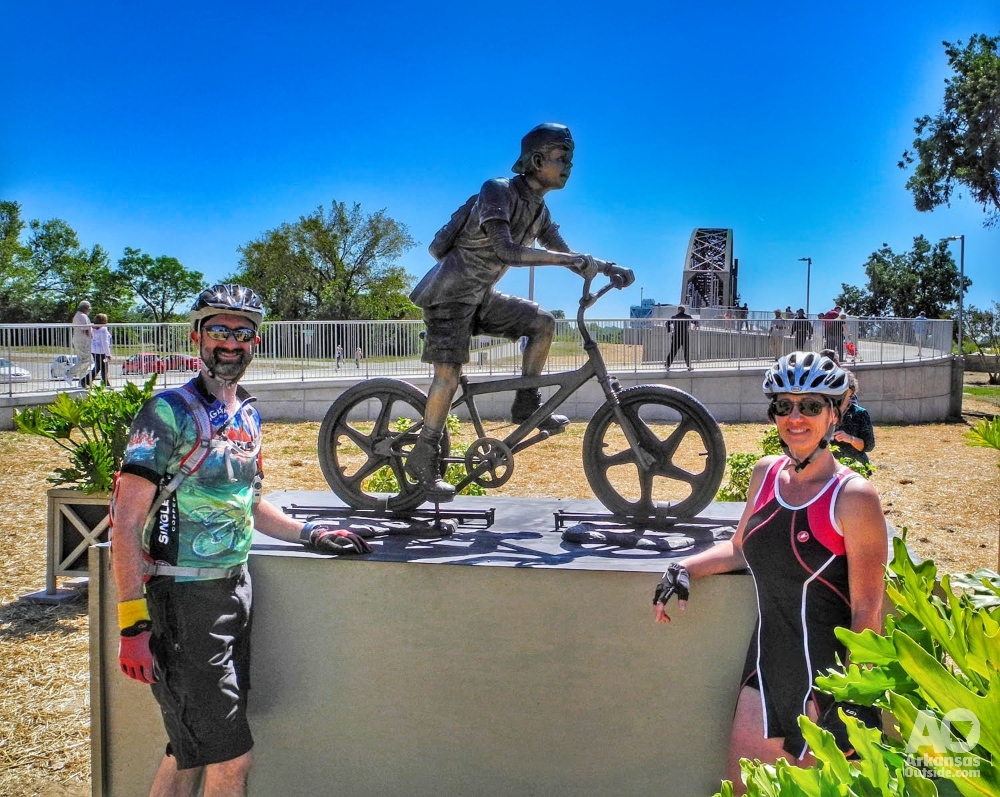
In October 2011, a small bronze kid on a bike greeted everyone stepping off the brand-new Clinton Presidential Park Bridge on the North Little Rock side. He wasn’t permanently mounted—just parked in the grass beside Riverfront Drive like a happy accident—but he fit the moment: a playful marker for a city celebrating a big connection on the Arkansas River Trail. Then-Mayor Pat Hays told Arkansas Outside the piece had been picked up for about $5,000 and set out for the bridge dedication while the city figured out a permanent home, maybe even beside a future fountain at the landing.
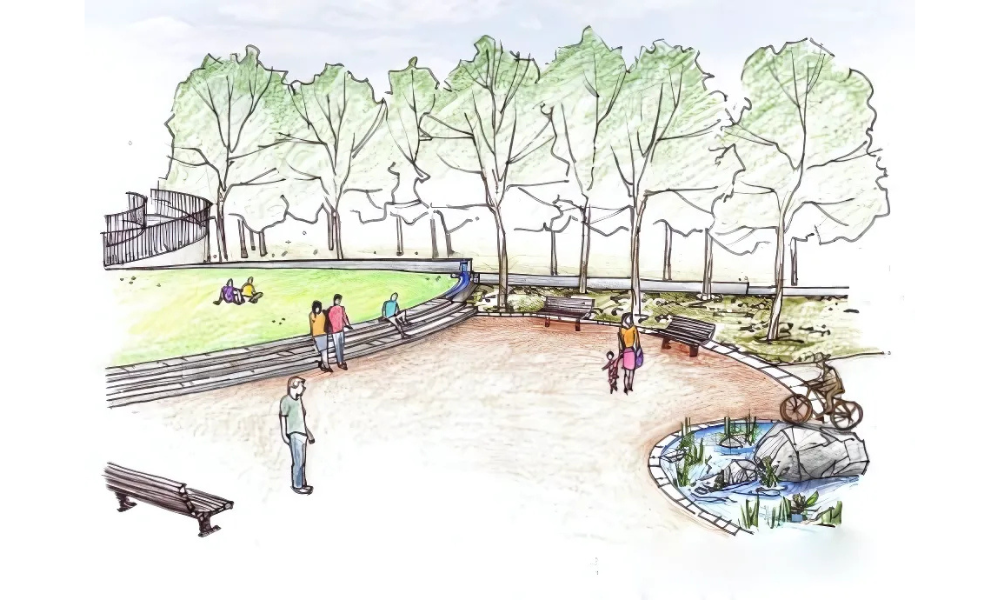
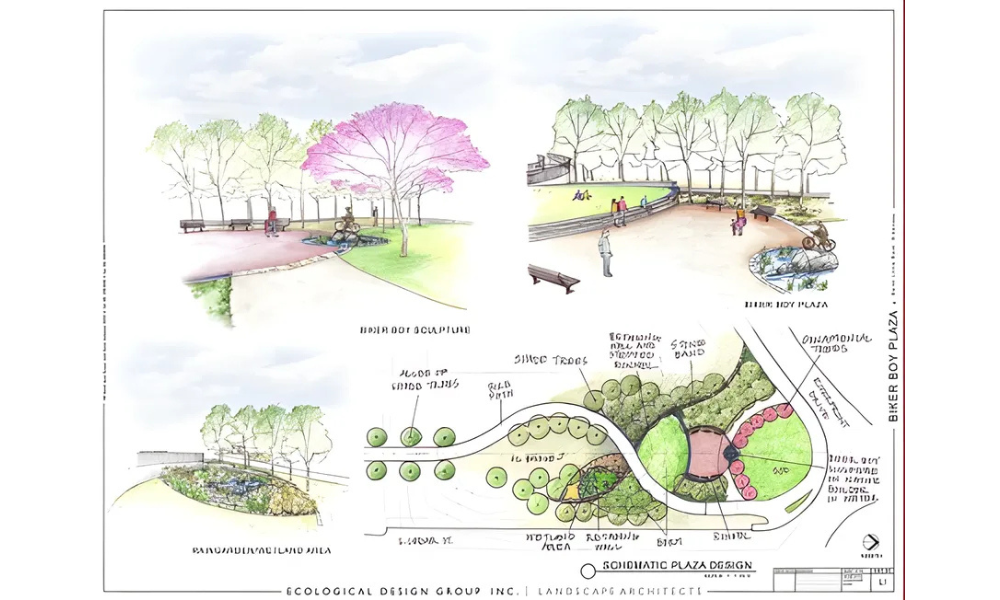
By December 2012, a rendering and a name were unveiled: “Bicycle Boy Plaza.” The concept set the statue on a rock encircled by water—part charm, part light-hearted moat against art theft—and sketched a pocket park where people could pause, picnic, and snap photos with the bridge at their back. The city, advocates said, would need to raise approximately $300,000 for construction and stewardship. It was a tidy vision: finish the base as nicely as the span itself, and honor the everyday joy that powers a trail.
And then… nothing.
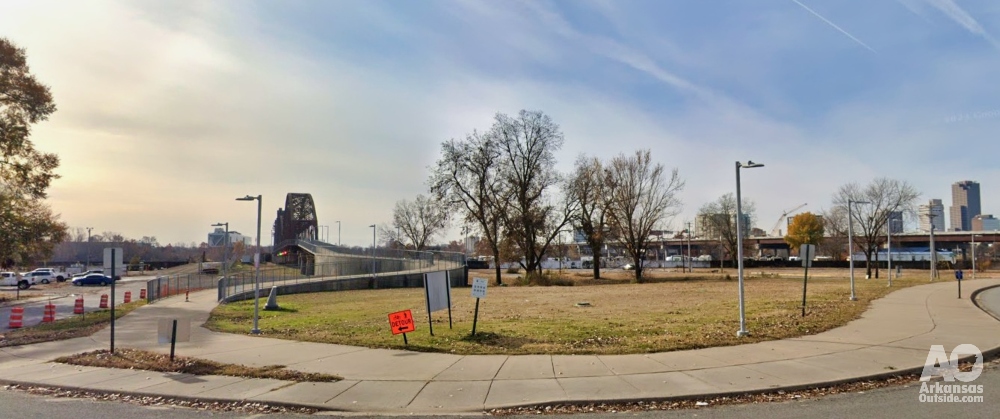
If you’ve walked or ridden that corner in the years since, you know: the plaza never materialized. The landing functions, sure, but the “last 10%” never arrived. The little plaza that would have stitched the bridge into the neighborhood fabric—turning a thoroughfare into a place—remained a plan on paper. (In 2012, the city was still seeking private dollars to build it; there’s no public record of the plaza being constructed afterward.)
Worse, Bicycle Boy himself was quietly rolled away. Where did he go? Public art listings don’t show him in a new North Little Rock location, and he’s long gone from the bridge approach. Even Randolph Rose, the foundry that once highlighted the Arkansas placement on its blog, offers no clue as to where the piece ended up next. In a city that rightly prides itself on public art—from the Vogel Schwartz Sculpture Garden to bike-themed sculpture elsewhere in Argenta—the absence is conspicuous.
This isn’t really a story about one bronze kid. It’s about municipal follow-through—the habit of treating ribbon cuttings as finish lines instead of starting points. We excel at the big, photogenic moves: opening a landmark bridge, launching a new corridor, and issuing a conceptual drawing that looks terrific in a council packet. We’re less consistent at delivering the connective tissue and human-scale details that make these triumphs feel complete.
“Bicycle Boy Plaza” is a case study. The cost was modest by public works standards. The payoff would have been outsized: shade, seating, water, identity. A public space that says, “You’ve arrived,” instead of, “You’ve exited.” Decade-old plans languish when we don’t budget for maintenance and activation along with capital, when we count “opened” as “finished,” and when the last 10%—the stuff that makes a place beloved—gets punted to “someday.”
If this sounds familiar, it’s because we’ve been living a larger version of the same pattern along the Arkansas River Trail. Nearly twenty years after the Big Dam Bridge, the promise of a seamless, people-first loop remains unfinished. We celebrate connectivity, but we still ask everyday users to thread needles around gaps and half-measures. That, too, is a last-10% problem—a governance problem, not a geography one.
None of this is unsolvable. Finishing what we start is mostly about priorities: reserving project dollars for the small things that make the big things work; building operations and stewardship into the plan, not as a postscript; and holding ourselves to the standard our marketing already implies. “World-class” isn’t a bridge in isolation. It’s a bridge with a place at its feet.
Which brings us back to our kid on the bike.
Bicycle Boy mattered because he made the landing feel like a welcome, not just a waypoint. He pointed at the trail and said, “This is for you.” Losing him—and the plaza that should have framed him—is a missed opportunity at the exact scale that shapes daily experience.
So here’s the ask:
Does anyone know where Bicycle Boy is? If you’ve seen the statue—warehouse, office, new park, private loan—tell us. And if there’s still a chance to bring him home and finally build the little plaza we were promised, let’s do the last 10% together.