

How Arkansas Ultra Running Aid Stations Became the Heart of the Race
She smells the food before she sees the table. Somewhere through the trees ahead, the sound of music and voices drifts up the trail to meet her. Her legs have been arguing with her for the last six miles, but her feet pick up the pace anyway. She is running toward the party, and the party is right here, in the afternoon light of the Ouachita Mountains, somewhere around mile 38.
This is what separates Arkansas ultra running from almost everything else on the endurance racing calendar. The finish line party is wonderful, cold beer, warm congratulations, and a buckle if you earned it. But in Arkansas, the party does not wait for you at the end. It meets you on the mountain.
More Than a Water Stop
Ask any runner who has toed the line at the Arkansas Traveller 100 or the Ouachita Trail 50 what they remember most, and you will hear a lot of answers that have nothing to do with their finishing time. They will tell you about the volunteer who jogged out to meet them on the trail with an ice-cold, wet towel. The one who took their water bottle, filled it, and pressed a warm quesadilla into their hand before they even had to ask. The aid station captain, who somehow knew they had been fighting nausea for the last eight miles, appeared with ginger ale and a calm voice saying, “You have got this. Head that way.”
A runner comes through that station in the bright afternoon, squinting in the sun, sweating through their pack straps, maybe a little wobbly. They leave with a full bottle, a settled stomach, and something to look forward to. Because the volunteers made a promise on the way out: “We will have quesadillas when you come back through.”
That promise matters more than it sounds. It plants something in the runner’s mind that carries them for miles.
The Humble Origins
It was not always this way. In the early days of trail and ultra racing in Arkansas, aid stations were little more than water drops. Gallon plastic milk jugs filled with warm water, left along the trail like breadcrumbs for desperate runners. There was no crew, no cheer, no grilled cheese. Just warm water and the hope that the next jug was not too far.
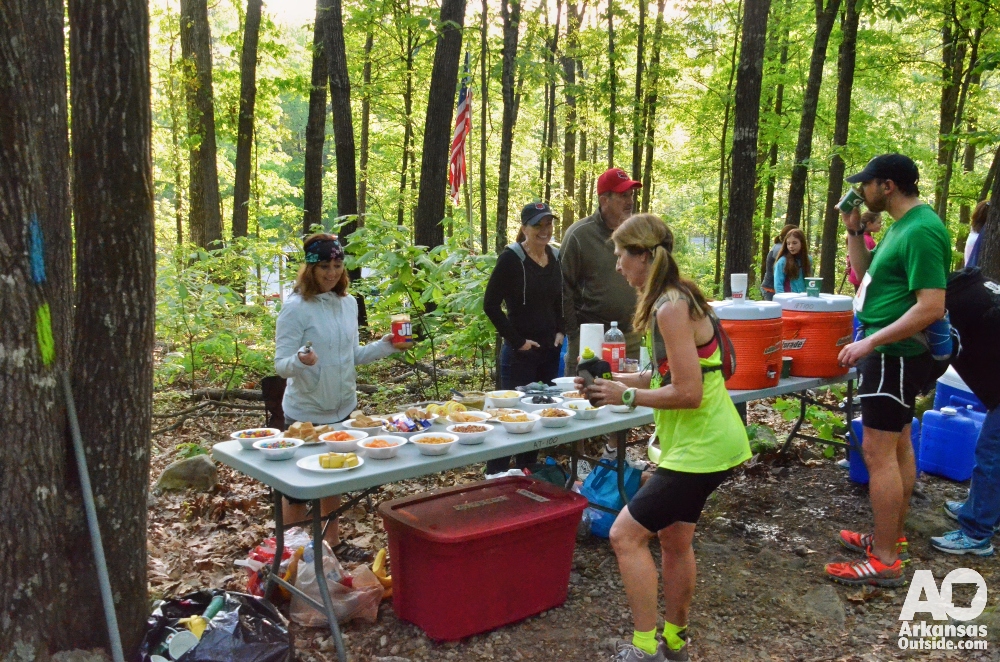
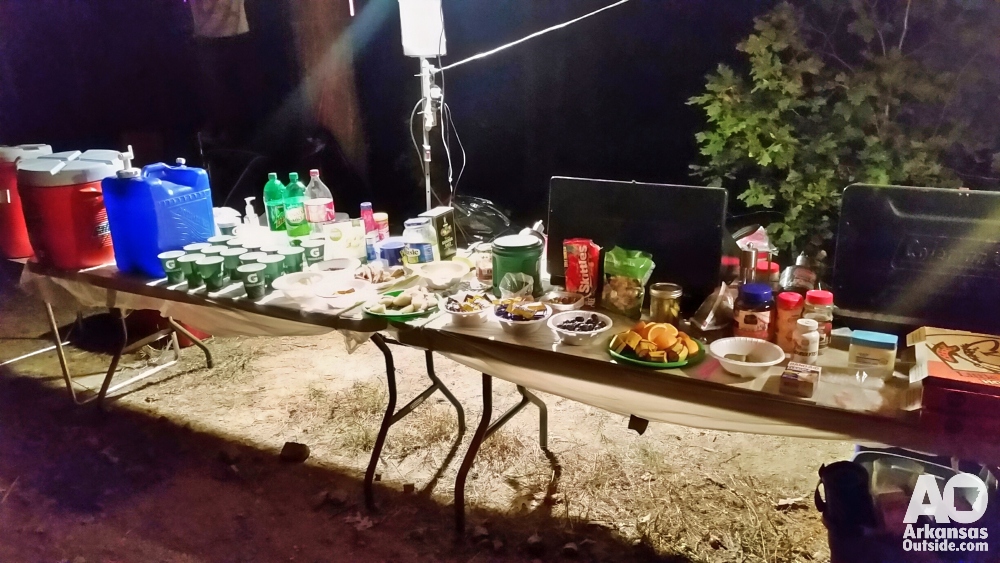
As the sport grew and volunteers stepped up to staff aid stations, things improved. Bananas, peanut butter and jelly sandwiches, Gatorade. A reasonable spread. And honestly, that is where most events, even well-funded corporate races, stopped evolving. You might get pickle juice and potato chips at a big-ticket event, but the soul is often missing. The volunteers are efficient, the tables are tidy, and the experience is forgettable.
Arkansas went a different direction.
The Friendly Competition Nobody Talks About
At events like the Arkansas Traveller 100 and the Ouachita Trail 50, there are two competitions happening simultaneously. There is the race between the runners, of course, the one that ends with a clock and a buckle. But there is a quieter, fiercer competition happening among the volunteers: which aid station crew can out-do every other aid station crew on the course.
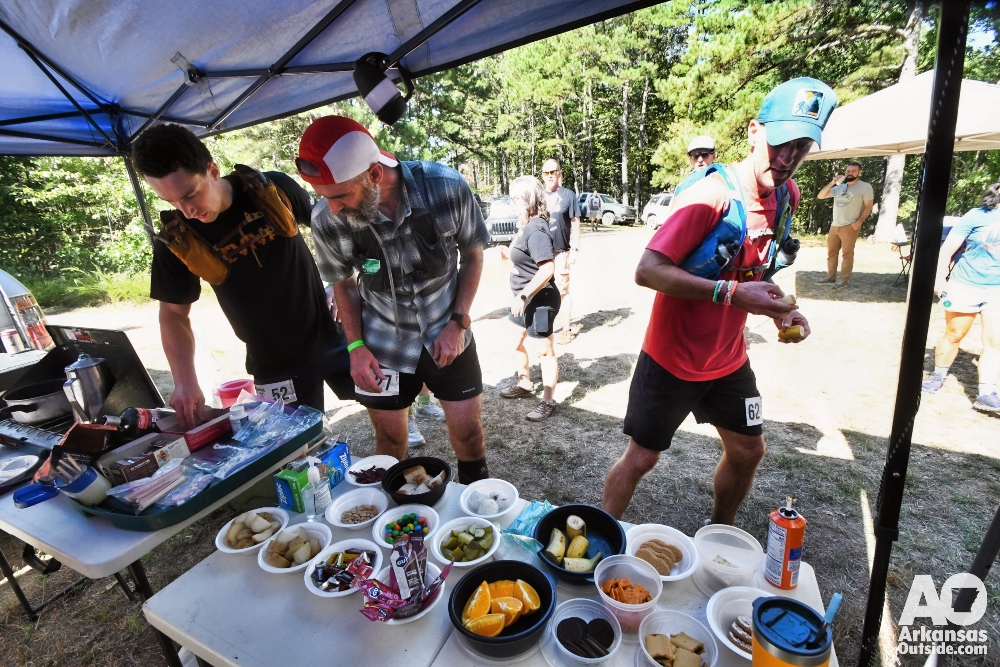
Aid station captains take this seriously. Not in a grim, corporate-retreat way, but in a “we stayed up until midnight making fresh pancake batter” kind of way. In the afternoon hours, when the front-runners are moving through, the aid stations are lively and well-stocked, full of energy and encouragement. Grilled cheese with bacon, made to order. Quesadillas hot off a camp griddle. Volunteers in good spirits, cheering names they read off race bibs.
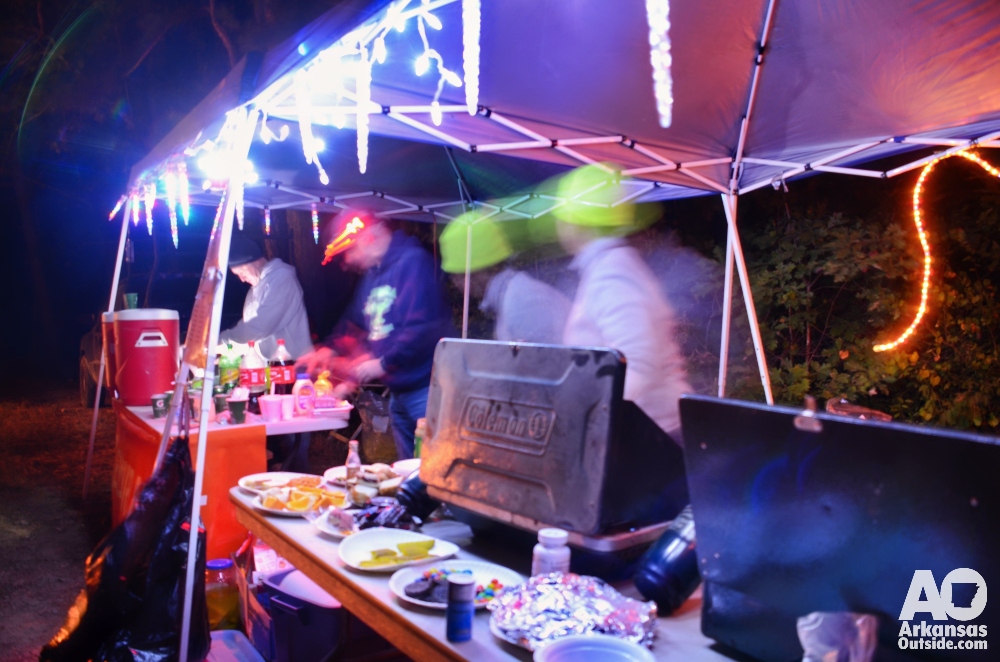
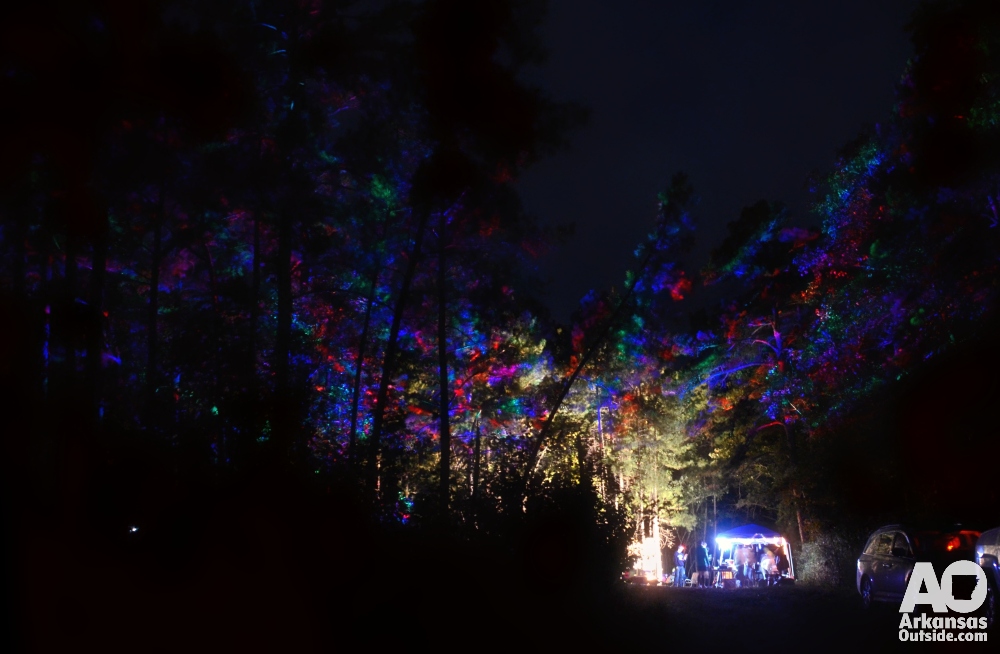
But the real magic happens after dark. When the mid and back-of-the-pack runners return through those same stations deep into the night, they find that the crews have not packed up and gone home. They have doubled down. The music is louder. The costumes have come out. Someone has strung a disco ball from a pine branch and the laser lights are sweeping through the trees. The griddle is still going, and there are pancakes at 2 in the morning for anyone who needs them.
This is not incidental. It is intentional. Race directors at Arkansas’s best events have long encouraged aid station captains to take ownership of their mile markers, to treat the aid station not as a logistical checkpoint but as an experience. A place a runner wants to arrive at and, just as importantly, feels motivated to leave.
Why the On-Course Party Matters More Than the Finish Line
Every race has a finish line party. Cold drinks, maybe a band, the warm glow of completion. And those moments are earned and real and worth celebrating. But consider what an on-course aid station does that a finish line cannot.
It finds you when you need it most. Not after the suffering is over, but right in the middle of it. A runner who passed through that same aid station in the afternoon sun, feeling strong and moving well, comes back through at mile 62 in total darkness, feet wrecked, pacer running out of encouraging things to say. That is when the lights appear through the trees. That is when they hear the music and smell something cooking and realize the crew is still there, still cheering, still calling out names.
The psychological lift of that moment is difficult to overstate. Runners who have been shuffling find their stride again. Runners who were considering a drop suddenly remember why they entered. And somewhere in the back of their mind, they remember: there are quesadillas here. The crew promised.
A great finish line is a reward. A great on-course aid station is a lifeline.
The Arkansas Traveller and the Ouachita Trail 50
Both the Arkansas Traveller 100 and the Ouachita Trail 50 have earned reputations that extend well beyond the state’s borders, and the aid station culture is a significant reason why. Runners travel from across the country for these races, and many will tell you they came back a second or third time not just for the trails, though the Ouachita National Forest is spectacular, but for the people stationed along them.
The Arkansas Traveller, in particular, has become a master class in what volunteer-run ultra events can be. The local running clubs and cycling groups who staff its aid stations return year after year, refining their setups, upgrading their menus, dialing in the playlists for both the afternoon crowd and the runners who will not pass through until well after midnight. They know the runners by name. They remember what someone ate on the way out when they come shuffling back through in the dark. It is, as one runner put it, a personalized pit stop for a few hundred people pushing their limits.
Spectator Sport, Redefined
There is a broader lesson here that extends beyond trail running. Community-run events thrive when spectators and volunteers are given real ownership of the experience. Corporate events manage. Community events invest.
When a volunteer drives out to a remote aid station, sets up a full kitchen, puts on a costume, and commits to being there through the afternoon and all the way into the dark hours of the morning, they are not fulfilling a job requirement. They are expressing genuine care for the people coming down that trail. That energy is palpable, and it changes what the race is.
This is spectator involvement at its absolute best. And it is why Arkansas ultra running events do not just have loyal runners. They have devoted communities.
The Quesadilla They Promised
She left that aid station in the afternoon with a full bottle and a smile, the volunteer’s promise of quesadillas carrying her through miles of ridge running and creek crossings and the slow fade of daylight into dusk into full dark. Now, deep into the night, her headlamp catches the first glow of the aid station through the trees. The music is louder than it was before. Someone is wearing a sequined jacket. The smell of a hot griddle drifts through the cold air.
A volunteer steps forward. “We have been waiting for you. Quesadilla?”
That is what the best aid stations do. They do not just fuel the body. They make a promise in the daylight and keep it in the dark. In Arkansas, the party is always just up the trail, and it is still going when you come back through.
A Challenge to Every Event Director Out There
Whether you are putting on a gravel cycling race through the river valley, a local 5K, a mountain bike enduro, or a backroads century ride, the model is right here and it does not cost much to follow it. Give your volunteers ownership. Let your aid station captains compete. Encourage them to bring a speaker, cook something real, wear a ridiculous hat. Tell them the riders or runners coming through have been out there suffering for hours and that a friendly face and a warm bite of food can change their entire day.
And if your event runs into the night, tell your crews to stay. The runners who come through after dark are not the fast ones. They are the ones for whom finishing is the hardest-earned thing they have ever done. They deserve a lit-up aid station and a hot meal and someone genuinely glad to see them every bit as much as the runner who came through six hours earlier in the afternoon sun.
The finish line party will always matter. But the events people talk about for years, the ones that sell out in minutes and have waiting lists and inspire genuine loyalty, are the ones where the party starts at mile one and is still going strong at mile 80 in the dark. Arkansas figured that out a long time ago. The rest of the endurance world is welcome to catch up.
More on Arkansas Ultra-Running Events.
This article was originally published on ArkansasOutside.com, your trusted source for outdoor news and updates in The Natural State. Unless otherwise credited, all photos included in this piece are the property of Arkansas Outside, LLC. We take pride in sharing the beauty and adventures of Arkansas through our lens—thank you for supporting our work!
One Response
Love, love, love…