
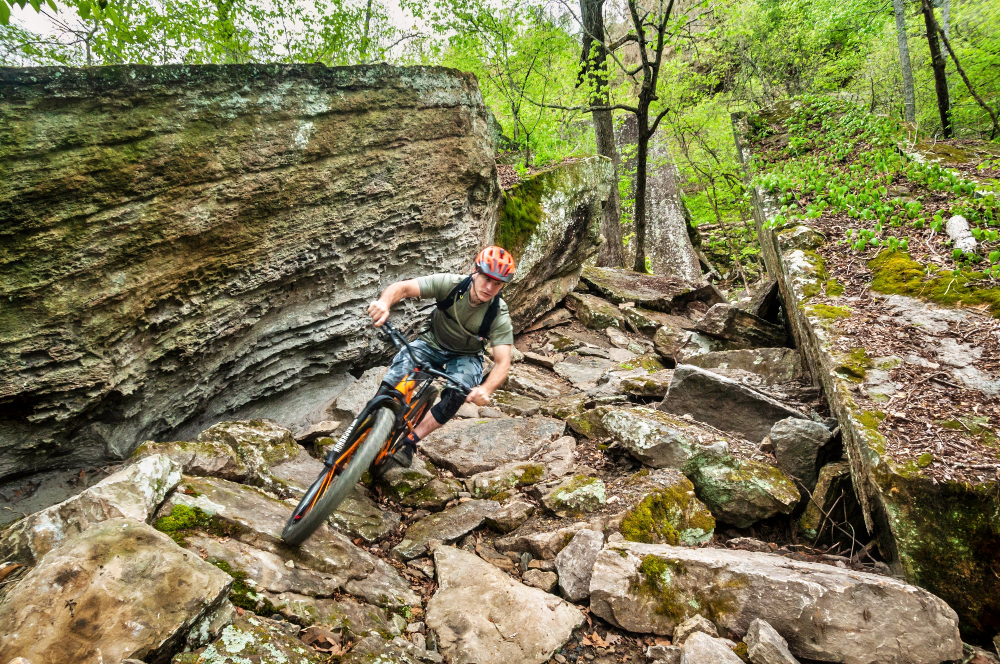

When Arkansas State Parks and the Arkansas Parks and Recreation Foundation unveiled their vision for the Monument Trails in 2019, they described something ambitious: a statewide collection of destination mountain biking trail systems designed to rank among the best in the country. Within just a few years, that vision became reality.
In 2023, Outside Magazine named the Arkansas Monument Trails the best mountain biking destination in the United States, putting Arkansas squarely on the national and international map for outdoor adventure.
Today, four Arkansas State Parks carry the Monument Trails designation: Hobbs State Park-Conservation Area near Rogers, Mount Nebo State Park in Dardanelle, Pinnacle Mountain State Park outside Little Rock, and Devil’s Den State Park near Fayetteville. Together, the systems include more than 75 miles of professionally designed singletrack for mountain bikers, hikers, and trail runners of all skill levels.
The Vision Behind the Monument Trails
The Monument Trails project grew from a partnership between Arkansas State Parks, the Arkansas Parks and Recreation Foundation, and the Walton Family Foundation. The idea was simple yet ambitious: to create world-class trail systems within Arkansas State Parks that could serve as gateways to larger outdoor experiences, while boosting tourism and conservation efforts.
The official vision emphasized destination trail systems that showcased Arkansas’ iconic landscapes through sustainable design, professional craftsmanship, and landscape art. The trails were intentionally built as shared-use systems welcoming mountain bikers, hikers, and trail runners alike.
Hobbs State Park Started It All
The first Monument Trails system officially opened at Hobbs State Park-Conservation Area in June 2019 with support from a $2 million Walton Family Foundation grant.
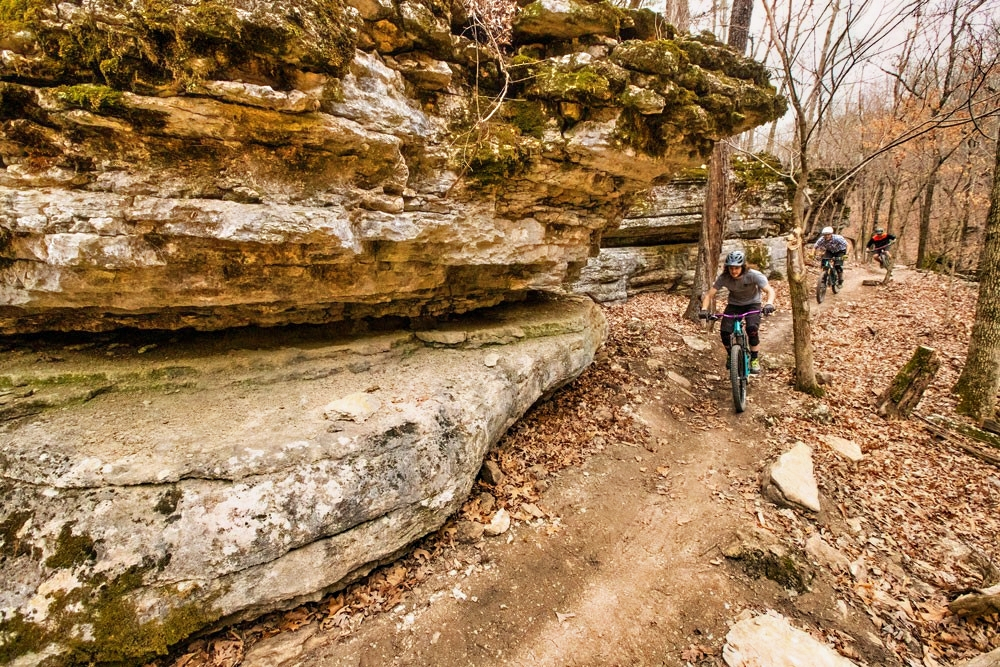
Located east of Rogers along Beaver Lake, Hobbs is Arkansas’ largest state park, spanning approximately 12,000 acres of Ozark terrain. Before the Monument Trails were built, much of the park’s lakeshore and interior landscape remained difficult to access. The new trail system changed that dramatically.
The Hobbs system introduced riders to modern trail design with flow trails, technical rock features, downhill sections, and sustainable construction techniques. The trail network includes the Karst Loop, Timberjack downhill trail, Sawtooth downhill trail, Return Trail, and Wolf Den Loop.
The nearly eight-mile Karst Loop became one of the signature rides in Arkansas, weaving through limestone formations, bluff lines, caves, and forest overlooking Beaver Lake. A purpose-built tunnel beneath Highway 12 connected riders to terrain previously inaccessible to the public.
Hobbs established the blueprint for the entire Monument Trails system: sustainable construction, technical excellence, scenic integration, and accessibility for a wide range of users.
Mount Nebo Raised the Bar
Just weeks after Hobbs opened, Arkansas State Parks unveiled the second Monument Trails system at Mount Nebo State Park near Dardanelle. The first phase opened July 27, 2019, supported by a $519,000 Walton Family Foundation grant.
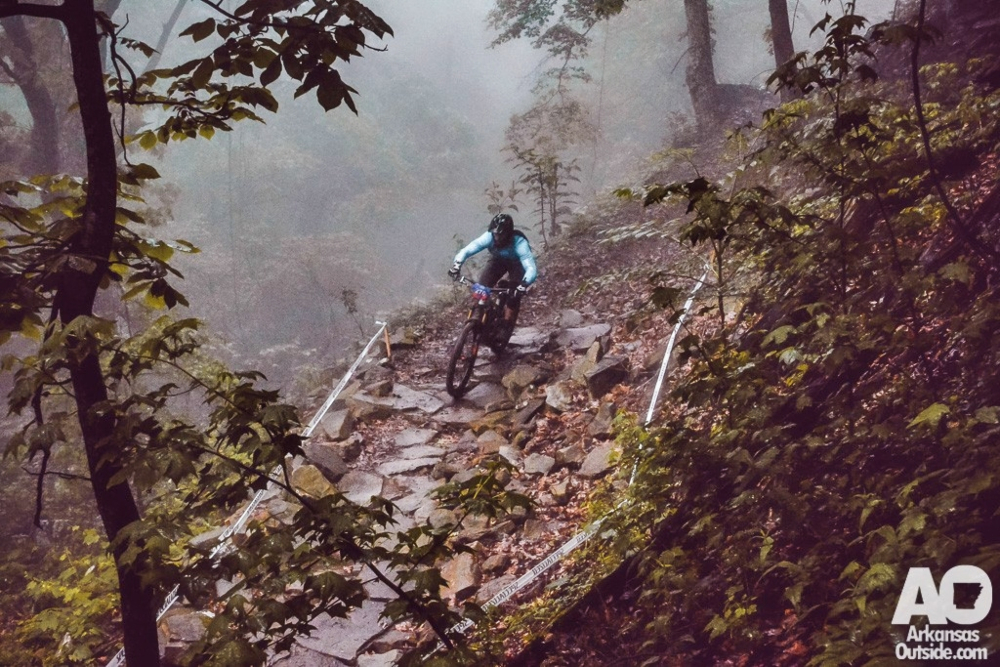
Mount Nebo offered a completely different riding experience from Hobbs. Rising sharply above the Arkansas River Valley, the mountain’s steep terrain allowed trail builders to create large berms, technical descents, jumps, and bluff-side riding with expansive views across the valley below.
Rock Solid Trail Contracting built the initial phase of the trail system, which eventually expanded to more than 20 miles. Popular routes include Chickalah Downhill, Hayes Creek Run, Lizard Tail, and Miller’s Goat.
The park’s historic Civilian Conservation Corps cabins also helped position Mount Nebo as a destination for multi-day riding trips. Riders could spend entire weekends exploring both the Monument Trails and the surrounding Arkansas River Valley.
Mount Nebo helped prove that the Monument Trails were not just a tourism initiative. The trails genuinely belonged among the best mountain bike systems in the country.
Pinnacle Mountain Brought Modern Trails to Central Arkansas
Pinnacle Mountain State Park became the third Monument Trails location, bringing professionally designed mountain bike trails to central Arkansas just outside Little Rock.
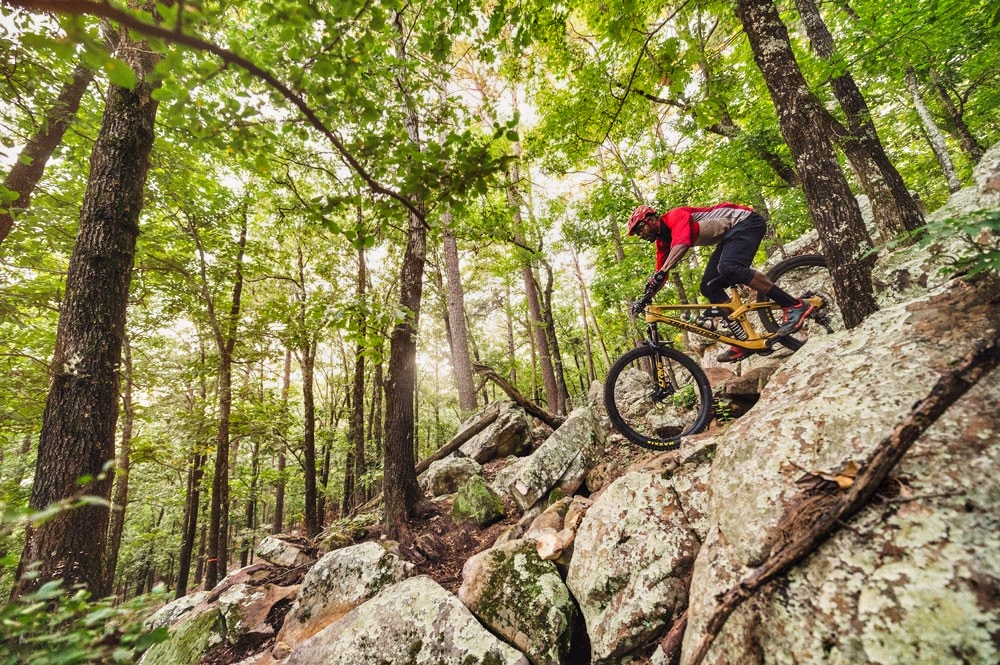
The new trails opened previously inaccessible sections of Middle Mountain and showcased the park’s unique volcanic and sandstone terrain. Unlike Pinnacle Mountain’s famous summit trails, the Monument Trails carried visitors deep into forests, rocky hillsides, creek crossings, and remote sections of the park rarely seen by casual visitors.
Pinnacle Mountain eventually grew into the largest Monument Trails system by number of trail segments, with more than 20 named trails including Jackfork, Coachwhip Loop, Dynamite, Carnasaw, Glade Runner, and Turkey Tracks.
The system includes beginner-friendly riding, technical rock sections, jump features, and fast flowing singletrack. Because of its location near Little Rock, Pinnacle became the most accessible Monument Trails system for urban riders in Arkansas.
The park also remains popular with hikers and trail runners since most Monument Trails are designed for multi-use access.
Devil’s Den Connected Arkansas Mountain Biking History to the Future
Devil’s Den State Park was the final Arkansas State Park added to the Monument Trails family, but it may have carried the deepest mountain biking history.
The park has long been considered the birthplace of organized mountain biking in Arkansas. The original Fossil Flats trail, built in the late 1980s, was among the first designated mountain bike trails in the state. For decades, riders gathered at Devil’s Den for races, festivals, and group rides.
Before becoming a Monument Trails destination, the original Fossil Flats trail underwent refurbishment by Rogue Trail Contracting in 2020.
On May 6, 2021, Arkansas State Parks dedicated 12 miles of new Monument Trails at Devil’s Den, bringing the park’s total trail mileage to approximately 18 miles.
The new trails were heavily inspired by the park’s Civilian Conservation Corps history. Trail names like Dollar-A-Day, Gold Brick, All You Can Eat, and We Can Take It reference CCC culture and history.
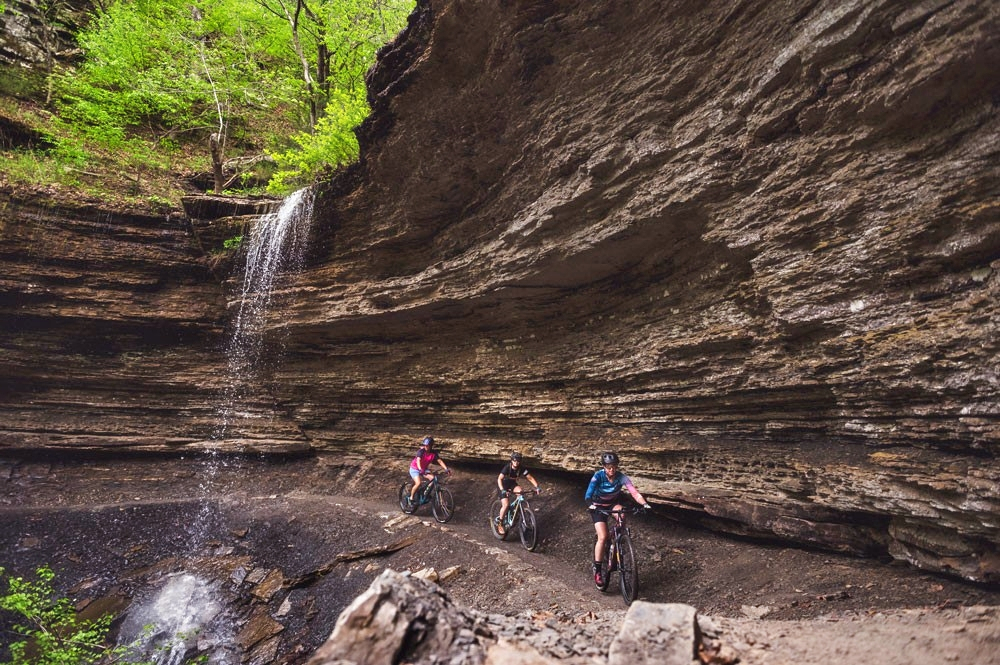
The nearly four-mile Devil’s Racetrack trail became the signature route, connecting the park’s northern and southern trail networks. Other additions included waterfall routes, bluff traverses, advanced downhill trails, and remote sections of forest that had never before been accessible to visitors.
Two purpose-built downhill trails, Sparky and Orville, added advanced riding opportunities with exposed bluffs, natural drops, and technical rock gardens.
What Makes a Monument Trail Different
The Monument Trails are about more than mileage and difficulty ratings. Each trail system is professionally designed and sustainably constructed by some of the country’s leading trail building firms, including Rock Solid Trail Contracting and Rogue Trail Contracting.
The systems are intentionally designed to include scenic overlooks, stopping points, architectural features, and landscape integration. Unlike many older trail systems that evolved organically over decades, the Monument Trails were purpose-built from the beginning.
They are also free to use and designed for shared recreation. Mountain bikers, hikers, and trail runners all use the same systems throughout Arkansas State Parks.
The broader partnership between Arkansas State Parks, the Arkansas Parks and Recreation Foundation, and private philanthropy has also become a model for expanding outdoor recreation access without relying solely on state funding.
National Recognition Changed Arkansas Outdoor Recreation
By 2023, the Monument Trails had earned national attention throughout the outdoor industry. Outside Magazine named the Arkansas Monument Trails the best mountain biking in the United States as part of its annual travel awards.
The recognition validated years of planning, construction, and collaboration while elevating Arkansas’ reputation far beyond the Bentonville mountain biking scene.
The Monument Trails now stretch across dramatically different landscapes, from the Ozark karst terrain of Hobbs to the sandstone around Pinnacle Mountain, the bluff lines of Mount Nebo, and the forested valleys of Devil’s Den. Each system reflects the geology, ecology, and history of its park while maintaining a consistently high standard of design and construction.
What started as an ambitious state parks project has become one of the defining outdoor recreation success stories in Arkansas history.
This article was originally published on ArkansasOutside.com, your trusted source for outdoor news and updates in The Natural State. Unless otherwise credited, all photos included in this piece are the property of Arkansas Outside, LLC. We take pride in sharing the beauty and adventures of Arkansas through our lens—thank you for supporting our work!