

Arkansas mountain bikers have long known that the Ouachita Mountains offer some of the most rugged and rewarding backcountry riding in the South. Now, a federal outdoor recreation law could bring new national attention to one of the state’s classic long-distance rides.
The Biking on Long Distance Trails Act, better known as the BOLT Act, became law as part of the Expanding Public Lands Outdoor Recreation Experiences Act, or EXPLORE Act, on January 4, 2025. The law directs federal land management agencies to identify existing long-distance bike trails and places where similar trails could be developed or completed.
For Arkansas, the most important name in that conversation is the Ouachita National Recreation Trail. The trail’s bike-legal section in Arkansas already meets the basic distance threshold for consideration, and it has long carried national credibility as an IMBA Epic ride.
What the BOLT Act Does
The BOLT Act does not automatically designate trails or send a check to local trail organizations. Instead, it creates a federal process to recognize long-distance bike routes and identify what those trails need to better serve riders and nearby communities.
Under the law, federal agencies are directed to create a catalog of at least 10 existing long-distance bike trails of at least 80 miles, develop an inventory of at least 10 areas where long-distance trails could be developed or completed, coordinate with stakeholders, identify needs for signage, maps, and promotional materials, and report those findings to Congress.
That may sound procedural, but recognition matters. A national catalog can help riders discover routes, help land managers make the case for maintenance and planning needs, and give gateway communities a stronger connection to the growing bikepacking and long-distance mountain biking audience.
Why the Ouachita Trail Fits the Conversation
The Ouachita National Recreation Trail runs across the Ouachita Mountains from eastern Oklahoma into central Arkansas. The U.S. Forest Service describes the trail as spanning 192 miles across the Ouachita National Forest, with an additional 32 miles continuing on private and other public lands to Pinnacle Mountain State Park west of Little Rock. The full route is commonly described as about 223 miles.
For mountain bikers, the key section is the Arkansas IMBA Epic segment. Friends of the Ouachita Trail lists 108 miles of the route as open to mountain biking, extending from mile 54.1 on the Talimena National Scenic Byway near the Rich Mountain Fire Tower to mile 160.4 at Highway 7 north of Hot Springs.
That makes the Ouachita Trail a strong candidate for BOLT attention. It is long, remote, predominantly natural surface, already recognized by the mountain biking community, and tied to communities that benefit from outdoor recreation travel.
A Ride Built for Commitment
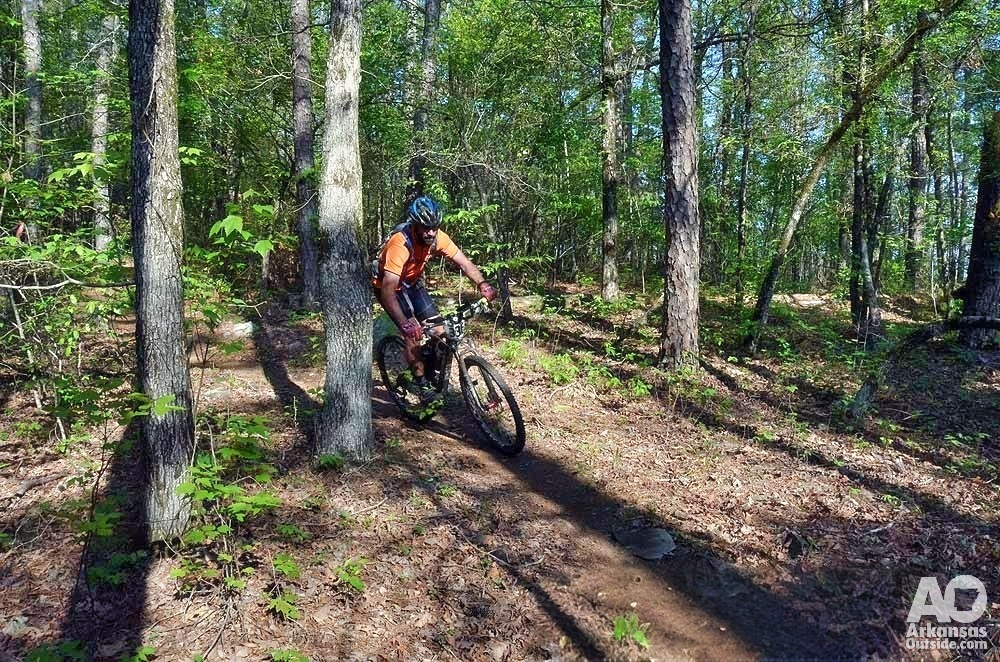
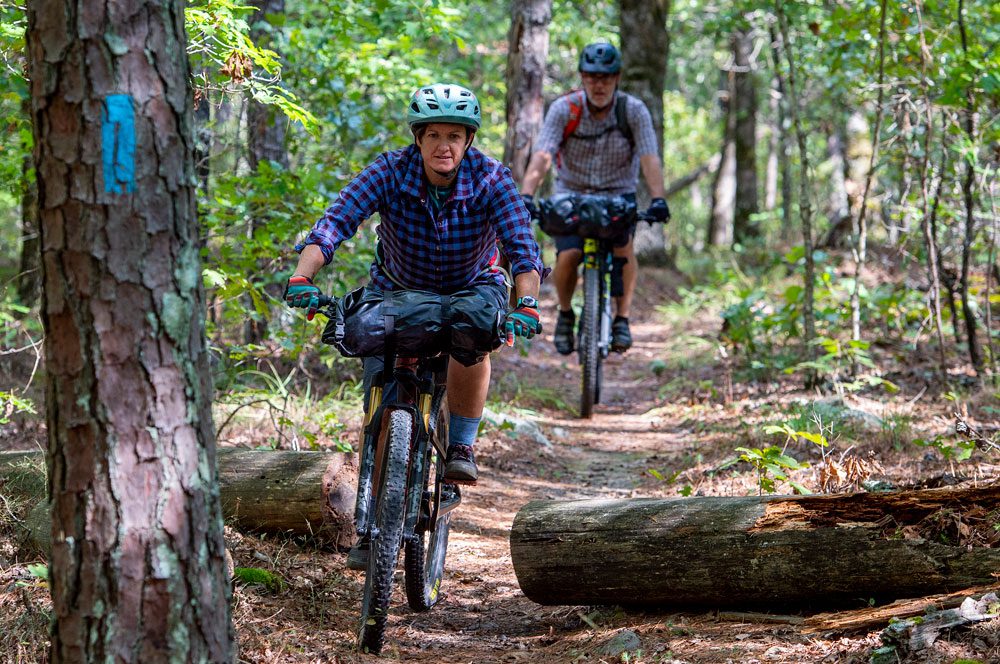
The Ouachita Trail is not a flow trail, and it was not built as a modern mountain bike park experience. It is a rugged backcountry trail that rewards preparation, fitness, patience and respect for changing trail conditions.
Riders should expect sustained climbs, steep descents, stream crossings, rocky ridgelines, remote sections and plenty of places where walking the bike may be the best option. Friends of the Ouachita Trail notes that riding the full mountain bike section requires a strong commitment to expedition-style mountain biking and camping.
The western ridges near Logan Gap and Rich Mountain are especially known for rocks and fast-growing vegetation. Volunteer maintenance makes the route possible, but the terrain and the length of the corridor make upkeep a constant challenge.
The Shelter System Adds to the Adventure
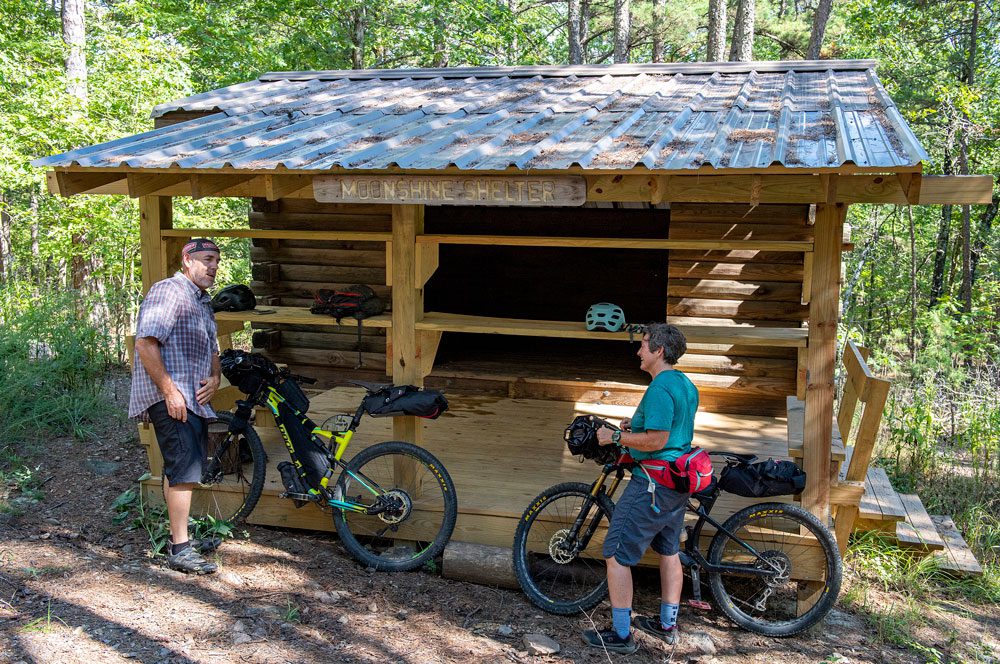
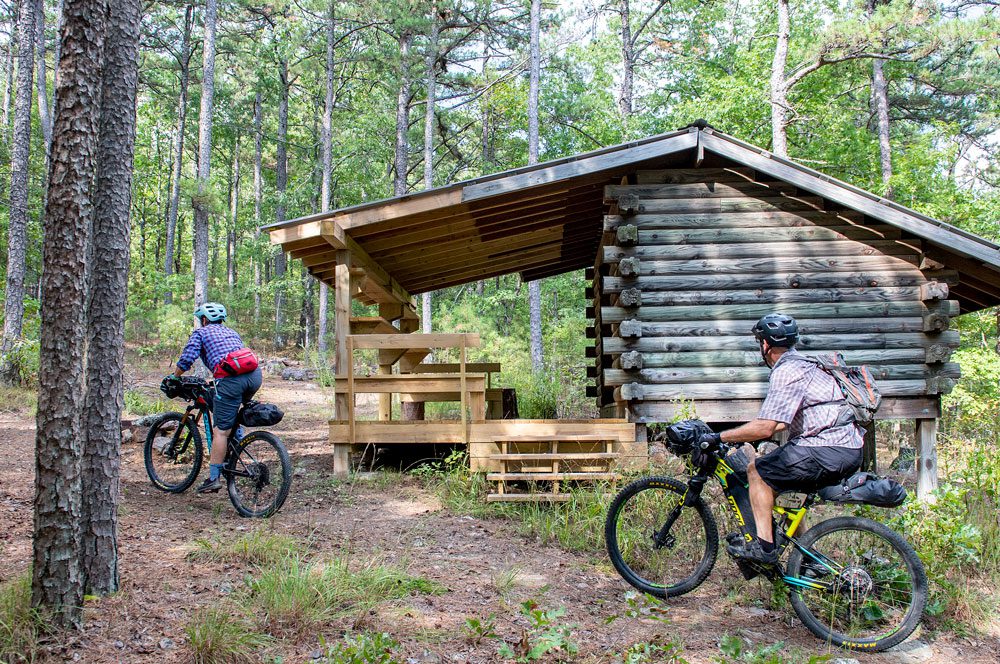
One of the more unusual features of the mountain bike section is the system of trail shelters. Friends of the Ouachita Trail describes log cabin-style shelters with sleeping space and porches located roughly every 10 miles along the Epic section.
For bikepackers, that infrastructure is a major advantage. The shelters can reduce the need to carry as much overnight gear and provide welcome cover during multi-day trips. They are available on a first come, first served basis and should not be treated as guaranteed lodging, but they remain one of the trail’s standout backcountry features.
Gateway Communities Stand to Benefit
Mena and Hot Springs are two of the Arkansas communities most naturally connected to the Ouachita Trail experience.
Mena sits near the western side of the bike-legal Arkansas section, close to Rich Mountain, Queen Wilhelmina State Park and some of the trail’s most demanding terrain. Hot Springs is near the eastern end of the mountain bike section and already serves as a major outdoor recreation and tourism hub.
National attention through the BOLT process could help connect more riders to lodging, food, bike shops, shuttle options and other visitor services in these communities. It could also strengthen the case for better mapping, signage and long-term trail stewardship.
The Arkansas High Country Route Is Part of the Bigger Story
The Ouachita Trail is not the only Arkansas long-distance cycling asset gaining attention. The Arkansas High Country Route, a roughly 1,000-mile bikepacking route developed by Adventure Cycling Association, has helped introduce riders from around the country to Arkansas’s gravel roads, mountain towns and public lands.
While the High Country Route is a mapped bikepacking route rather than a single managed trail corridor, its growth reflects the same trend behind the BOLT Act. Riders are looking for longer, more adventurous routes, and Arkansas has the terrain and communities to meet that demand.
How Riders Can Help
BOLT recognition, if it comes, would not replace local stewardship. The Ouachita Trail depends on volunteers, land managers and riders who understand that remote trails require ongoing care.
Anyone who wants to support the trail can start with Friends of the Ouachita Trail, the nonprofit volunteer organization that helps maintain the Ouachita National Recreation Trail and other regional trails. Riders can also help by reporting trail conditions, volunteering for maintenance, joining local trail organizations, and riding within posted rules.
The Ouachita Trail has never needed hype to be special. It has earned its reputation mile by rocky mile. The BOLT Act could simply help more riders understand what Arkansas has had all along: a true backcountry mountain biking adventure in the heart of the Ouachitas.
This article was originally published on ArkansasOutside.com, your trusted source for outdoor news and updates in The Natural State. Unless otherwise credited, all photos included in this piece are the property of Arkansas Outside, LLC. We take pride in sharing the beauty and adventures of Arkansas through our lens—thank you for supporting our work!