
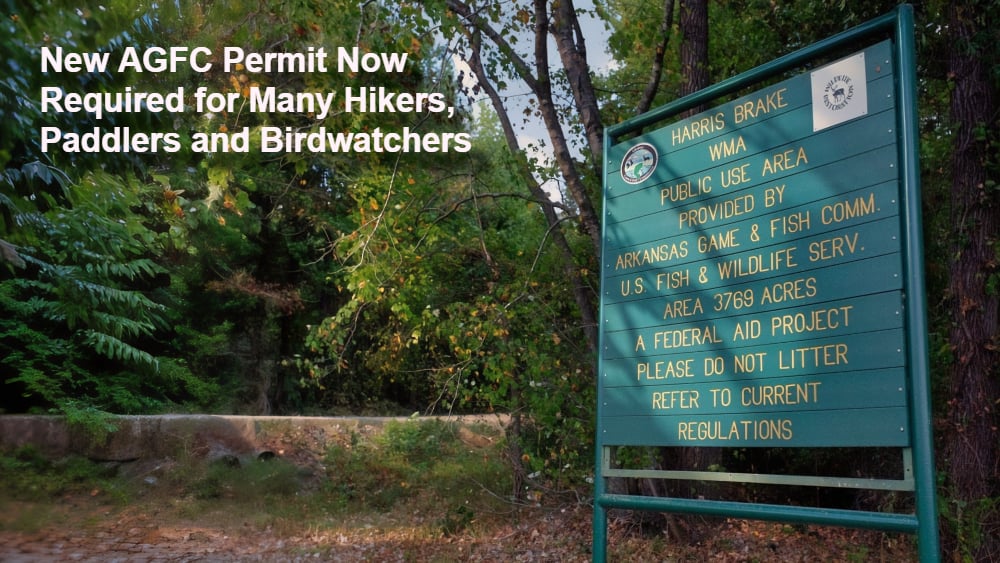

*A $10.50 annual fee applies at dozens of wildlife management areas and lakes across Arkansas, but not all of them*
LITTLE ROCK, Arkansans who hike, paddle, camp, or birdwatch on state wildlife land now need more than a good pair of boots. As of July 1, many of them also need a permit.
The Arkansas Game and Fish Commission has begun requiring an annual WMA/Lake Conservation Permit for visitors age 16 and older who use AGFC-owned wildlife management areas and lakes and who don’t already hold a valid Arkansas hunting or fishing license. The permit costs $10.50 and can be bought anywhere AGFC licenses are sold, including agfc.com and the agency’s mobile app.
For decades, hunters and anglers were the only visitors required to buy a permit to use those properties. Now hikers, paddlers, campers, wildlife photographers and birdwatchers are included, too.
Who needs it
The permit applies to anyone 16 or older visiting an AGFC-owned WMA or lake who does not already hold a valid Arkansas hunting or fishing license. Covered activities include hiking, kayaking and canoeing, birdwatching, wildlife photography, camping and other recreational use of AGFC land.
Hunters and anglers are covered by their existing licenses and do not need to buy the permit separately.
The requirement does not apply to people who are traveling through a WMA on a designated through-trail or direct route without stopping to recreate, who stay on a public road not maintained by AGFC, or who travel a navigable waterway without setting foot on AGFC property. The phrase “navigable waterway” is vague, and we were not able to get a list of these waterways in the state.
Not every WMA is covered
The permit applies only to land AGFC actually owns, and that’s a smaller share of the state’s wildlife management areas than many visitors assume. Arkansas has roughly 140 WMAs, but only 106 are owned outright by the commission. The new requirement covers 61 of those WMAs and 41 AGFC-owned lakes, according to a list the agency provided to reporters.
Many other WMAs are managed cooperatively with agencies such as the U.S. Forest Service, the U.S. Army Corps of Engineers or the Arkansas Natural Heritage Commission, and those sites are not affected by the new fee. White Rock WMA, co-managed with the Forest Service, and Devil’s Eyebrow Natural Area, co-managed with the Natural Heritage Commission, are among the properties that remain free to access without the new permit. State parks, national forests and Corps of Engineers lakes are also exempt.
AGFC has said it plans to install signs with QR codes at WMA and lake entrances over the coming months to direct visitors to the permit. For now, the agency recommends visitors check a property’s ownership before assuming the fee applies. During a call to the AGFC, we were told that they did not have a current list or map available of the Commission-owned WMAs. The representative said that they may have something available by the end of the week.
What replaced
The new fee replaces two things: a free WMA General Use Permit that AGFC introduced in 2017 to track visitor numbers, and a $5 camping permit the agency had used since 2024. Both have been discontinued.
AGFC spokesman Trey Reid said the paid permit gives the agency a funding mechanism for visitors who use WMAs and lakes but don’t contribute through hunting or fishing license sales. Randy Zellers, another AGFC spokesman, said the change had been “a few years in the making” and is meant to capture a broader base of recreational users, whose numbers on Game and Fish land have grown. Zellers said tracking those users could eventually help justify new amenities such as kayak launches or additional trails.
How the rule became public
The requirement drew little attention before it took effect. A legal notice announcing the rule change ran in a March 16 newspaper listing alongside hundreds of other notices, according to reporting by the Arkansas Democrat-Gazette, and many visitors first learned of the fee when it appeared in the 2026-27 Fishing Guidebook.
Before adopting the rule, AGFC collected 8,447 public survey responses on the proposal: 41.5% supported the conservation permit, 24.7% opposed it, and the rest expressed no opinion, the agency has said. Opponents submitted more written comments than supporters did.
Reaction since the requirement took effect has been mixed. Some outdoor recreation groups, including the Arkansas chapter of the Nature Conservancy, say they support dedicated funding for WMA maintenance but want AGFC to more clearly explain how permit revenue will be used. Others, including Ozark Society leadership, have criticized charging a fee for basic access to public land they consider already paid for through taxes.
AGFC says the rollout will emphasize education over enforcement. Zellers said the agency isn’t looking to write citations during the transition, though officials have said the permit will eventually be enforced similarly to hunting and fishing license requirements.
A familiar debate
Arkansas has been here before. In the early 1990s, Arkansas State Parks explored charging general entrance fees at state parks to raise operating revenue. The idea drew strong public opposition. Many Arkansans argued they already paid for the parks through taxes, and the state ultimately abandoned widespread entrance fees. Today, most Arkansas State Parks remain free to enter, with charges limited to specific amenities such as camping, lodging or guided programs.
The new AGFC permit differs in that it applies only to Commission-owned WMAs and lakes, not the state park system. But the underlying question is much the same one Arkansas debated three decades ago: should access to public outdoor land be free, or should everyone who uses it help pay for its upkeep?
Context: conservation funding beyond the new fee
The new permit is a small piece of a much larger funding picture. Since 1997, Arkansas has collected a dedicated one-eighth-cent conservation sales tax approved by voters as Amendment 75, with proceeds split among AGFC (45%), Arkansas State Parks (45%), the Division of Arkansas Heritage (9%) and Keep Arkansas Beautiful (1%). Because it’s a sales tax rather than a fixed appropriation, collections generally rise with consumer prices, even though inflation has eroded the purchasing power of each tax dollar collected in 1997.
AGFC has not publicly tied the new conservation permit to a shortfall in Amendment 75 revenue. Agency officials have instead framed the fee as a matter of fairness, asking non-hunting, non-fishing visitors to contribute directly to the upkeep of the properties they use, the way hunters and anglers already do through license sales. Rising operating costs and growing visitor numbers may be part of the broader financial backdrop, but AGFC’s public explanation for the permit centers on spreading the cost of maintenance across a wider group of users, not closing a specific budget gap.
Questions and Confusion Remain
Despite the new permit taking effect on July 1, many questions remain about exactly where it applies and how visitors are expected to know whether they need one.
When Arkansas Outside contacted the Arkansas Game and Fish Commission for clarification, the agency representative was unable to provide a public list or map identifying all Commission-owned wildlife management areas covered by the new permit. While AGFC supplied a list of affected properties to members of the media, that information has not yet been presented in an easy-to-use format for the public. Without a searchable map or clearly identified ownership information on the agency’s website, visitors may have difficulty determining whether a permit is required before arriving at a destination.
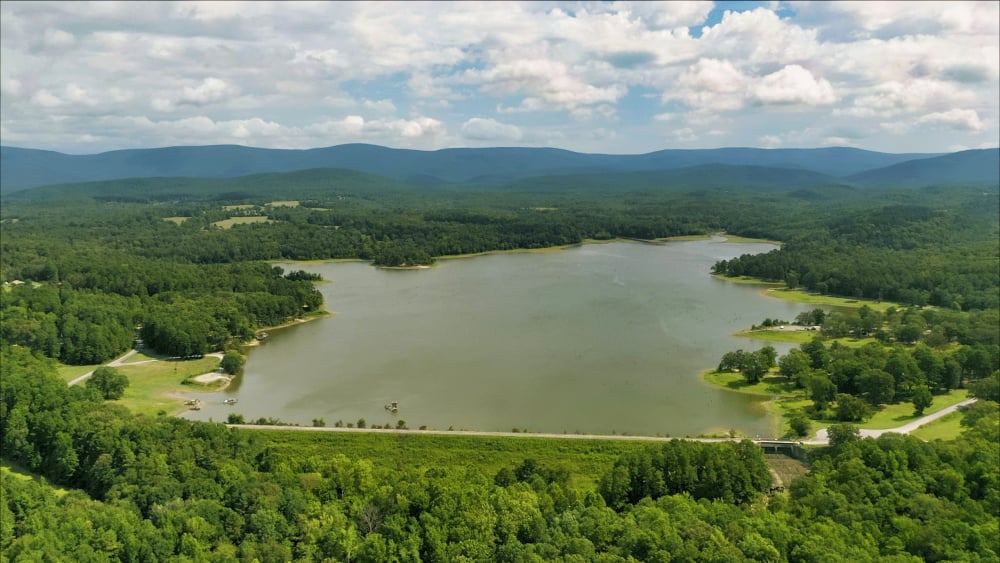
The uncertainty extends beyond wildlife management areas. Cane Creek Lake appears on AGFC’s list of covered properties, yet the southwest side of the lake is home to Cane Creek Lake State Park, where visitors can rent kayaks and canoes for use on the lake. When Arkansas Outside contacted the state park, staff members said they were unsure whether visitors renting boats through the park would also be required to purchase the AGFC conservation permit before launching.
Situations like this illustrate the challenges facing both visitors and the agencies responsible for serving them. At least during the early weeks of implementation, there appears to be considerable confusion both within AGFC offices and among staff in the field regarding how the new requirement applies in specific situations.
As more questions arise, many outdoor enthusiasts will be looking to AGFC for additional guidance, including a comprehensive public map of affected properties, answers to common scenarios, and clearer information for first-time visitors who simply want to enjoy Arkansas’s public lands without worrying about inadvertently violating a new regulation.
What it could mean for visitors
At $10.50 a year, the permit is unlikely to deter regular hikers, paddlers and birdwatchers who already return to AGFC land often. The bigger question is whether casual visitors and out-of-state tourists will know the fee exists before they show up. Because the rule applies only to a subset of Arkansas’s wildlife management areas, confusion over which sites require a permit is likely to continue until AGFC publishes a complete, easy-to-find list and finishes installing signage at affected properties.
Visitors planning a trip to an AGFC-owned WMA or lake can check the agency’s website or call an AGFC regional office to confirm whether a specific property requires the new permit before they go.
This article was originally published on ArkansasOutside.com, your trusted source for outdoor news and updates in The Natural State. Unless otherwise credited, all photos included in this piece are the property of Arkansas Outside, LLC. We take pride in sharing the beauty and adventures of Arkansas through our lens—thank you for supporting our work!
2 Responses
This is wrong in every aspect.
Taxes paid should already cover any expenses by the AFGC.
Whats next? A fee for breathing, collecting rain water, star gazing? Where do we draw the line?
I don’t disagree with the rule for the most part. However, what about us old people who maybe use a trail once or twice a year if that? Couldn’t there be a senior lifetime permit? We aren’t the ones who litter the area and mess it up. We’re the ones who pick other people’s trash up and obey the rules. Thank you in advance for any consideration.