

Estimated reading time: 5 minutes
A 66-acre piece of Madison County forest will remain protected from future development under a new conservation agreement announced by the Northwest Arkansas Land Trust.
The Northwest Arkansas Land Trust, or NWALT, announced the permanent protection of the forested property within the War Eagle Creek watershed. A conservation easement will protect the land’s wildlife habitat, streams, forests, and other natural resources for future generations.
The project adds another piece to conservation efforts within the greater Beaver Lake watershed, where protecting forests and stream corridors can play an important role in maintaining water quality as Northwest Arkansas continues to grow.
Protecting Forest and Streams in Madison County
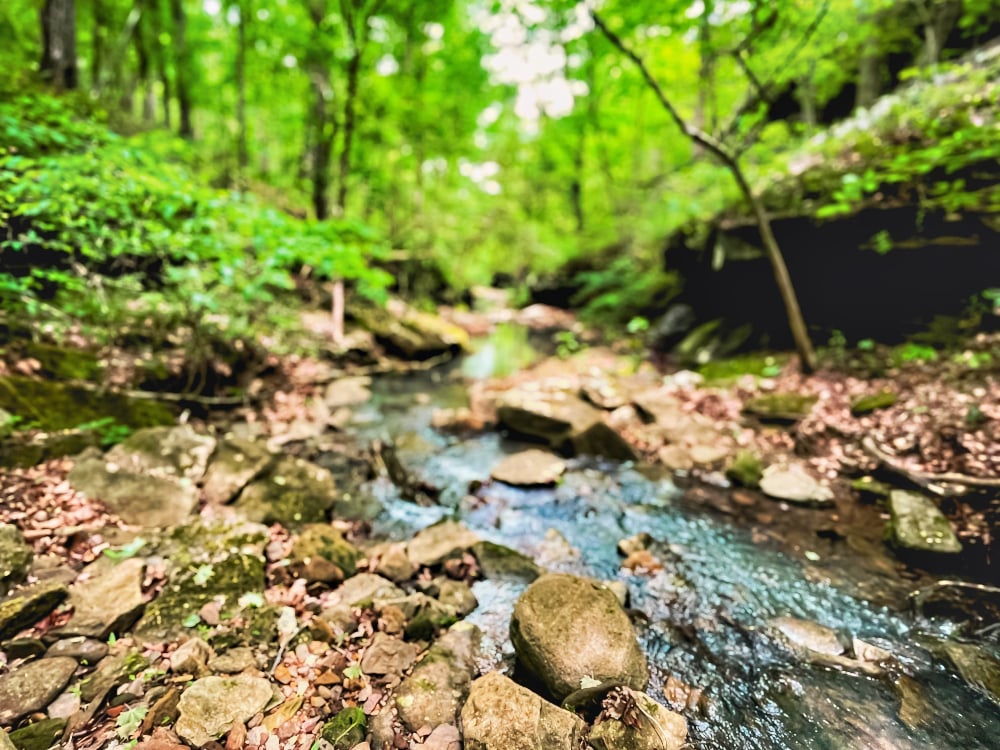
The 66-acre property, owned by Rebecca Livingston and Billy Minter, includes more than 3,400 linear feet of riparian habitat along two streams. It also contains a healthy mixed hardwood forest and remains free of permanent structures.
For the landowners, the conservation easement offered a way to keep the property looking and functioning much as it does today.
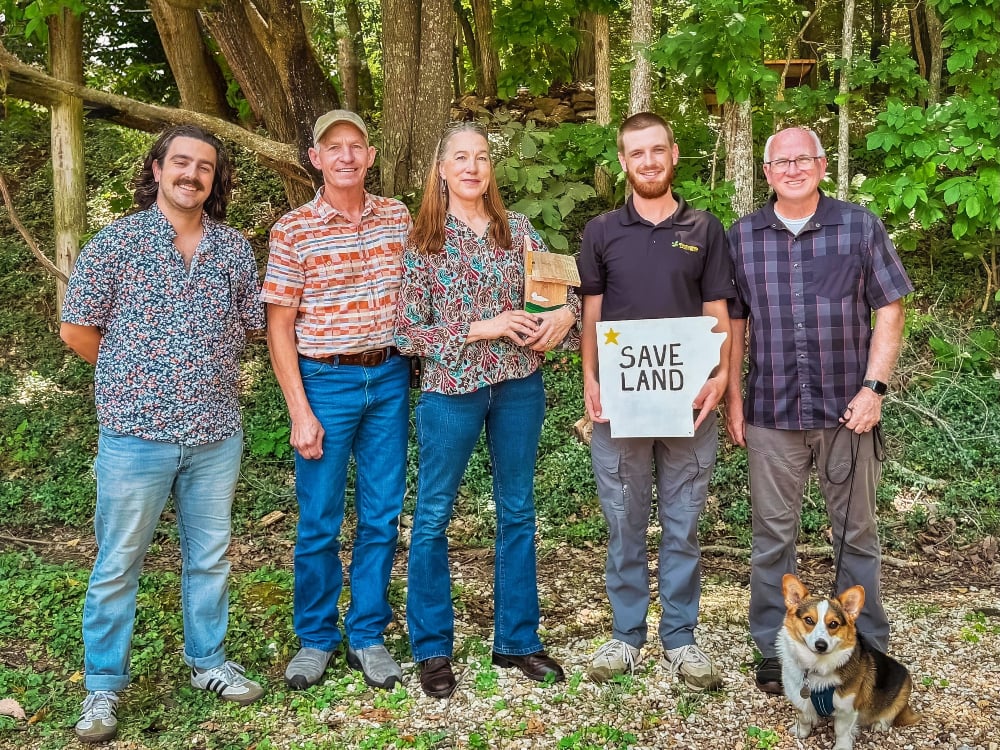
“We wanted to ensure our 66 acres would remain true to the rural landscape we value,” Livingston said. “Placing a conservation easement was a straightforward and rewarding way to protect the land for wildlife and habitat.”
A conservation easement is a voluntary legal agreement that allows a landowner to permanently protect specific conservation values of a property. The land generally remains privately owned while restrictions within the agreement help protect its natural features into the future.
A High-Value Conservation Property
According to NWALT, the Livingston-Minter property received a strong conservation ranking because of its intact forests, riparian resources, and ecological importance.
Field assessments found healthy early-successional hardwood forest with minimal invasive species. Wetlands, natural springs, forest habitat, and streams were also identified among the property’s important conservation features.
Those characteristics make the property valuable beyond its boundaries.
Healthy forests and streamside vegetation can help slow runoff, reduce erosion, provide wildlife habitat, and protect waterways. That becomes increasingly important as development expands into previously rural parts of Northwest Arkansas.
Protecting the War Eagle Creek and Beaver Lake Watersheds
The conservation project is also part of a larger effort to protect water quality within the War Eagle Creek and Beaver Lake watersheds.
The property sits within the greater Beaver Lake watershed. According to NWALT, its protection supports the Beaver Lake Watershed Protection Plan and the goals of the War Eagle Creek Watershed Initiative.
“Every acre we protect in the War Eagle watershed is an acre that protects the water quality of Beaver Lake,” NWALT Land Protection Director Ben Speight said.
Speight credited partnerships with Beaver Water District and Beaver Watershed Alliance, as well as the landowner’s decision to permanently conserve the property.
The connection between land conservation and water quality is especially important in this part of Arkansas. What happens on forested hillsides and along small streams can eventually affect larger waterways downstream.
Protecting those areas before they are fragmented or developed can help preserve the natural systems that support the watershed.
Wildlife Habitat Gets Permanent Protection
Water isn’t the only beneficiary.
The property provides wildlife habitat and lies within a U.S. Forest Service Forest Legacy Area. Conservation assessments determined that protecting the property supports several state and regional priorities, including wildlife habitat, riparian corridors, and watershed resilience.
Maintaining connected forests and stream corridors can be particularly valuable for wildlife. These natural corridors give animals places to feed, shelter, reproduce, and move across the landscape.
Permanent conservation can also help prevent habitat fragmentation as nearby areas experience development.
Partnerships Help Make Conservation Possible
The project received funding in part from Beaver Water District and a Natural Resources Conservation Service grant managed by Beaver Watershed Alliance.
Those partnerships demonstrate how private landowners, conservation organizations, water utilities, and public programs can work together to protect important landscapes without necessarily moving the property into public ownership.
For Northwest Arkansas, that approach could become increasingly important.
Rapid growth brings new homes, businesses, roads, and infrastructure. At the same time, the forests, streams, farms, and open spaces surrounding those communities are part of what makes the region attractive in the first place.
Strategic conservation can help maintain that balance.
Conserving Northwest Arkansas as the Region Grows
The Livingston-Minter conservation easement represents 66 acres within a much larger Northwest Arkansas landscape. But projects like it can have an impact beyond the individual property.
By protecting forests and stream corridors before development occurs, conservation groups and willing landowners can help maintain wildlife habitat, water quality, and the rural landscapes that define much of the region.
NWALT says the easement demonstrates how strategic land conservation can protect natural resources while Northwest Arkansas continues to grow.
The Northwest Arkansas Land Trust is a nationally accredited nonprofit organization working to conserve land with ecological, agricultural, scenic, recreational, and historical significance. The organization works with private landowners and other partners through conservation easements and land acquisition.
For outdoor enthusiasts, conservation projects like this may not always result in a new trail, park, or public recreation area. Their value can be less visible but just as important. Protecting forests, streams, wildlife corridors, and watersheds helps preserve the larger natural landscape that makes outdoor recreation in Arkansas possible.
All photos courtesy of Northwest Arkansas Land Trust.
This article was originally published on ArkansasOutside.com, your trusted source for outdoor news and updates in The Natural State. Unless otherwise credited, all photos included in this piece are the property of Arkansas Outside, LLC. We take pride in sharing the beauty and adventures of Arkansas through our lens—thank you for supporting our work!