

Estimated reading time: 10 minutes
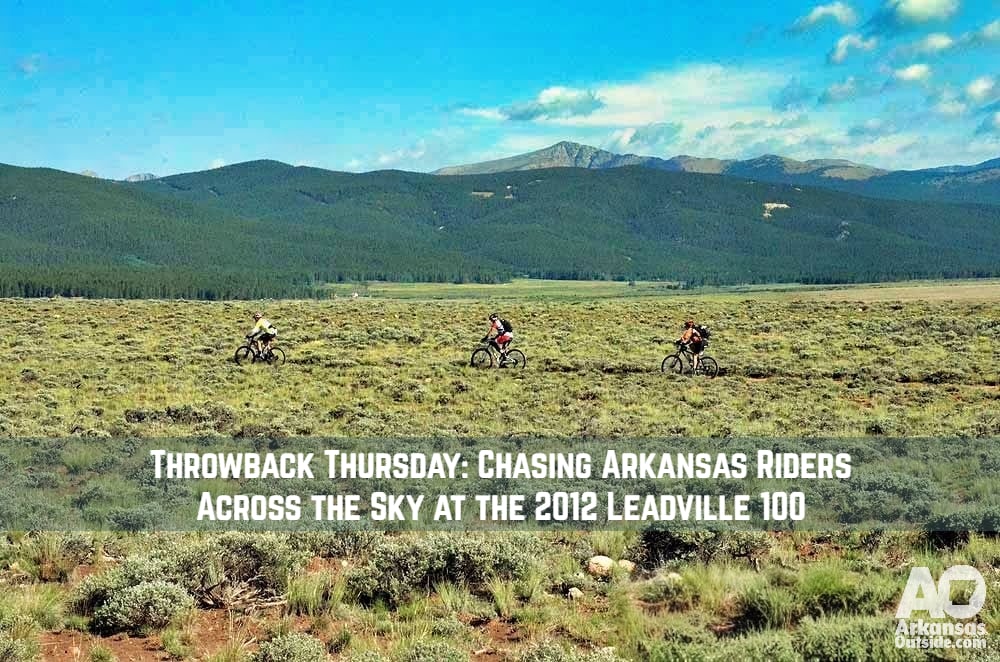
As the Leadville Trail 100 MTB prepares to roll out of Leadville, Colorado, again this weekend, we’re going back to 2012, when Arkansas Outside traveled west to follow a group of Arkansas mountain bikers taking on one of the most legendary endurance races in the country.
Fourteen years ago, Arkansas Outside was still a pretty new publication.
We had launched less than a year earlier, and in August 2012, photographer and fellow mountain biker Cliff Li and I packed up and headed west. Our destination was Leadville, Colorado, the highest incorporated city in the United States and home of the Leadville Trail 100 MTB.
We weren’t there to race.
Our job was to chase Arkansans around the Colorado mountains with cameras, notebooks, and whatever lungs we could muster at 10,000 feet.
What followed became a three-part series on Arkansas Outside: “The Calm Before,” “The Race Begins,” and “The Finish.” (More photos at these links) Looking back at those stories today, they capture more than a mountain bike race. They capture what made Leadville special then, and what continues to draw riders back to the “Race Across the Sky.”
Welcome to Leadville
We arrived in Leadville in time for the pre-race activities on Friday, August 10, 2012.
The atmosphere was hard to describe.
Leadville isn’t simply a 100-mile mountain bike race. Even then, it felt like a pilgrimage for endurance cyclists.
Riders came from across the country and around the world. Professionals lined up alongside dedicated amateurs. Some had spent years trying to get into the race. Others had built entire seasons around reaching Leadville prepared for a course that climbed from an already breath-stealing elevation of more than 10,000 feet to above 12,000 feet.
The reward for most wasn’t prize money.
It was a belt buckle.
Finish under 12 hours and you earned the coveted Leadville buckle. Break nine hours and you received the larger buckle, a piece of hardware that carried considerably more meaning than its size suggested.
Before the race, founder Ken Chlouber delivered his famous pre-race pep talk and message to riders: dig deep.
Arkansas also received a little special attention.
“We have racers from all 50 states, even Arkansas,” Chlouber joked during the meeting.
Arkansans had become part of the Leadville tradition, and in 2012 we had a sizable group ready to represent the Natural State.
The pre-race meeting also featured some serious cycling star power. Lance Armstrong made an appearance, along with past Leadville winners Dave Wiens and Rebecca Rusch.
Then it was time for us to figure out how we were going to cover a 100-mile race spread across the mountains.
Seeing Powerline for the First Time
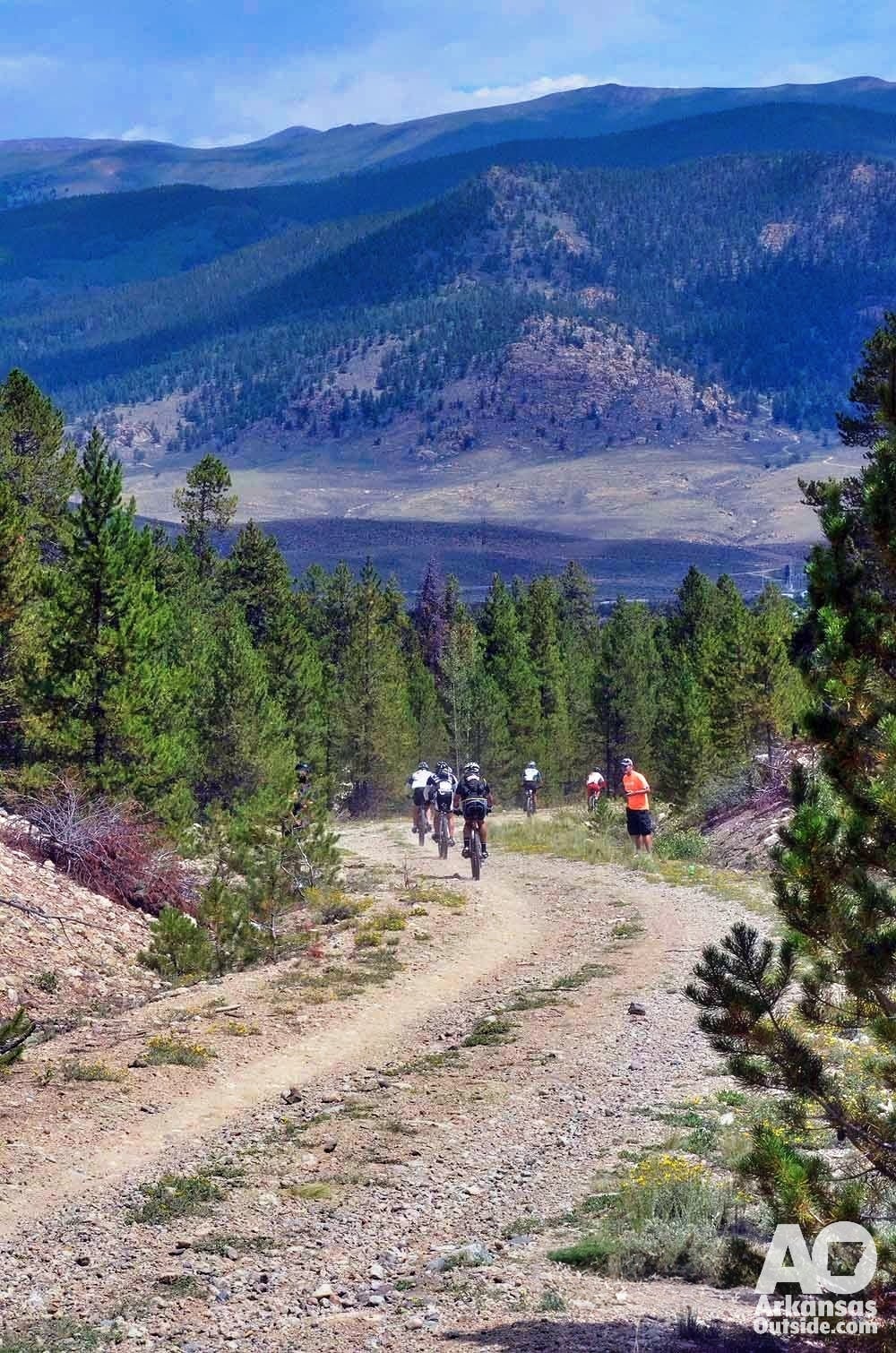
Our scouting trip took us to one of the most famous sections of the traditional Leadville course: Powerline.
Walking out of the woods and seeing it for the first time was startling.
The rough jeep road seemed to head almost straight up the mountain beneath humming powerlines.
The racers would descend it early in the race, at roughly mile 20. That looked challenging enough.
But Leadville was an out-and-back course.
They would have to climb Powerline on the return trip at around mile 80.
Standing there with fresh legs and no bicycle, I had trouble imagining riding up it. Trying to do it after 80 miles of racing at altitude seemed absurd.
We continued scouting through Pipeline and Twin Lakes before checking out the beginning of the Columbine climb.
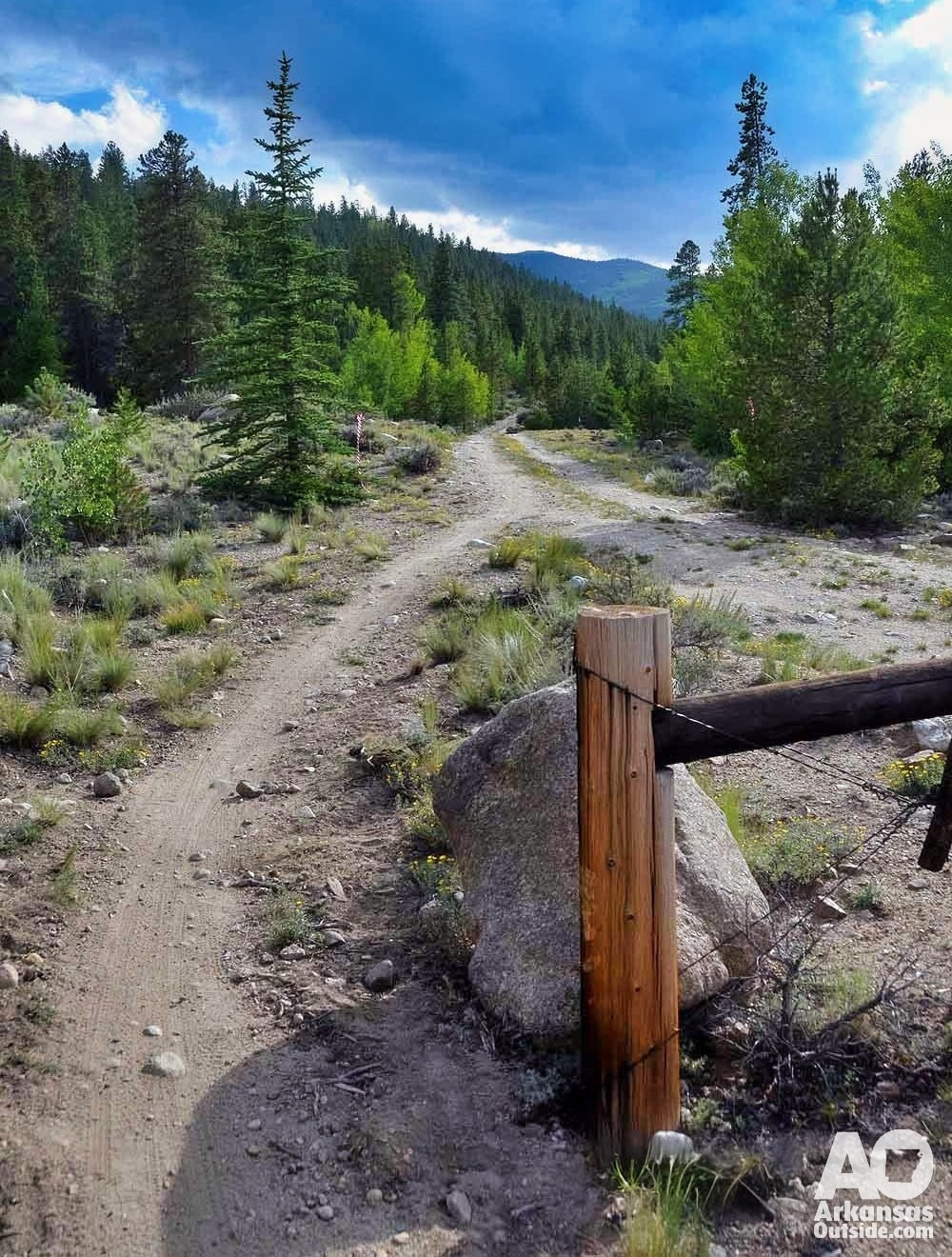
Columbine was another defining feature of Leadville. Starting around 9,600 feet, riders climbed roughly 10 miles toward Columbine Mine, topping out above 12,000 feet before turning around and descending.
By the time we finished scouting, we had done plenty of hiking ourselves. Dinner was a big steak and baked potato, followed by a return to our campsite as rain poured down.
Inside the tent, listening to the rain, one question kept coming to mind.
Would it still be raining in the morning?
Race Day
It wasn’t.
We woke to temperatures in the low 40s and a beautiful Colorado morning.
Nearly 1,800 riders packed into corrals along Sixth Street in downtown Leadville. Finding the Arkansas riders among them was difficult. Racers were arranged according to qualifying times, previous finishes, lottery positions, and elite status.
Then came the national anthem.
The countdown.
A shotgun blast.
And AC/DC’s “For Those About to Rock.”
The Leadville 100 was underway.
While the riders headed toward Turquoise Lake, Cliff and I started our own race.
He headed toward Pipeline. I went to Powerline.
Flying Down Powerline
The leaders arrived quickly.
Calling what they were doing “descending” doesn’t really capture it.
They were flying.
Powerline was a rutted jeep trail with loose sections, turns, shade, and plenty of opportunities for things to go wrong. The fastest riders seemed to use remarkably little braking.
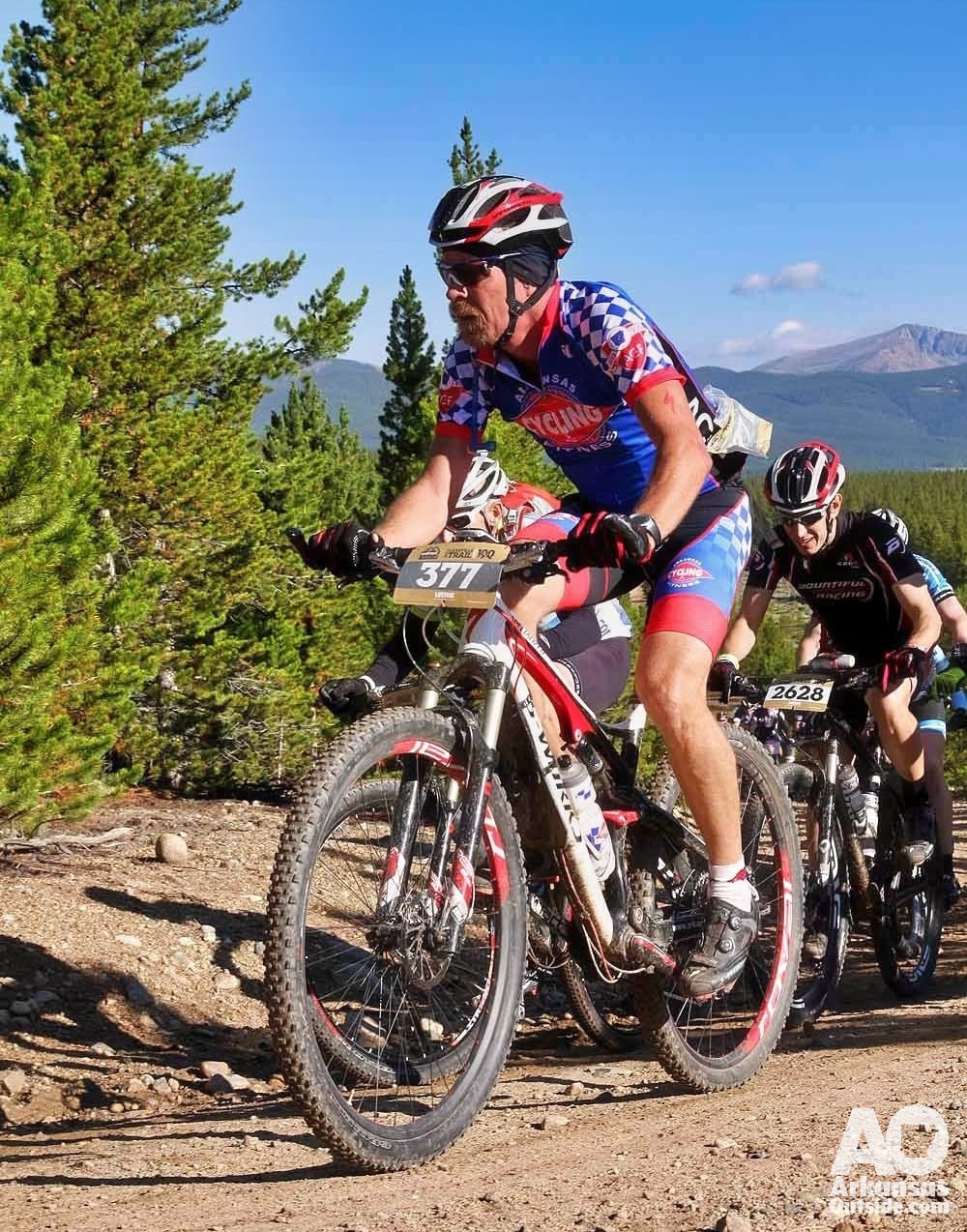
As more riders arrived, I could smell overheated brakes.
There were close calls. One rider went over the handlebars in a turn, got back up, and continued.
Arkansas riders began appearing through the dust and trees. Robert Mooney, James Gaston, Brian Jenkins, Mark Little and others came through before I packed up and headed toward Pipeline.
From there, the race transitioned through road sections, aid stations, short stretches of trail, and eventually toward Twin Lakes.
And Twin Lakes was a party.
The Mountain Ahead
Twin Lakes sits at the bottom of the long climb toward Columbine Mine.
Spectators, support crews, volunteers, and riders packed the area. Racers came through twice, once heading toward the high point of the course and again after turning around.
We moved farther up the mountain to photograph riders descending.
Watching them come back down told only part of the story.
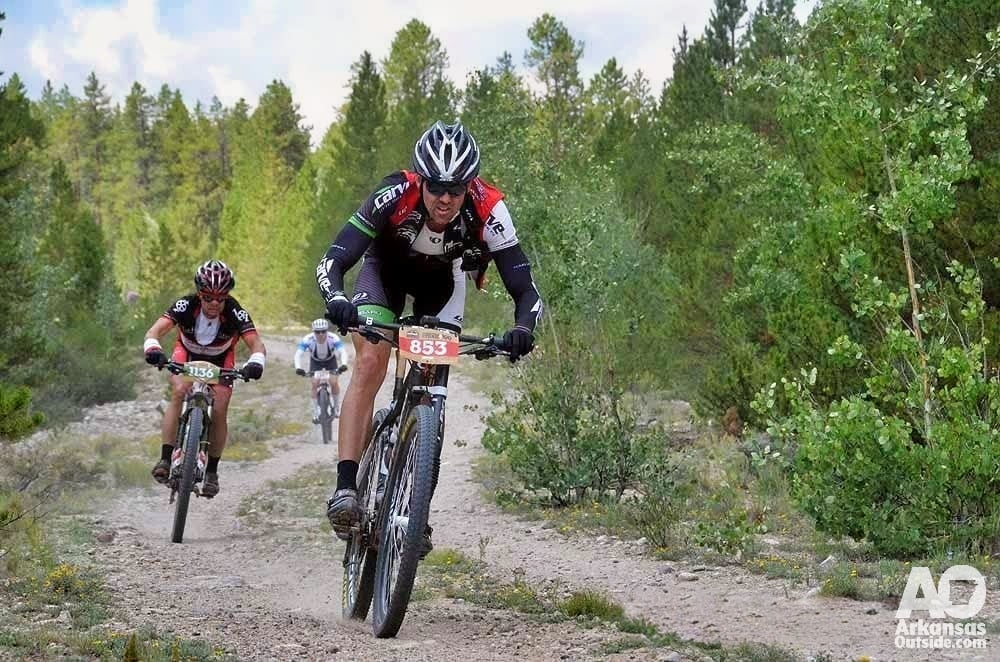
The climb had taken a toll.
Scott Penrod later described being in a dark place emotionally while climbing Columbine. At Twin Lakes on the return trip, he briefly considered stopping. A sub-nine-hour finish was gone, but finishing the race wasn’t.
Chad Cragle faced a similar moment later at Pipeline.
He was around 74 miles into the race. He had stopped having fun hours earlier, and Powerline was still waiting.
All he needed was someone to tell him it was okay to quit.
Instead, his support crew gave him another reason to keep moving.
If he finished, they told him, he wouldn’t have to do it again.
That was apparently enough.
He got back on his bike and headed toward Powerline.
That might be the most Leadville thing imaginable.
Back to Sixth Street
Eventually, our Arkansas riders had passed through Twin Lakes and it was time for Cliff and me to return to Leadville.
The race wasn’t finished, and neither was our job.
In some ways, the best part was still ahead.
Sixth Street had been transformed.
Music filled downtown. Spectators lined the road. The announcer called the names and home states of riders approaching the finish.
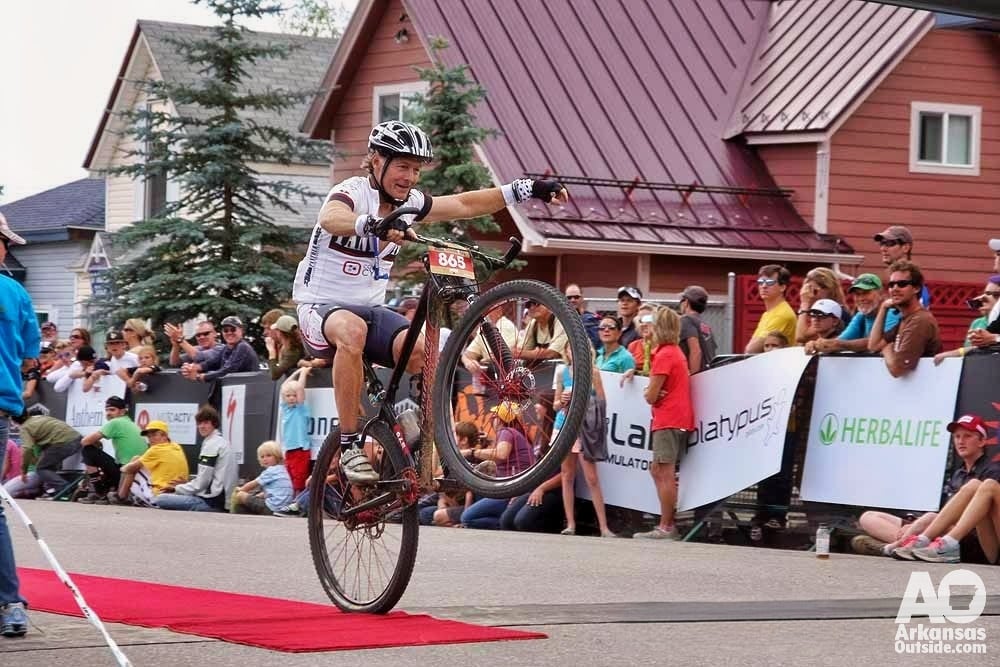
Some riders raised their arms.
Some pumped their fists.
Some cried.
Some barely seemed aware of anything beyond the finish line.
Family members jumped from the crowd and ran alongside racers for the final few yards.
After spending the day watching people suffer across the mountains, the emotion at that finish line was overwhelming.
Arkansas Comes Across the Line
Ben Stone was the first Arkansas rider to finish, crossing in 8:34:33.
Richard Machycek followed at 8:49:33.
Both earned the coveted sub-nine-hour buckle.
Then the rest began arriving.
Craig Zediker finished the race on a singlespeed in 9:06:30. Ted Herget finished in 9:12:34. Chad Cragle, who had nearly stopped at Pipeline, crossed in 9:17:34.
Scott Penrod finished in 9:20:38.
Brian Jenkins and James Gaston came through just over the 10-hour mark. Stephen Durham followed in 10:11:25.
Durham later remembered struggling up the late climbs while spectators cheered as enthusiastically as if he were leading the race.
He even claimed someone dressed in a full-body pizza-slice costume gave him a push up Powerline.
At the time, we suggested the altitude might have been getting to him.
One by one, the Arkansas riders continued arriving.
Steve Jones. Robert Mooney. Mark Little. Mark Singleton. Rodney Small. Natalie McBee.
By the end of the day, 16 Arkansas riders had completed the 2012 Leadville Trail 100 MTB.
More Than 100 Miles
The following morning, we attended the awards ceremony.
Alban Lakata won the men’s race. Rebecca Rusch took the women’s victory.
But one of the moments that stuck with me involved two riders nowhere near the front of the race.
Art Fleming and Frederic Schmid completed Leadville in the 70-plus division. Schmid was 79 years old.
In the original article, I ended that observation with a simple question:
What’s your excuse?
Fourteen years later, Leadville still has that effect.
It’s easy to focus on the numbers: 100 miles, thousands of feet of climbing, elevations above 12,000 feet, nine-hour buckles, 12-hour cutoffs.
But the numbers aren’t really what we remembered when we drove home to Arkansas.
It was the people.
It was support crews spending an entire day anxiously waiting for their rider to appear.
It was strangers screaming encouragement at exhausted cyclists.
It was friends who had spent months training together.
It was racers who decided to keep moving when quitting would have been easier.
It was seeing someone you knew appear in the distance on Sixth Street after wondering for hours how they were doing somewhere out in the mountains.
James Gaston summed it up well after finishing. For him, there wasn’t one coolest part of Leadville. The entire experience, from signing up to training with friends to finally saying goodbye after the race, was the thing that mattered.
That is probably the best explanation for why Leadville keeps calling people back.
Leadville in 2026
This weekend, another field of riders will roll away from Sixth Street for the 2026 Life Time Leadville Trail 100 MTB.
The race is scheduled for Saturday, August 15. This year’s edition will look a little different. Wildfire impacts have forced organizers to modify the traditional course, including removing the iconic Powerline and Sugarloaf Mountain sections. The revised course is approximately 102 miles with about 9,900 feet of climbing, while Columbine remains one of its defining challenges.
But the heart of Leadville remains.
The race still starts above 10,000 feet. Riders will still climb above 12,000 feet. And hundreds of cyclists will once again arrive in a small Colorado mountain town hoping to find out exactly how deep they’re capable of digging.
For Arkansas Outside, the 2012 Leadville trip remains one of those early adventures that helped define what this publication was about: going places, meeting people, telling the stories of Arkansas outdoor athletes, and occasionally wondering how we got ourselves into this.
Fourteen years later, looking back through those photographs and stories brings all of it back.
The cold morning.
The buzz of the powerlines.
The crowds at Twin Lakes.
The thin air on Columbine.
The anxious wait on Sixth Street.
And finally, the sight of another Arkansas rider coming up the road toward the finish.
Dig deep.
Some things about Leadville don’t change.
This article was originally published on ArkansasOutside.com, your trusted source for outdoor news and updates in The Natural State. Unless otherwise credited, all photos included in this piece are the property of Arkansas Outside, LLC. We take pride in sharing the beauty and adventures of Arkansas through our lens—thank you for supporting our work!