
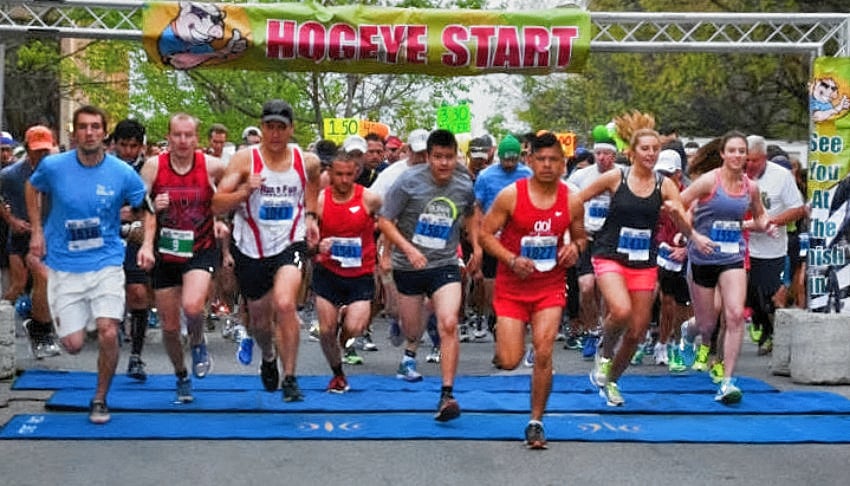

After 50 years of runners taking on the hills of Northwest Arkansas, the Hogeye Marathon is entering a new chapter.
Estimated reading time: 4 minutes
The organization behind one of Arkansas’ longest-running road races will no longer offer the full 26.2-mile marathon. But Race Director Tabby Holmes wants runners to understand one thing: Hogeye isn’t going away.
The decision comes after the event celebrated its 50th year in 2026. According to Holmes, the growing challenges of staging a full marathon on increasingly busy Northwest Arkansas streets played a major role in the decision.
“With the growth of the area, it became harder and harder to put on the race. It also became more difficult to get the number of volunteers we needed to keep it a safe event,” Holmes told Arkansas Outside.
Growth Makes a Marathon More Difficult
The Hogeye has adapted to Northwest Arkansas’ growth throughout its history.
The event began in Fayetteville in 1977. According to Holmes, a group that included University of Arkansas professor Dr. Barry Brown mapped out a route from the university to the community of Hogeye and back. The race soon took the Hogeye name.
Over the decades, the course changed as Fayetteville and the surrounding area developed. As the Fayetteville trail system expanded, organizers incorporated more trails into the race, reducing the number of volunteers needed on streets while improving safety.
In 2016, the 40th running of the marathon started at the Fayetteville Square and finished at Wilson Park. The following year, the event moved to Springdale after highway and interchange construction affected the course.
Holmes said Springdale provided significant support, including police coverage and public works crews to help manage traffic and close lanes.
But Northwest Arkansas continued to grow, making the logistics of a 26.2-mile urban race increasingly complicated.
“It’s a matter of sometimes doing something for a long time and realizing that things are changing. We could see, with the growth of the area, that it was just going to get harder and harder to maintain the marathon,” Holmes said.
Holmes emphasized that the decision was not caused by sponsors withdrawing support or by problems with the City of Springdale. Instead, organizers saw increasing challenges in safely managing the full marathon.
A Long History of Running in Northwest Arkansas
The Hogeye has gone through plenty of changes during its five decades.
The half marathon was added in 1998, and various relay formats have also been part of the event.
The full Hogeye Marathon has also been a Boston Marathon qualifying race, giving Arkansas runners an opportunity to earn a qualifying time without leaving the state. Holmes said Hogeye has produced numerous Boston qualifiers over the years despite Northwest Arkansas’ challenging hills.
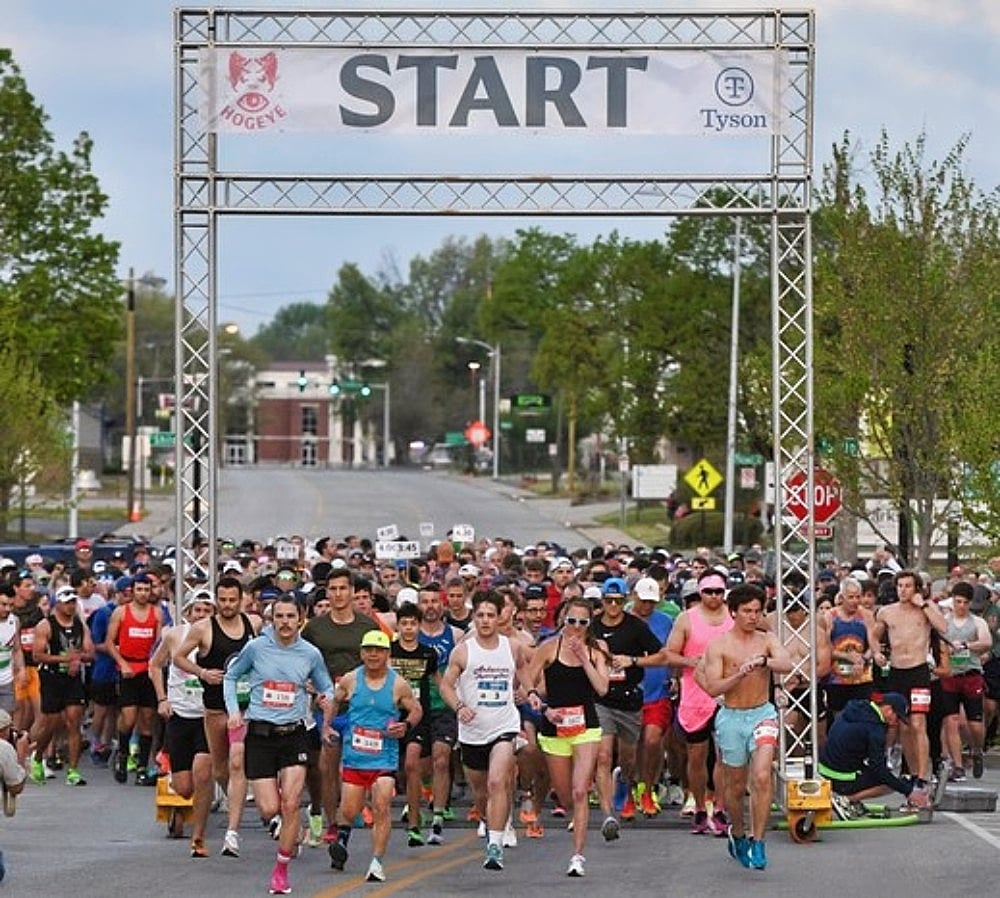
The end of the Hogeye’s 26.2-mile race removes one of the state’s options for runners chasing a Boston qualifying time. Other Arkansas marathons offering Boston qualifying opportunities include the Little Rock Marathon, White River Marathon for Kenya in Cotter, Three Bridges Marathon in Little Rock and Papa Loco Marathon in Conway. The Little Rock Marathon identifies its USATF-certified marathon as a Boston qualifier, while current race listings also identify White River and Three Bridges as qualifying events. Papa Loco is also listed among Arkansas Boston qualifying races.
For Holmes, losing that part of Hogeye’s identity is significant.
“That’s one of the hardest parts about giving up the marathon,” she said.
Even the COVID-19 pandemic didn’t completely stop Hogeye.
When organizers had to cancel the traditional race just weeks before the scheduled 2020 event, they shifted to a virtual format. Participants submitted evidence of completing their distance and received their shirts and medals.
Now, following the 50th year, organizers see an opportunity to reshape the event rather than end it.
Hogeye Half Marathon Becomes the Focus
The biggest part of that future will be the Hogeye Half Marathon.
Holmes said the organization plans to put more energy into growing the 13.1-mile event, which she describes as the oldest continuously running half marathon in Arkansas.
“The half marathon has really been limited by the fact that we’ve also had the marathon. I’m hoping we can build the half marathon into something bigger than it is now. It probably won’t happen in the first year, but that’s a goal,” Holmes said.
The Hogeye Marathon and Relays nonprofit will also continue operating. Proceeds from its events support organizations including American Wheelchair Mission, Meals on Wheels in Washington County and Peace at Home Family Shelter. Hogeye also supports programs promoting running and fitness in the community.
Registration for the next Hogeye event is already open, according to Holmes. Learn more and get registered at the new website, HogeyeHalf.com.
Could the Hogeye Marathon Return?
While the full marathon is ending, Holmes isn’t willing to rule out its return someday.
When asked whether there could be a future in which runners once again line up for a Hogeye 26.2-mile race, she said it could happen, but she doesn’t want runners to expect a comeback.
For now, the focus is on the half marathon and building the next version of an event that has been part of Northwest Arkansas running for half a century.
The marathon distance may be gone, but Hogeye isn’t.
After 50 years, organizers are looking toward the next chapter.
This article was originally published on ArkansasOutside.com, your trusted source for outdoor news and updates in The Natural State. Unless otherwise credited, all photos included in this piece are the property of Arkansas Outside, LLC. We take pride in sharing the beauty and adventures of Arkansas through our lens, thank you for supporting our work!
One Response
I hope the Hogeye Marathon continues. Someone else pick it up and continue the tradition. I’ve only run it twice. In 1978, and the mid 2000’s when thère was a severe storm during it. I finished 2nd and 3rd those years. Also ran it as a relay one year. The original course wouldn’t be too bad. ( to Hogeye and back )Start and finish it near the indoor track, or finish it inside the indoor track arena. Arkansas road races need tradition.