

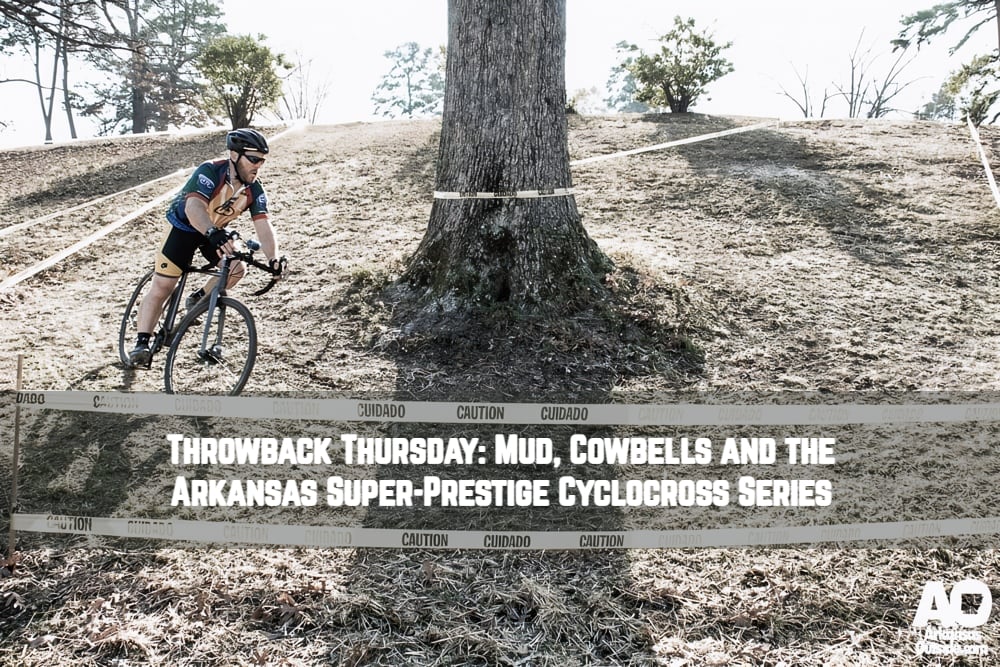

There was mud, there were cowbells, and there were costumes, cold rain, heckling, barriers, beer, bruises and bicycles being carried through places bicycles probably had no business going.
For several glorious autumns, there was also the Arkansas Super-Prestige Cyclocross Series. We miss it.
For this #ThrowbackThursday, we’re going back almost 15 years to a time when cyclocross occupied a wonderfully strange corner of the Arkansas cycling world. The races weren’t huge. Most people outside the cycling community probably had no idea they existed, and even plenty of cyclists weren’t quite sure what was going on.
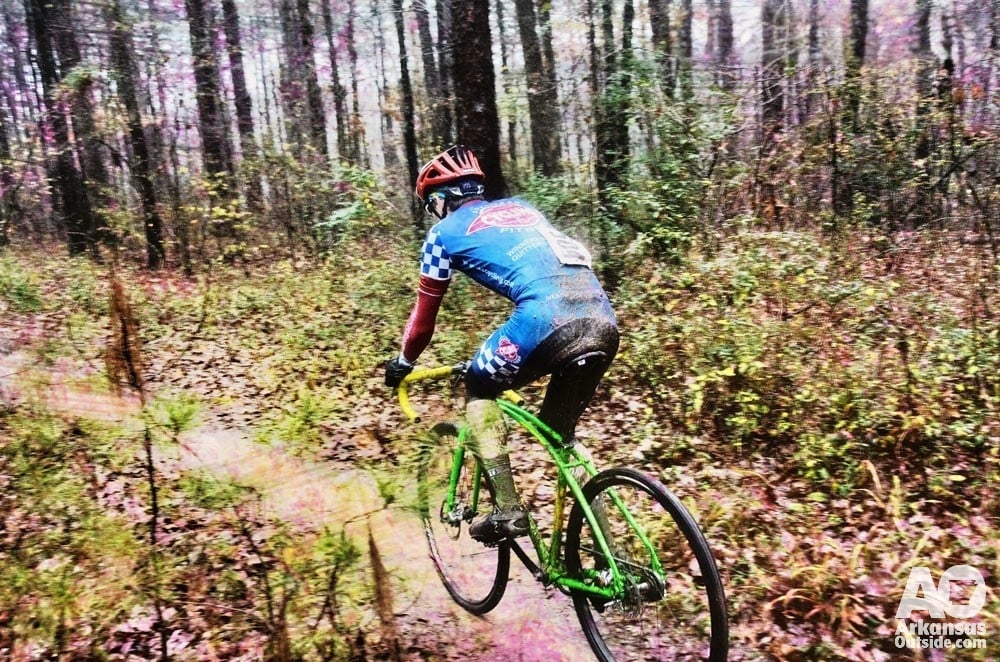
That was part of the charm.
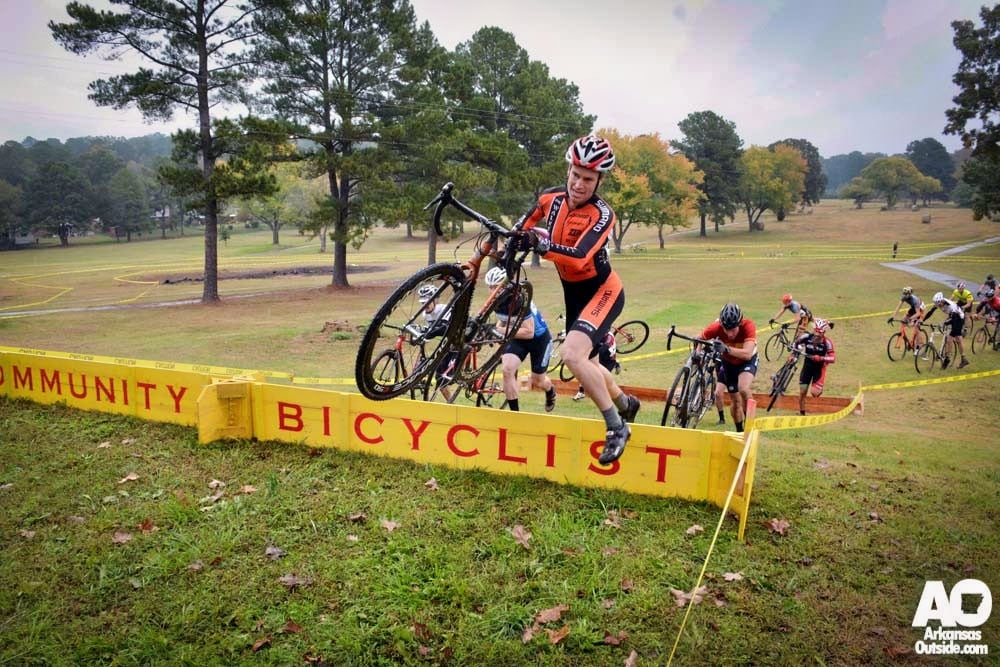
Cyclocross took over parks, fields, hillsides and other unlikely pieces of Arkansas real estate for a few hours on fall weekends. Racers pushed around short courses filled with tight corners, grass, mud, pavement, roots, hills and barriers that forced them off their bikes. Spectators rang cowbells, yelled themselves hoarse and usually hung around long after the race they had come to watch was over.
Looking back, it feels like exactly the kind of outdoor recreation Arkansas Outside was created to celebrate.
A Sport That Was Difficult to Explain
Cyclocross has always been a little obscure. Explaining it to someone who has never seen a race isn’t easy.
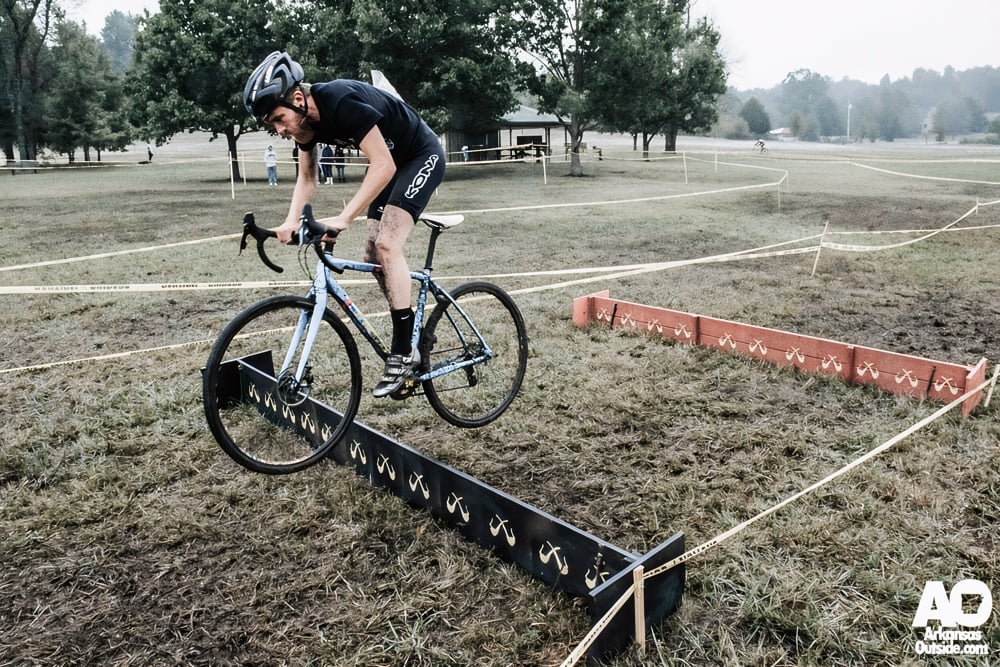
Imagine a road bike race and put it in a field. Add some mountain biking and cross-country running. Build barriers across the course that require racers to jump off their bikes, carry them and remount. Make the course short enough that spectators can see racers several times each lap, then hope for terrible weather.
Now you’re getting close.
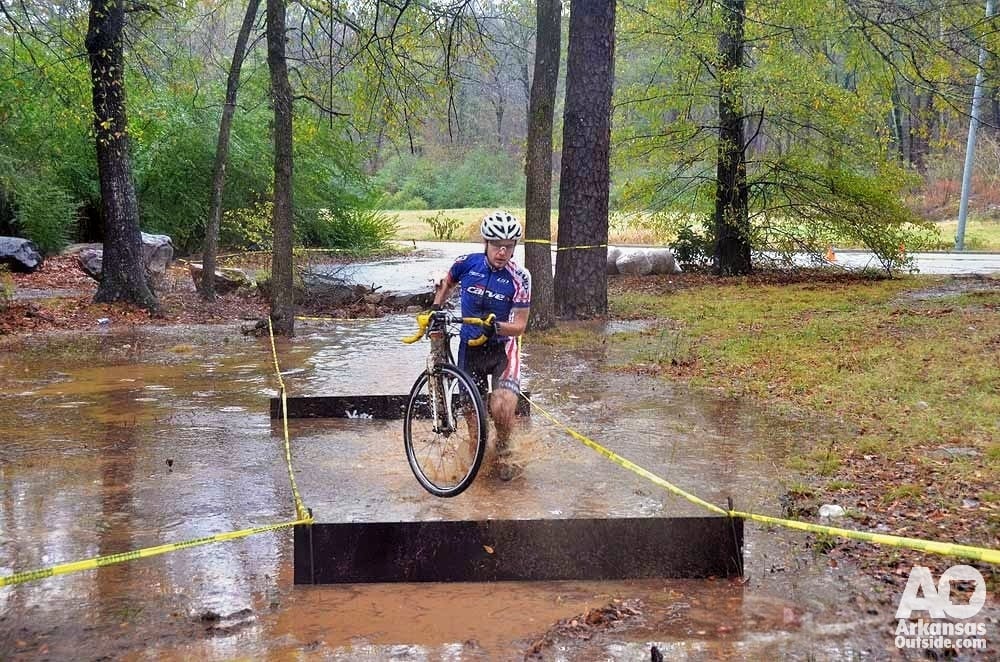
Cyclocross developed as an off-season cycling discipline in Europe and eventually found an enthusiastic following in the United States. In Arkansas, the Super-Prestige Series gave the sport something particularly important, a season. By 2012, the series featured eight races, primarily in Central and Northwest Arkansas, turning the arrival of cooler weather into something cyclists could anticipate rather than dread.
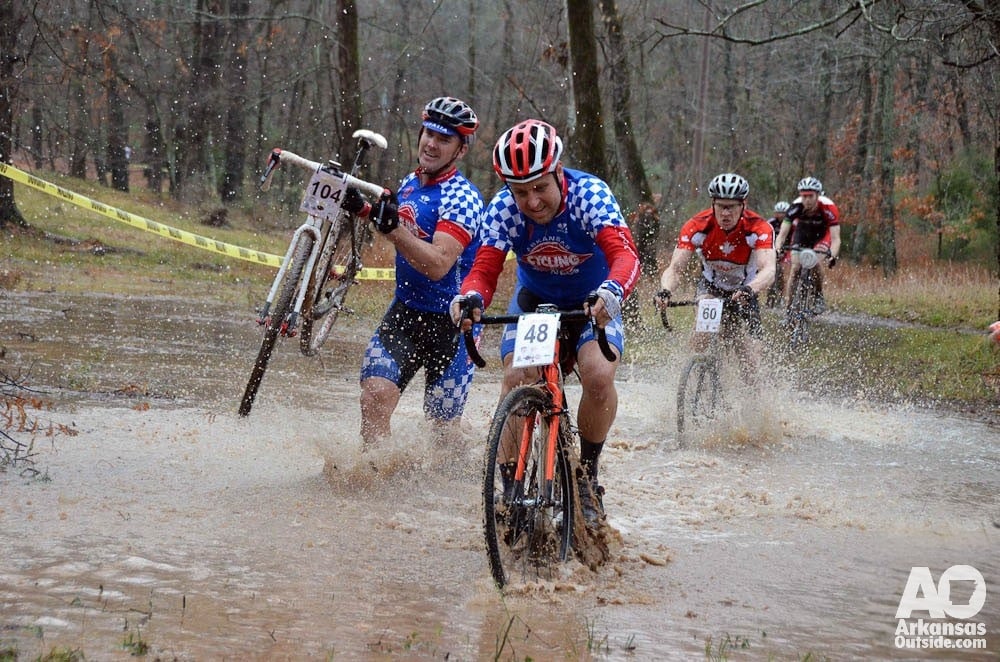
While most outdoor events hope for sunshine and comfortable temperatures, cyclocross was different. Rain was good. Cold could be even better. Mud was perfect. Arkansas weather could almost always provide something useful.
The Venues Were Half the Fun
One of the great things about the Arkansas Super-Prestige Cyclocross Series was where the races happened. These weren’t carefully manicured cycling facilities. Organizers looked at ordinary parks and pieces of open land and apparently asked, “Could we race bicycles here?”
The answer was usually yes.
Reservoir Park in Little Rock became a maze of muddy trails, grass, rocks, roots, pavement, creek crossings and steep climbs. Rain could transform the course into the kind of slippery mess that cyclocross racers seemed inexplicably happy to encounter.
Craighead Forest Park in Jonesboro offered an entirely different experience. One course incorporated pavement, pine trees, an old foundation, singletrack, a power-line corridor, hills and barriers, all packed into roughly a mile.
Then there was Cedarglades Park near Hot Springs, where the race was held around the Garland County Landfill.
Yes, a landfill. And it was fantastic.
Thick grass and soft ground seemed determined to stop bicycles in their tracks. Long climbs, short descents, barriers and washed-out hills made Cedarglades one of the toughest venues in the series.
There were races at Boyle Park and Kanis Park in Little Rock, along with venues in Northwest Arkansas and elsewhere around the state. Kanis even hosted racing at night. A park beneath Interstate 630 isn’t the first place most people would imagine staging a memorable bicycle race, but that was cyclocross. Take a place everyone had driven past a hundred times, string some course tape through it, add barriers, and suddenly it became an arena.
The Weather Was Part of the Course
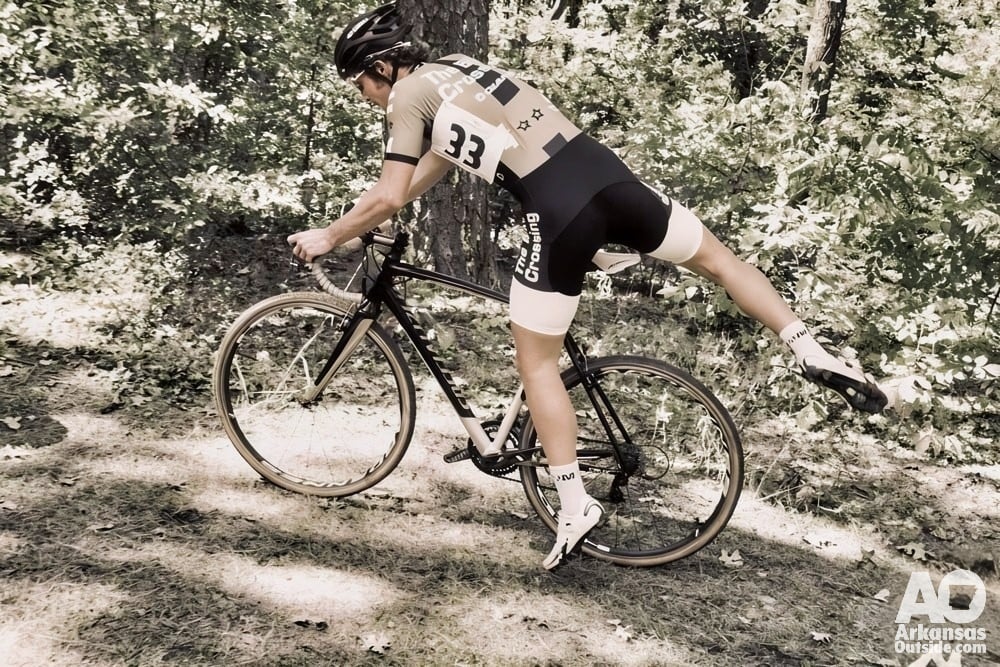
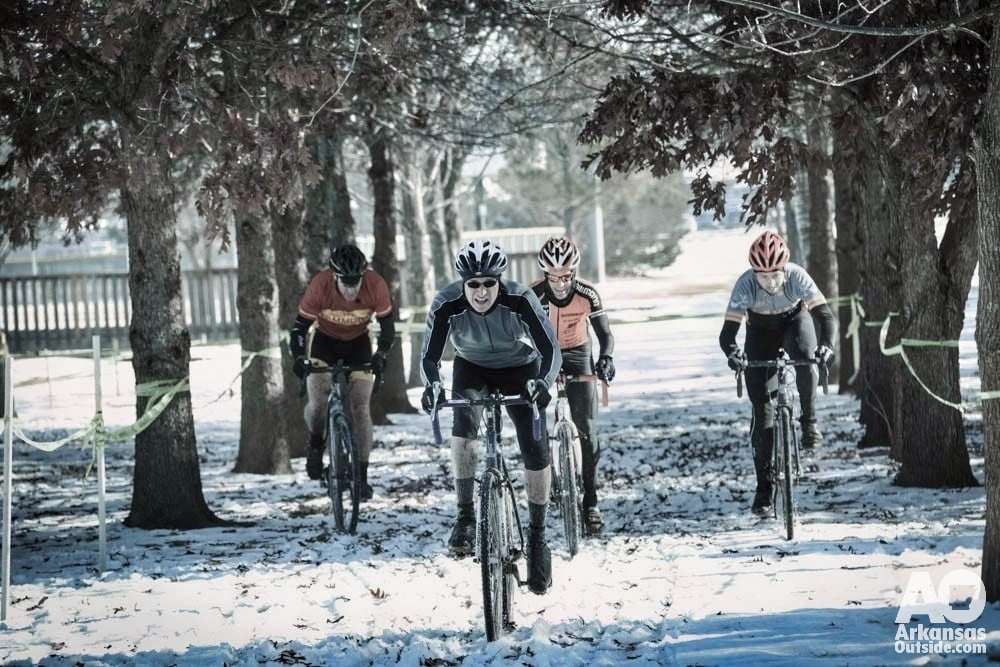
Anyone could race a bicycle on a beautiful fall afternoon. Cyclocross asked a different question: What are you doing when it is 42 degrees and raining?
Apparently, we’re racing bicycles.
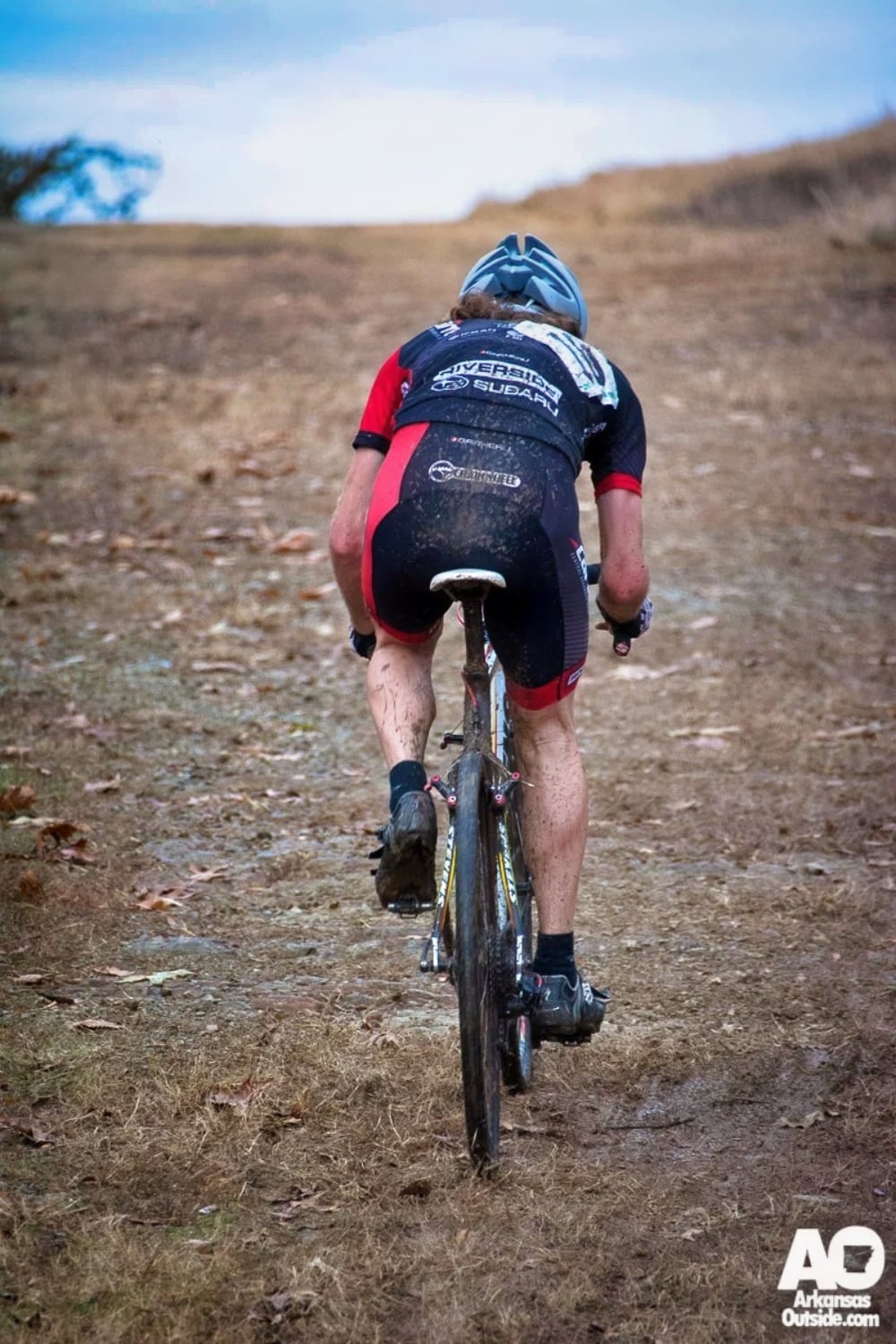
Changing conditions meant the same course could become something entirely different overnight. Dry grass became slippery grass. Dirt became mud. A rideable hill became a running section. Corners that seemed harmless during a warm-up suddenly became opportunities to demonstrate the coefficient of friction between Lycra and Arkansas soil.
That unpredictability was part of the appeal. You didn’t just race the other riders. You raced the course, your bike, your lungs, your questionable tire-pressure decision and whatever Arkansas weather had decided to throw at you.
Somehow, the worse the conditions became, the better the photographs seemed to get.
Cyclocross Was a Spectator Sport
This may have been our favorite part.
You didn’t quietly observe a cyclocross race. You participated.
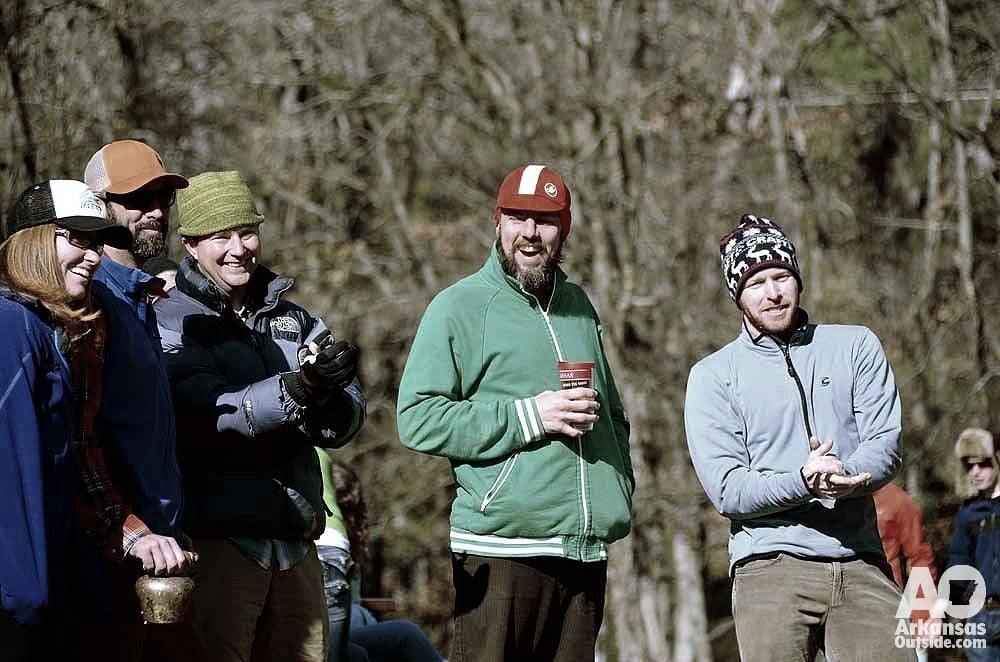
Cowbells were practically required equipment. Spectators moved around the course looking for the best places to watch riders struggle. They yelled encouragement, offered good-natured heckling, rang bells and screamed at friends and complete strangers.
At one point, Arkansas Outside even handed out cowbells at races. The instructions included finding the Arkansas Outside table and saying, “Don’t Fear the Reaper.” It made perfect sense at the time. Probably.
We once described proper cyclocross spectating as a “full body, top of the lungs, screamfest.” That still seems accurate.
Unlike many forms of bicycle racing, cyclocross kept competitors close to spectators. Short courses meant racers came around again and again. You learned where someone was having trouble, knew when a battle was developing and could run across the course after the riders passed to get into position to yell at them somewhere else.
Spectating could become nearly as exhausting as racing. Nearly.
Serious Racing That Didn’t Take Itself Too Seriously
There were fast racers in the Arkansas Super-Prestige Series. Really fast racers.
Series points mattered. State championships mattered. Racers studied lines, watched competitors and fought for positions. Mechanical problems could change a race, and a mistake at a barrier could cost several places.
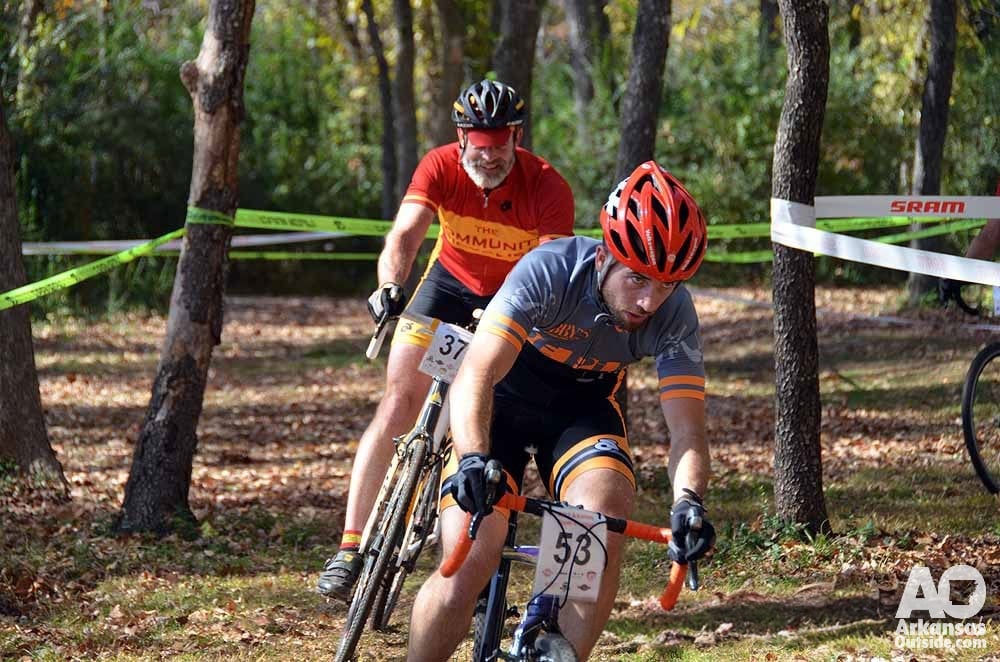
Surrounding all that competition, however, was a remarkably welcoming atmosphere. Mountain bikes showed up alongside cyclocross bikes. Beginners lined up with experienced racers. People raced multiple categories. Someone who had just spent 45 minutes trying to beat you might be standing beside you a few minutes later discussing exactly where both of you almost crashed.
At Craighead Forest Park in 2013, the post-race scene captured it perfectly. Exhausted riders stood over their bikes sharing stories, congratulating each other and talking about the racing still ahead.
At Smoke-N-Suds, racers negotiated grass, creek beds, barriers and slick corners while spectators provided cowbells, cheering and plenty of heckling. Afterward, our crew headed to Devil’s Den State Park for camping and s’mores before returning for more racing the next morning.
The race was important, but so was everything happening around it.
A Party Where a Bike Race Broke Out
Looking through the old Arkansas Outside cyclocross stories today, certain words appear again and again: mud, cold, rain, cowbells, friends and fun.
Those old articles document races, but they also document a community. The same faces keep appearing. Racers became spectators. Spectators eventually became racers. People brought their kids. Teams set up tents. Someone always seemed to have food. People stayed after their race instead of immediately packing the car and leaving.
Cyclocross encouraged that. A race might last 35, 45 or 55 minutes, but race day could consume most of a Saturday or Sunday. There wasn’t much reason to leave. Your friends were still racing, and someone had to ring the cowbell.
That camaraderie may be what we remember most. There were podiums and series standings, but years later those aren’t necessarily the things that stick with you. It’s the people standing around in muddy shoes. It’s laughing about a crash after determining everyone is okay. It’s the racer you barely know hearing you yell their name every time they pass. It’s everyone sharing the same ridiculous experience on a cold Sunday afternoon.
Arkansas Outside Was There
There is another reason these stories mean so much to us. The Arkansas Super-Prestige Cyclocross Series was happening during the formative years of Arkansas Outside.
ArkansasOutside.com officially launched in November 2011. We were still figuring out what this thing was going to become, and cyclocross helped provide an answer.
We went to races, took lots and lots of photographs, wrote stories, posted results, promoted upcoming events, stood in the rain, handed out cowbells, cheered and got to know racers, organizers, families and volunteers. Then we did it again the next weekend.
The series represented what we believed Arkansas Outside could be, not simply a place to publish results or announce events, but a place to tell the stories of people who find interesting ways to play outside in Arkansas.
You didn’t have to be competing for a championship. You didn’t even have to completely understand what cyclocross was. You just had to show up.
That’s still a pretty good description of Arkansas Outside.
The Obscure Stuff Matters
Today, Arkansas is widely recognized for cycling and outdoor recreation. We have nationally and internationally known mountain bike trail systems, major gravel events, long-distance trails, bike parks, climbing areas, paddling destinations and an outdoor recreation community that would have been difficult to imagine when some of these cyclocross stories were published.
But outdoor culture isn’t built only by major events and multimillion-dollar projects. It’s also built in city parks on cold Sunday mornings, by someone designing a racecourse around an old foundation, by volunteers pounding stakes into the ground and stretching course tape between them, and by a handful of racers willing to drive across Arkansas to spend an hour suffering on a bicycle.
It’s built by spectators who show up in miserable weather because their friends are racing. It’s built around campfires after the race. And sometimes, apparently, it’s built on top of a landfill.
The Arkansas Super-Prestige Cyclocross Series was wonderfully obscure. You could tell someone what you did over the weekend and spend the next five minutes trying to explain it.
That didn’t make it less important. Maybe it made it more special.
We Could Use a Little More Cowbell
Eventually, the Arkansas Super-Prestige Cyclocross Series faded away. Other cycling disciplines grew. Gravel exploded. Mountain biking expanded dramatically. Riders found new ways to spend their fall weekends.
But every year, when the temperatures begin dropping and Arkansas gets one of those gray, damp days when sensible people start thinking about staying inside, some of us remember the mud, the barriers, the ridiculously skinny tires, the night races, the strange venues, the muddy bikes, the cold fingers, the exhausted racers, the tents, the heckling, the friendships and the unmistakable sound of cowbells ringing across an Arkansas park.
For Arkansas Outside, those races are tied permanently to our earliest years. We were discovering Arkansas’s outdoor community at the same time we were trying to figure out how to tell its stories, and the Arkansas Super-Prestige Cyclocross Series gave us plenty of stories to tell.
Almost 15 years later, we’re still telling stories about people getting outside, trying something different and finding community along the way. Maybe that’s the real legacy of Arkansas cyclocross.
Outdoor recreation doesn’t have to be famous to matter. It doesn’t need thousands of participants or national attention. Sometimes all it takes is a park, some course tape, a bicycle and a few people crazy enough to think spending a cold, rainy Sunday riding through the mud sounds like fun.
We miss it.

And yes, we still have the cowbells.
This article was originally published on ArkansasOutside.com, your trusted source for outdoor news and updates in The Natural State. Unless otherwise credited, all photos included in this piece are the property of Arkansas Outside, LLC. We take pride in sharing the beauty and adventures of Arkansas through our lens, thank you for supporting our work!