

Estimated reading time: 16 minutes
Arrival in Jonesboro
Lisa and I arrived in Jonesboro on Monday evening and headed straight to rider check-in at The Forum, just off Main Street. Our accommodations were less than two blocks from the festivities, where Main Street had been closed for the kickoff of the third Arkansas Graveler bicycle tour.
The best part of arriving early was running into familiar faces before we had even turned a pedal. We wandered Main Street, caught up with friends, accepted a complimentary drink from Delta Dirt Distillery inside the beautiful Gearhead Outfitters bike shop, listened to music and picked up our Graveler T-shirts. After dinner, we walked back to our room, checked our gear one more time and tried to sleep. Five days of riding across the Delta were waiting for us.
The Arkansas Graveler is a fully supported, multiday gravel cycling tour produced by the Ozark Foundation and co-hosted by the Arkansas Department of Parks, Heritage and Tourism and the Arkansas Game and Fish Commission. Its mission extends beyond riding, introducing cyclists to rural communities, state parks, local food, music and the people who make Arkansas special.
The event debuted in 2024 with a route from Fayetteville to Jonesboro through the Ozarks. In 2025, it crossed the Ouachita region from Mena to Russellville. The third edition, held October 6 through 10, 2026, explored the Arkansas Delta, with a planned 347-mile route from Jonesboro to Arkansas City. Riders could choose the full route or use available support and shuttles to tailor the experience. This year’s Delta Blues Edition included an evening at the King Biscuit Blues Festival in Helena.
Day One: Jonesboro to Village Creek State Park
In the dark, we loaded our bikes and bags into the car and drove to Arkansas State University’s football stadium. There, we dropped off our packing box and duffel with Pork Belly Ventures, the outfitter handling baggage and camping services. Then we had breakfast overlooking the football field.
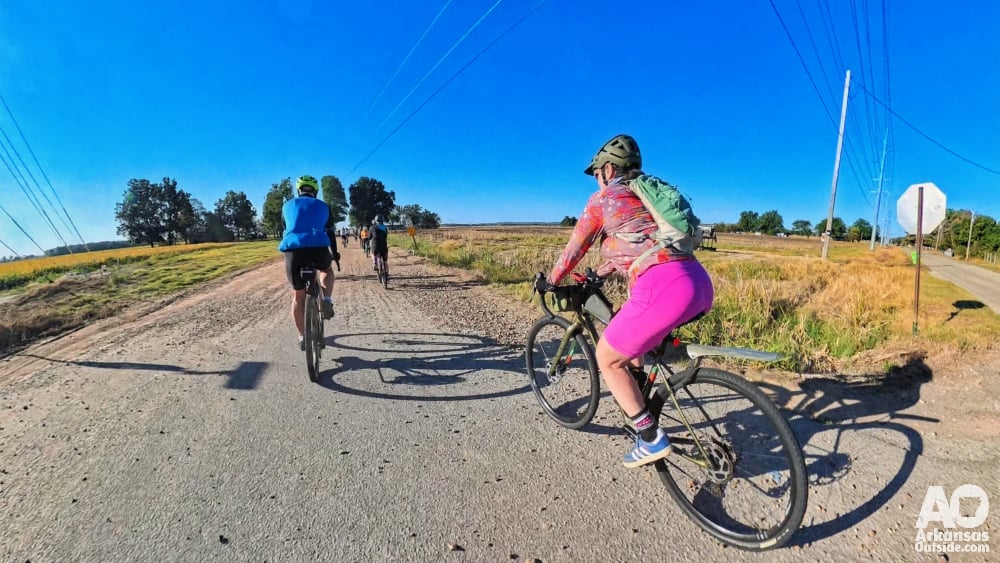
Before long, we gathered in a nearby field for the start. The day’s planned route was about 71 miles, with the greatest elevation gain of the week. A police escort guided us through Jonesboro for roughly five and a half miles before we reached our first gravel.
I had ridden some of these roads before on a four-day trip from Jonesboro to Clarksdale, Mississippi. This time, several of the days would be considerably longer.
Our destination was Village Creek State Park near Wynne, the second-largest park in the Arkansas State Parks system, with two lakes and miles of hiking, mountain biking and horseback riding trails. First, though, we had to get there.
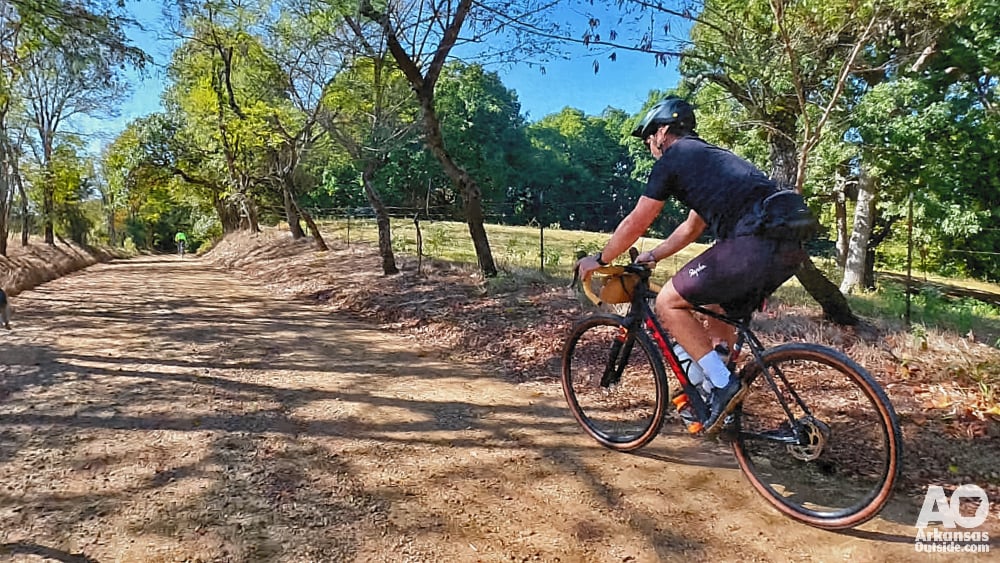
After a stiff climb, we were on top of Crowley’s Ridge, following rolling gravel roads past farms, churches and small crossroads communities. In Harrisburg, we stopped at our first aid station outside Big O’s Ribs, a barbecue spot we’d enjoyed during rides at the Birdeye Gravel Festival.
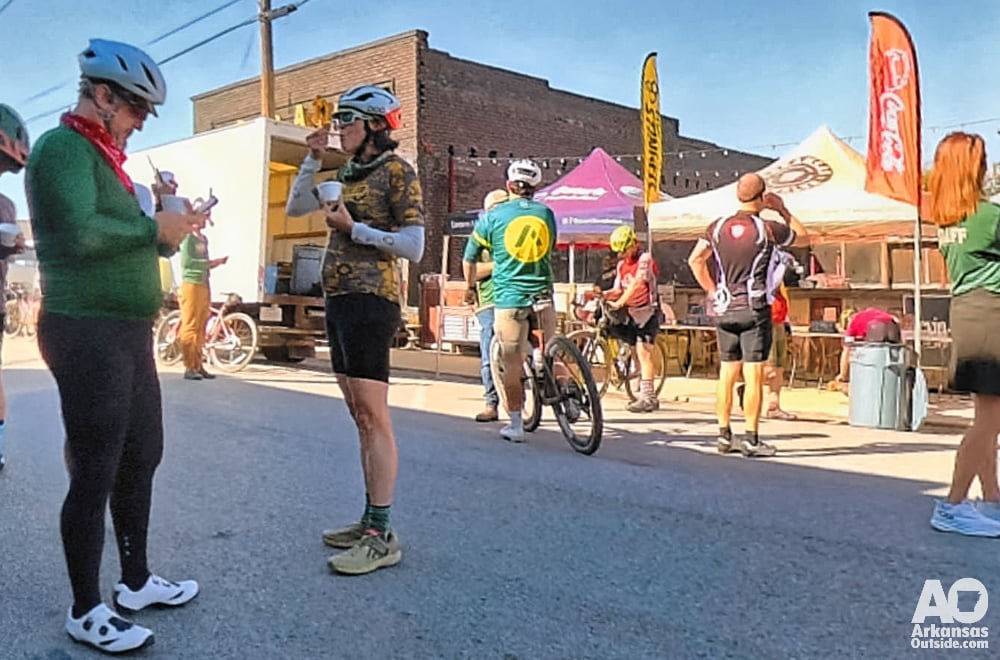
Next came Birdeye Farm, a place that holds special memories for us. We’ve spent several nights enjoying the hospitality of the Smith family at their historic home, and we were eager to return. Riders were welcomed with a generous lunch spread, wandering farm animals, live blues music and an opportunity to try archery with the Arkansas Game and Fish Commission.
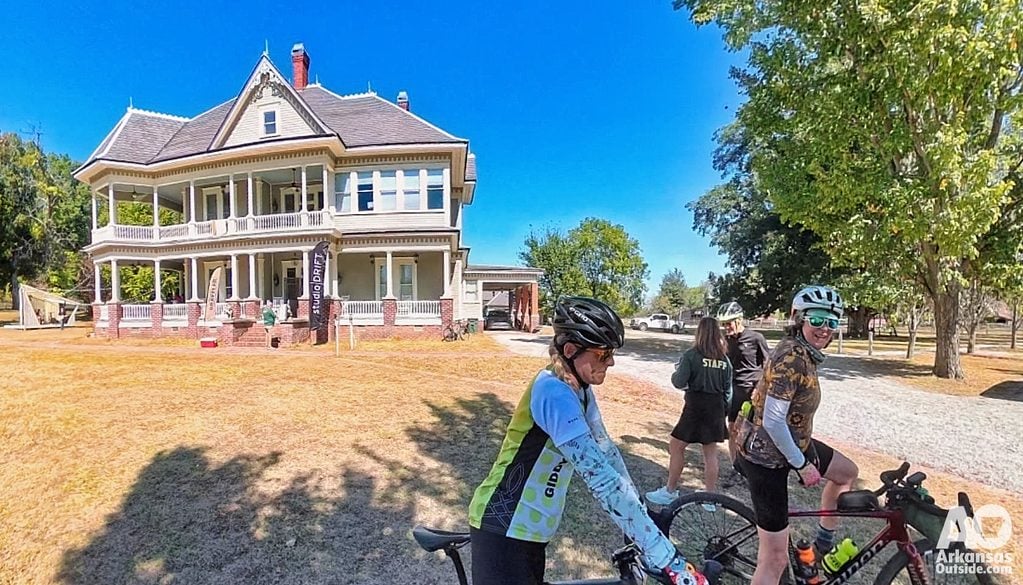
At Birdeye Farm, the food and familiar faces made it tempting to stay a little longer. But the bigger question was waiting: shuttle the last 30 miles or get back on the bikes? I suspect Lisa and I both wanted that shuttle. Neither of us was quite ready to be the first to say it. So we rode.
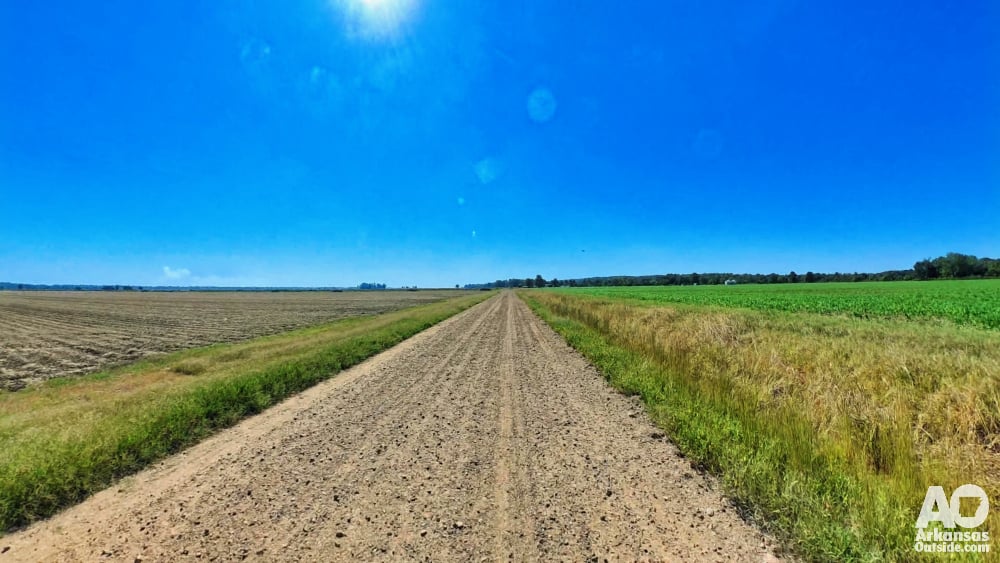
By midday, the heat was wearing us down. I love riding the Delta levees when the light is low and the wind is behind you. In the middle of a hot day, though, they can feel endless. There is little coasting, just one pedal stroke after another. Our friend Randy Jackson, volunteering on the course, pulled up twice with cold water. I cannot tell you how good that water felt.
Near the park, we faced one last big hill. Once over it, we enjoyed a quick ride through The Ridges at Village Creek golf course to the finish.
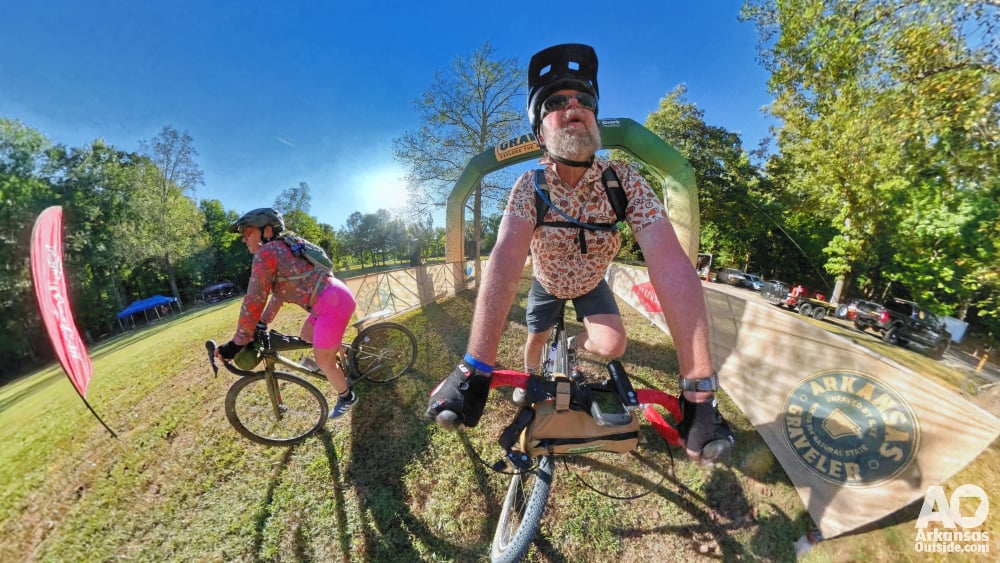
The event had taken over the campground. We found a spot in the woods, away from the rows of tents set up by Pork Belly Ventures for riders who had purchased extra camping services. Lisa went to the park visitor center to watch a cycling documentary while I stuck around camp and visited. After dinner and a beer or two, we turned in around 8:30 p.m., We were tired, and another big day awaited.
Day Two: Village Creek to Mississippi River State Park
Six in the morning comes early, even if you went to bed at 8:30. As we broke camp, I was excited about the roads ahead, but my legs were still negotiating with me over what we had done the day before. We were headed toward Mississippi River State Park, with Marianna and some of my favorite Delta gravel along the way.
We rode back through the golf course, descended the big hill and returned to gravel. The previous day had taken a toll, and we weren’t entirely sure how our legs would respond. Soon, though, we were climbing Crowley’s Ridge again and weaving along paved and gravel roads on top.
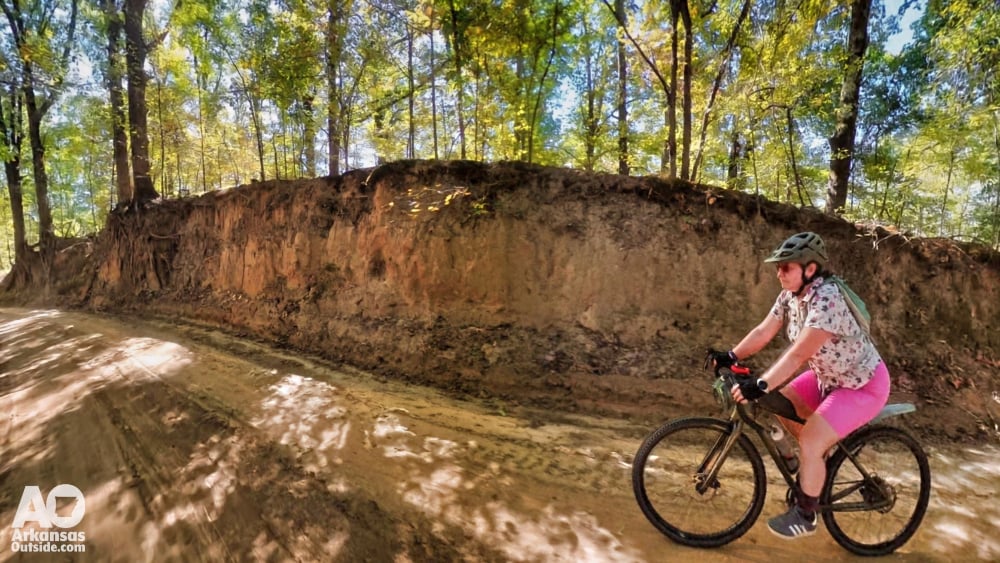
South of Interstate 40, we rolled into Forrest City past signs from local businesses welcoming riders. Those small gestures matter when you are tired and far from home. After an aid station, we headed out of town and onto Tuni Canyon, the sunken road. It is one of those places that makes me want to stop riding long enough to just look around.
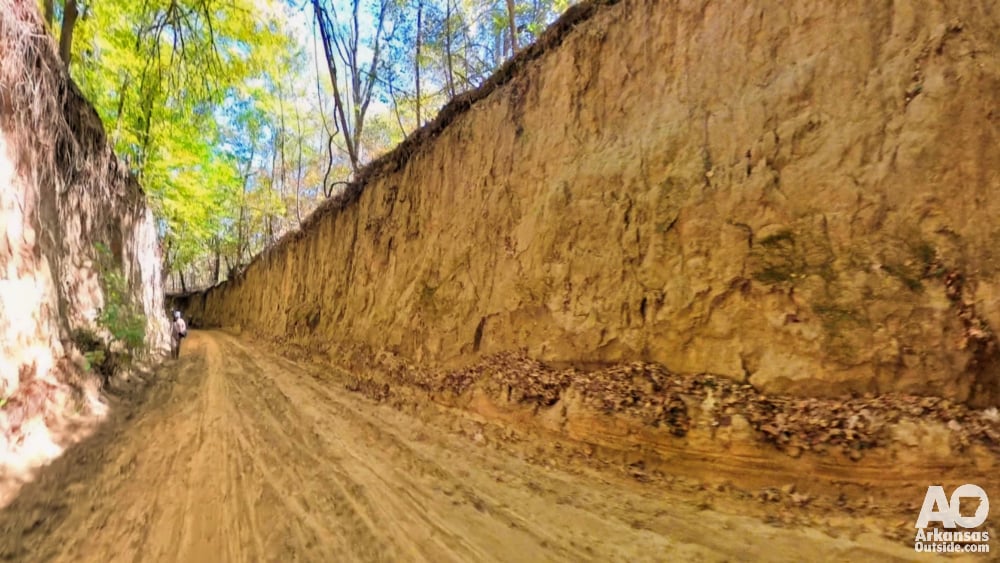
I’d recommend returning during a good fall color season. The dry weather had muted the colors this year, but the shaded road was still beautiful. More gravel brought us to a levee and an aid station along the L’Anguille River. In addition to the usual food and drinks, the Arkansas Game and Fish Commission offered a chance to try clay-target shooting.
After resting in the shade, we pushed into Marianna and joined other riders for lunch and a beer at Off the Square, a small restaurant known for its Cajun food. From there, it was only a couple of miles to the finish.
At Mississippi River State Park, staff had organized a fishing activity for riders. A local band played, and dinner featured a shrimp boil and other Southern favorites. We washed our bikes, and the mechanics from Phat Tire Bikes worked on my troublesome front derailleur. We pitched our tent in the shade and were asleep before nine.
Day Three: Marianna to Helena
We had been looking forward to the shortest ride of the week. Somehow, it became one of our longest days, just not because of the miles. We started with breakfast at a church in Marianna, and I will happily plan a ride around a good Southern church breakfast. After taking photos of the murals, we pointed our bikes toward Helena, Delta Dirt Distillery and the King Biscuit Blues Festival.
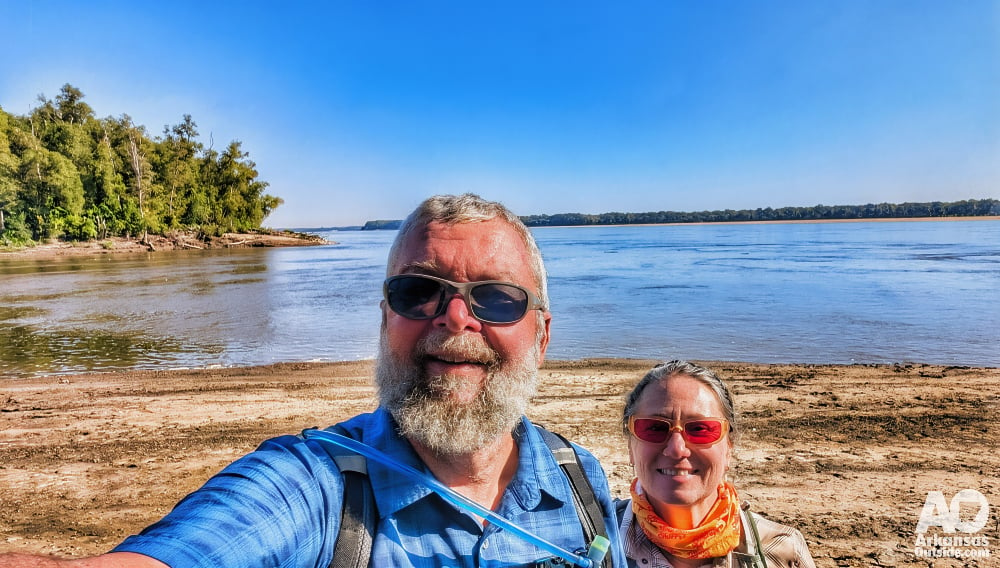
The ride was relatively quick, with a gradual downhill and a short levee section approaching town. At an aid station near the confluence of the St. Francis and Mississippi rivers, participants got their first view of the Mississippi.
Once we reached Helena, there was really no debate about our first stop: Delta Dirt Distillery on Cherry Street. It has become one of those places where Lisa and I feel at home. We lingered over a drink, picked up bottles of the newer whiskey and gin and were grateful that organizers would carry our purchases to the finish. That is the kind of logistical detail I can appreciate on a bicycle.
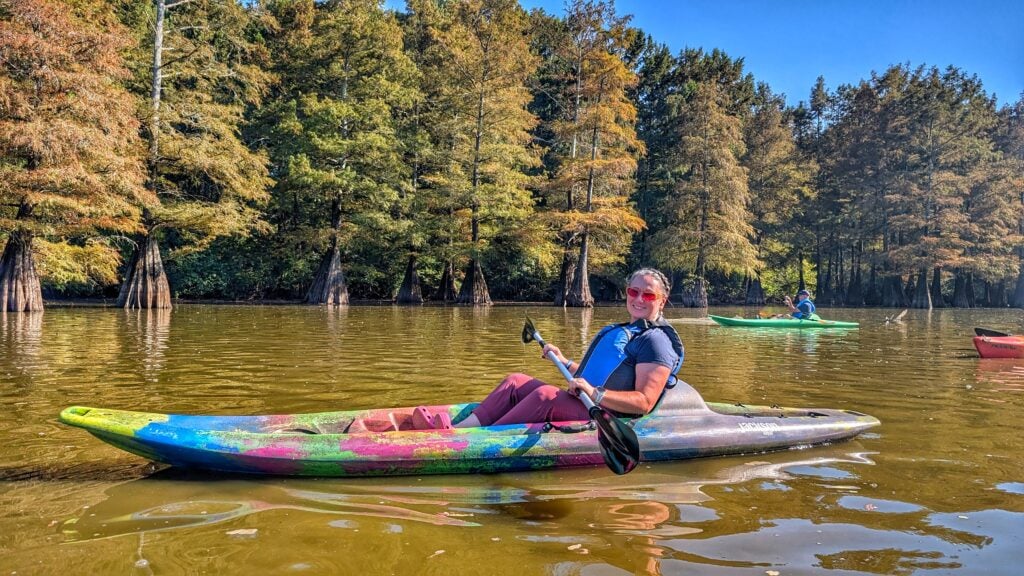
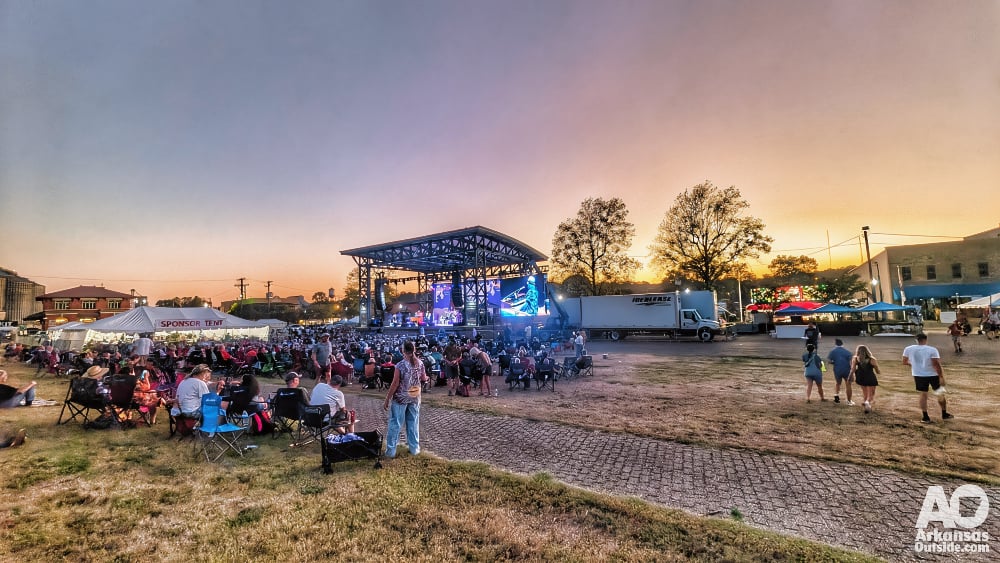
We then rode back to Storm Creek Campground, part of Mississippi River State Park, and joined a short kayak outing on Horner Neck Lake led by park staff. Afterward, a shuttle took us into town for the King Biscuit Blues Festival. Festival admission and a dinner voucher were included with the ride.
We enjoyed shrimp and grits from the Doe’s Eat Place food truck, found a low wall to sit on and settled in for the evening’s headline performances. Great food and remarkable music made for a memorable night. At 8 p.m., we caught the shuttle back to camp. We were done.
Day Four: Helena to Stuttgart
I had been thinking about this day for a while. The full route to Stuttgart was more than 86 miles, and after three days on the bike I was not feeling particularly heroic. Breakfast helped, especially the unexpected a cappella gospel singing by a woman and her grandson. It was a reminder that the Graveler was giving us much more than a route to follow.
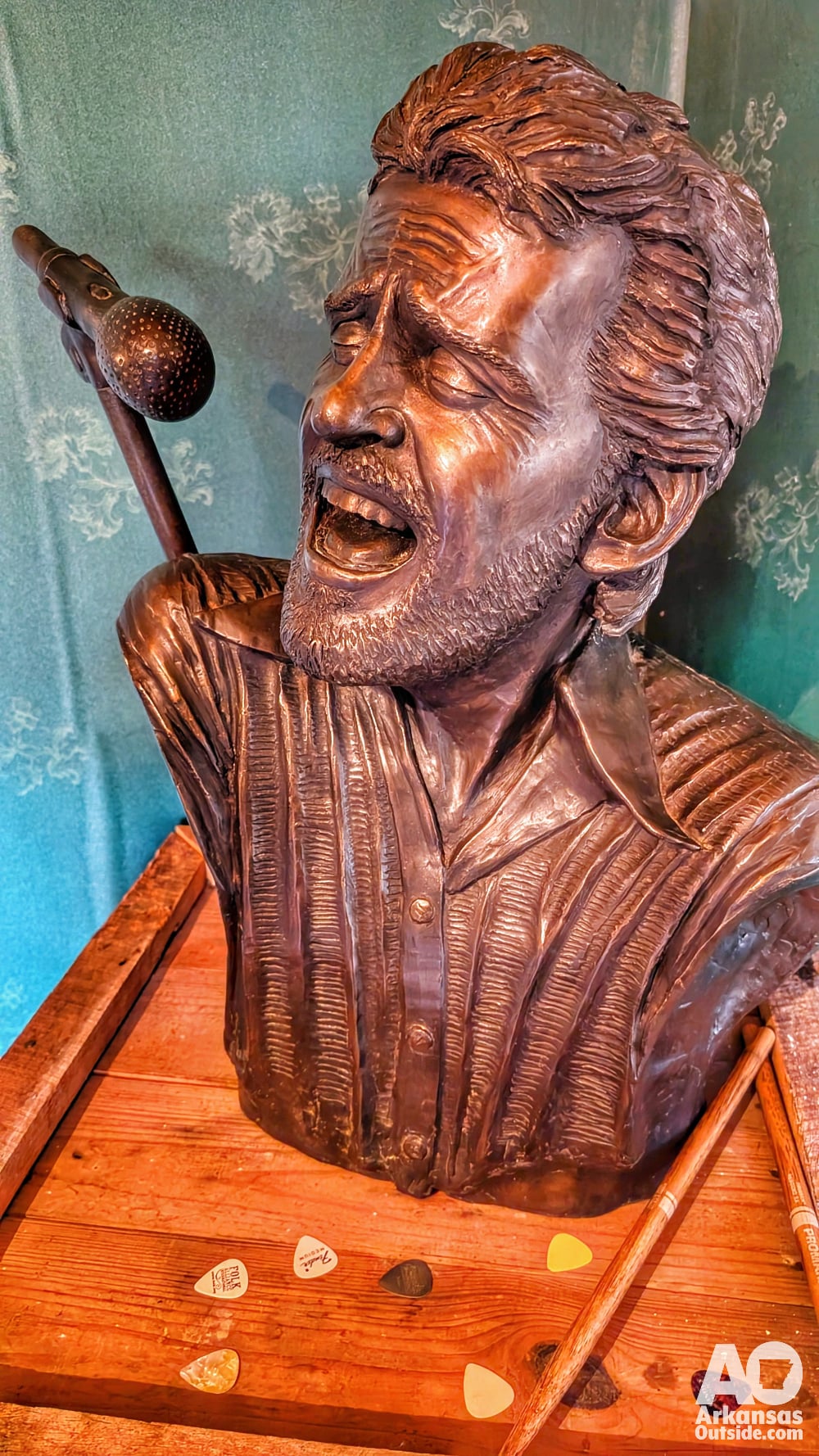
We had wisely signed up for a shuttle to the first aid station in Marvell, hometown of Levon Helm, the singer, songwriter and drummer of The Band. We toured his modest childhood home and spent a little time playing with a volunteer’s dog before getting on our bikes.
We rode a mix of gravel and pavement to the next aid station, where I made a decision I had been turning over in my head: I would take the shuttle the rest of the way to Stuttgart and save something for the last day. Lisa wanted to keep riding. She headed on with our friend Frank Webber of Shift Modern Cyclery and Hex Carbon Workshop, and I felt good knowing they would look out for each other.
The shuttle traveled much of the route while checking on riders. It was getting hot, and the gravel was becoming rougher. I was glad I’d made the call. Waiting at aid stations also gave me a chance to talk with cyclists from across the country and a few from overseas. In some ways, it was the best way to meet people.
By the time my shuttle reached Stuttgart, Lisa and Frank were already there. I was impressed, and maybe a little envious. They had earned that finish.
We were especially excited about our accommodations that night: a hotel room just a block from the campground. Skipping tent setup and having our own shower and bathroom sounded wonderful.
Most of the evening’s festivities took place at a local club, with an excellent dinner. Anyone who passed up Grandma’s rice pudding missed out.
Back in Jonesboro, riders had been given duck calls to practice with. Stuttgart was the night to show off those skills. After performances by expert duck callers, Graveler participants took their turns in a competition. It was great fun.
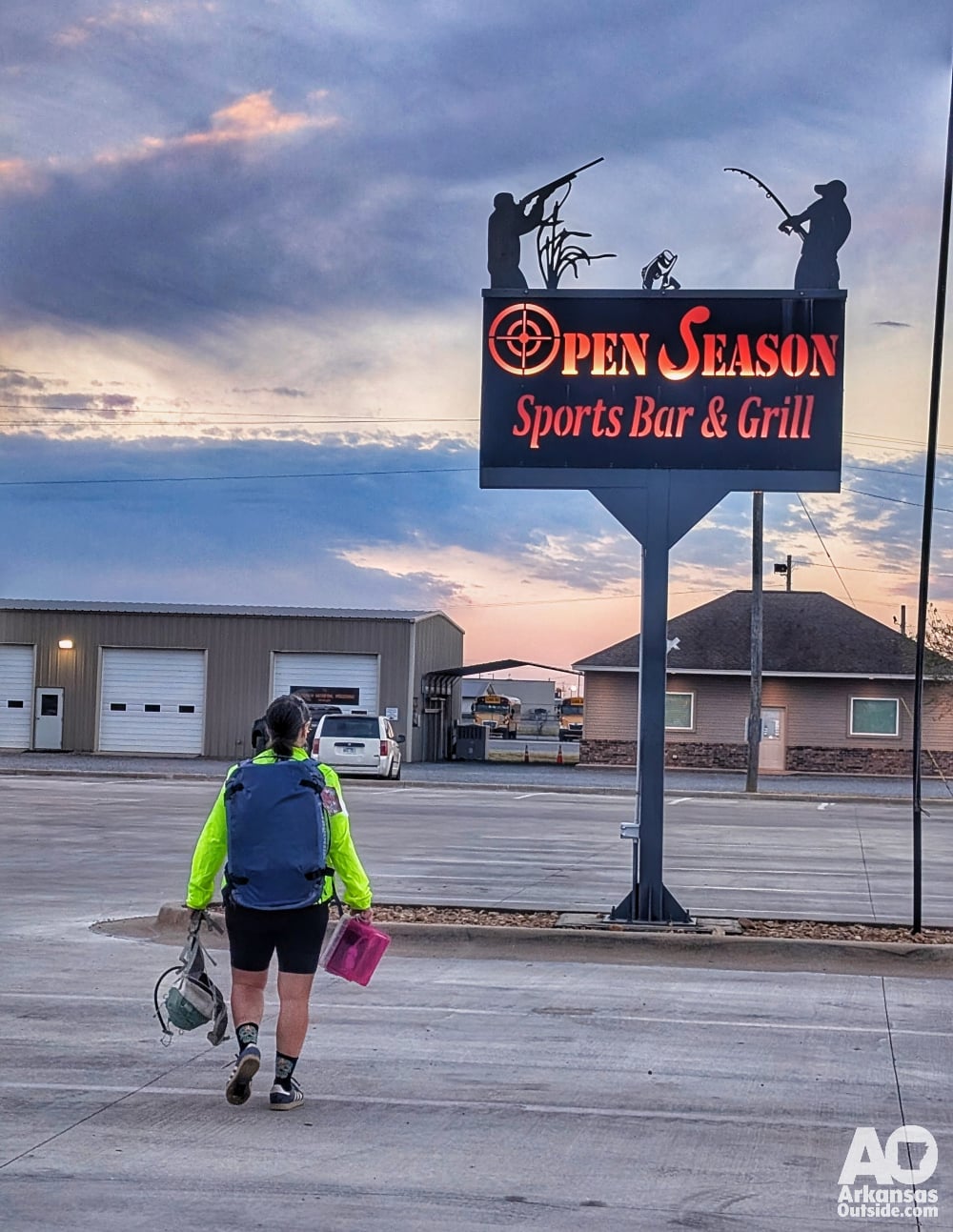
We went to bed thinking we had treated ourselves to a little luxury. The next morning we had to laugh: we had actually been sleeping better in the tent. I was already doing the math on the final day and figuring out which miles mattered most to me.
Day Five: Stuttgart to Arkansas City
The last day’s full route was nearly 100 miles of mostly flat, pedal-heavy riding. My plan was to shuttle the first two sections, putting us beyond Gillett and closer to the Delta Heritage Trail. Lisa agreed. After some time at the first aid station, we reached the second, where overcast skies brought slightly cooler conditions.
We joined a couple of friends and soon turned onto a private hunting-club road that event director Bobby Finster had worked to secure for the route. The sandy track brought us to the north side of the Yancopin Bridge on the Delta Heritage Trail.
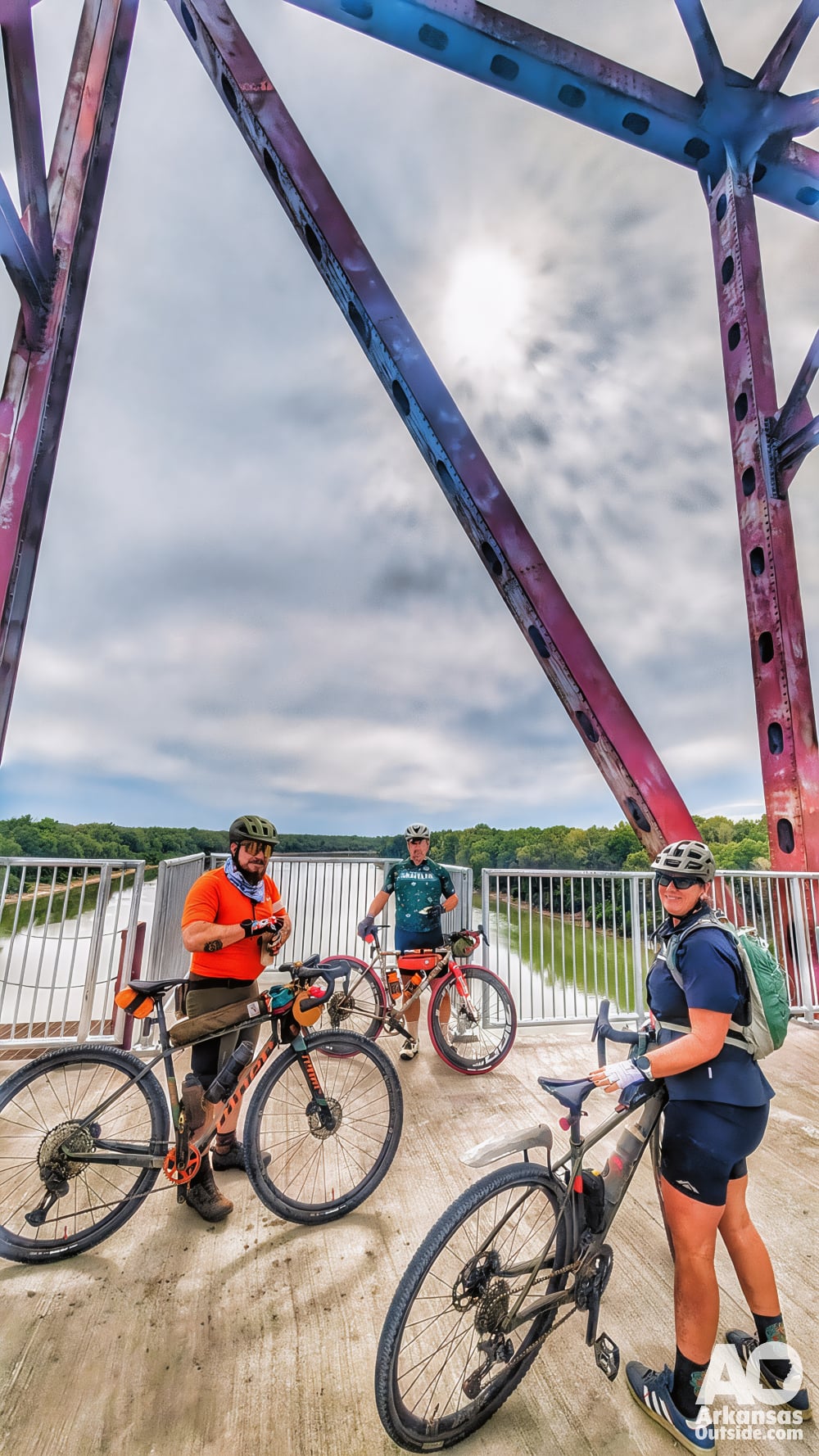
We turned north for about three miles to see the newly built Benzal Bridge over the White River, a striking structure that reminded us of the Clinton Presidential Park Bridge in Little Rock. Heading south again, we stopped above wetlands to watch an alligator glide just below the surface.
Soon we returned to the Yancopin Bridge, which crosses the Arkansas River. The enormous sandbars below looked inviting for camping and bonfires, but we had miles to cover.
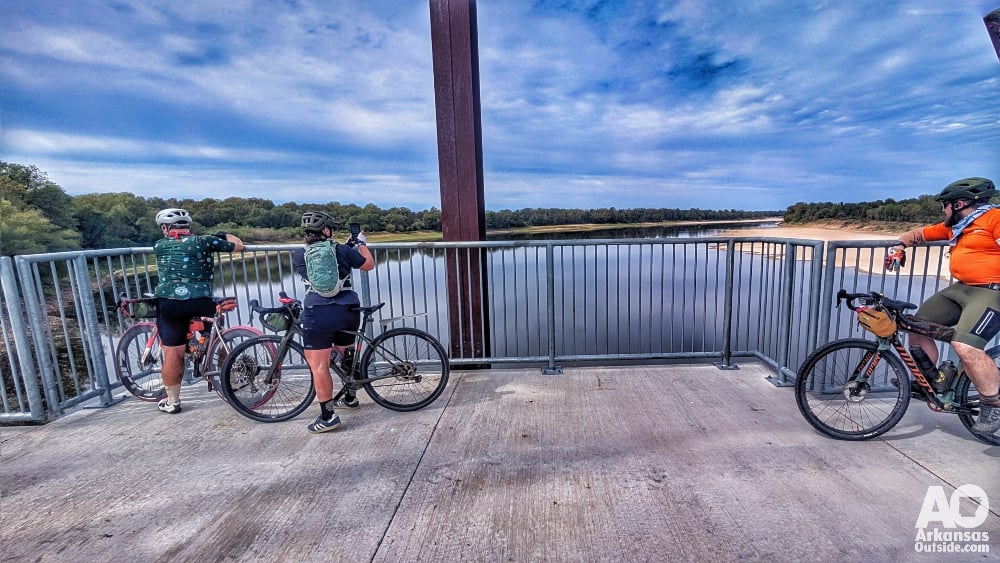
In Watson, people from Gillett greeted us along the route, cheering on the cyclists. The community also has a collection of antique fire trucks and a small former jail. About nine and a half miles later, we reached Rohwer, the site of a World War II Japanese American Relocation Center. Lisa and I stopped to visit the memorials.
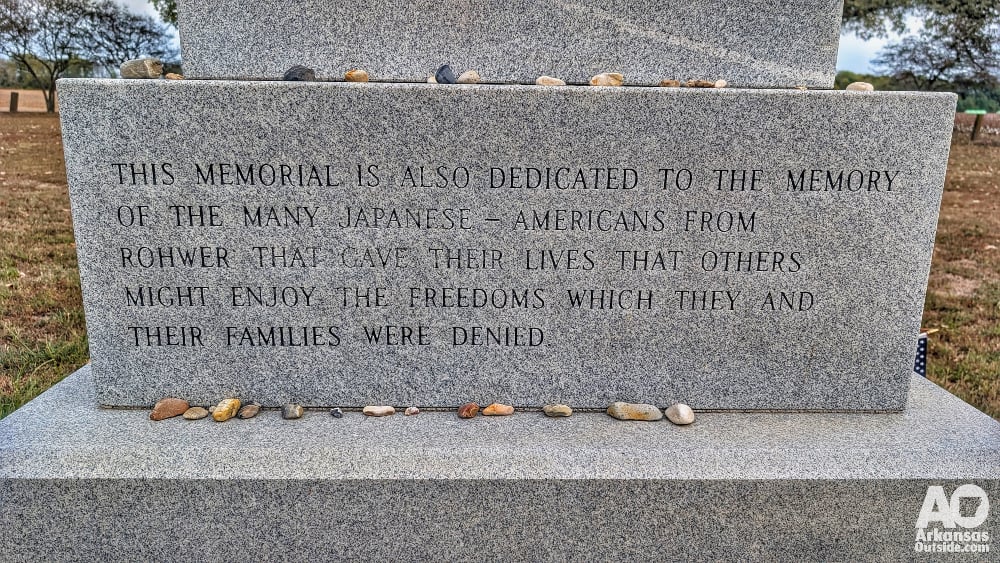
Rohwer was home to the week’s final aid station. After a quick snack, we began the last push toward Arkansas City: a little more than 14 miles of pavement along the Mississippi River levee.
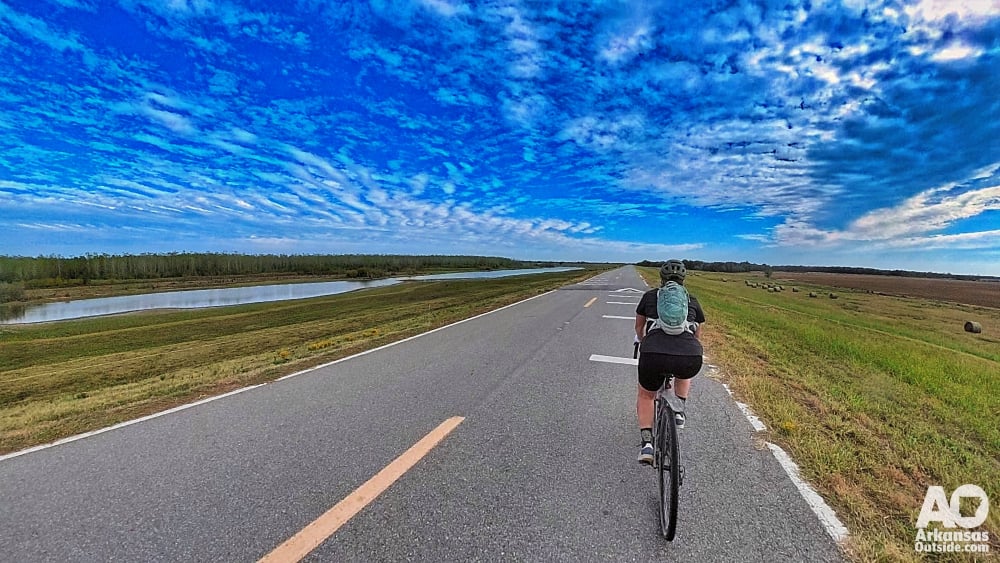
Then, after all those miles and all those little decisions along the way, we dropped off the levee into Arkansas City. There were cowbells, cheers and applause. Lisa and I reached for each other’s hands and rolled across the finish together. That moment meant more to me than any number on a bike computer.
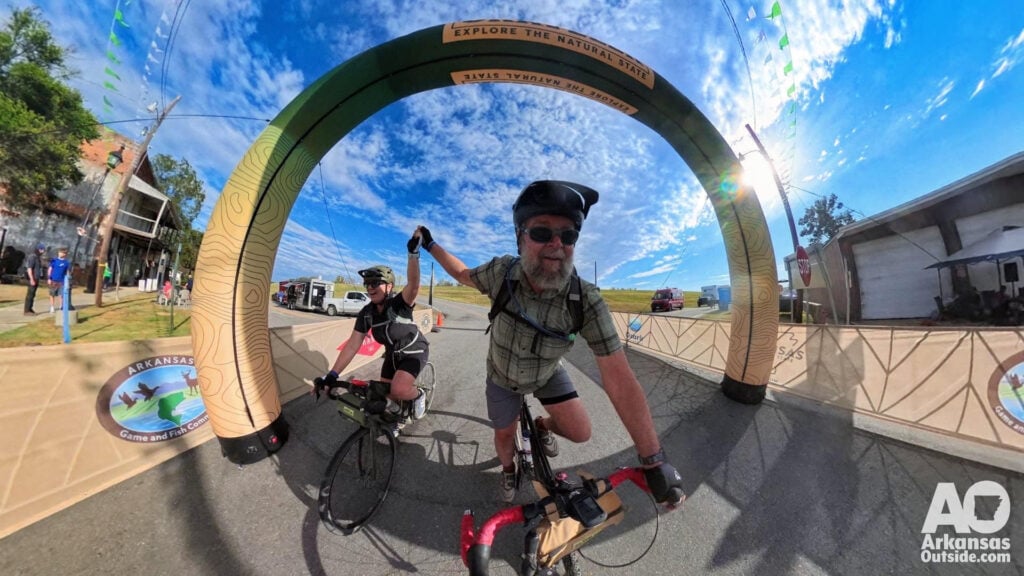
After putting our bikes away, we enjoyed food from Hoots BBQ in McGehee and joined friends under the food tents for conversation and laughter. Our final campsite was on the lawn of the historic county courthouse. That evening brought more food, live music, a bonfire and, for some riders, karaoke.
The Way Home
The next morning, we packed camp at an easy pace. Our buses weren’t leaving until 9 a.m., so there was time for another excellent church breakfast and conversations with friends. We handed our bikes and luggage over to Pork Belly Ventures for transport back to Jonesboro and boarded the buses. Most of us slept through much of the four-hour return trip.
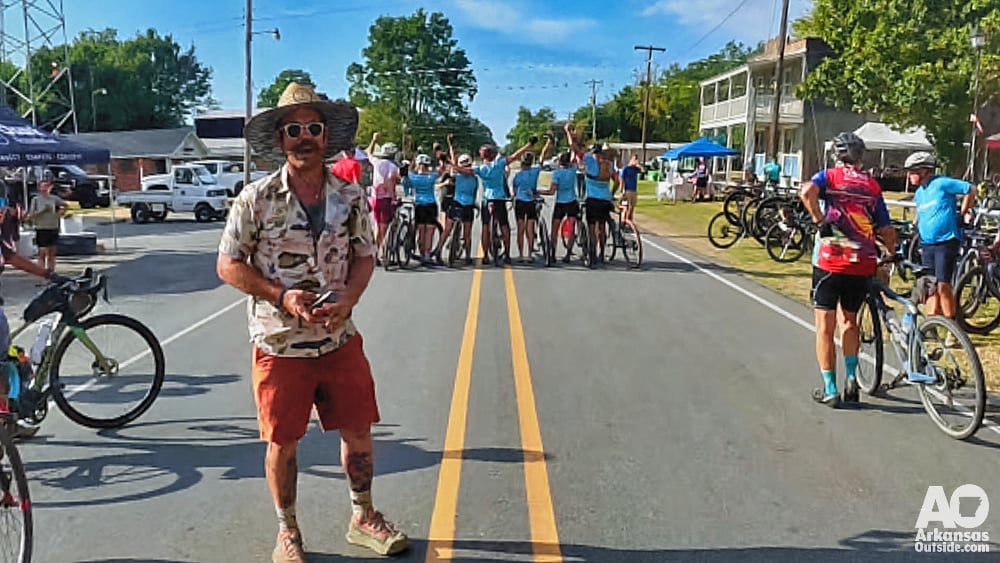
The Arkansas Graveler is not an easy ride if you have not put in the miles beforehand. I also learned that there is no shame in using the support that is there. I do not regret a single shuttle. I met people I might otherwise have passed with little more than a wave, and I saved enough energy to enjoy the roads and places that had drawn me to this ride in the first place.
The next Arkansas Graveler route has not yet been announced. When it is, we’ll share the details.
What stays with me is not the mileage. It is the Smith family welcoming us back to Birdeye Farm, cold water on a hot levee, church breakfasts, music in Helena, the people cheering from small towns and Lisa reaching for my hand at the finish. The Arkansas Graveler gives you a reason to cross the state slowly enough to notice it. If you go, do yourself a favor: stop now and then, look around and talk to people. Arkansas has a way of rewarding that.
Watch the video below:
This article was originally published on ArkansasOutside.com, your trusted source for outdoor news and updates in The Natural State. Unless otherwise credited, all photos included in this piece are the property of Arkansas Outside, LLC. We take pride in sharing the beauty and adventures of Arkansas through our lens, thank you for supporting our work!