

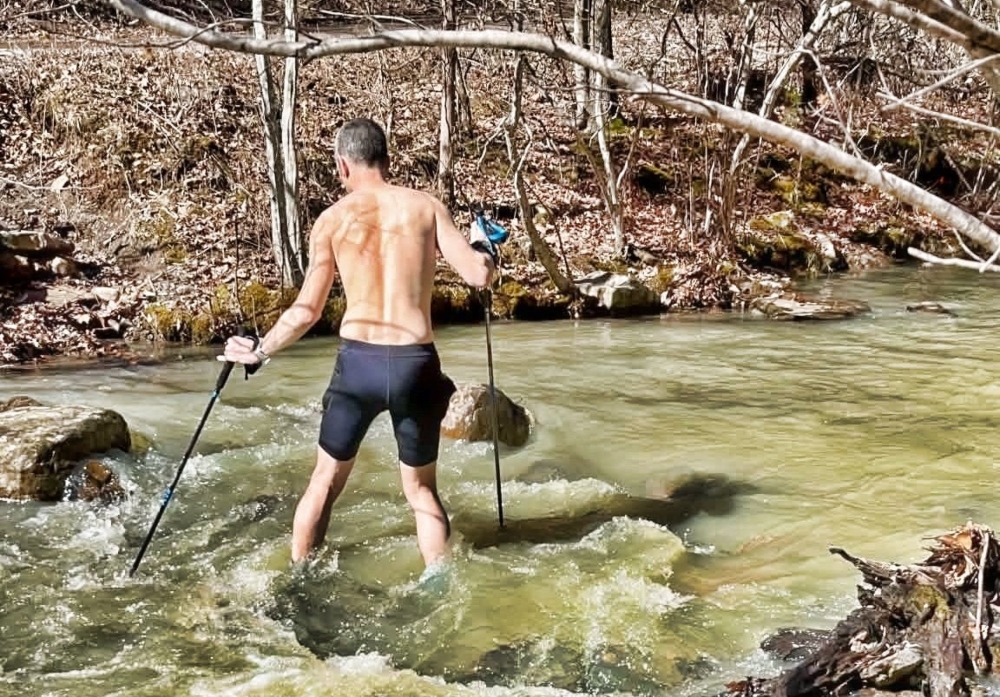


Speed records. Gnarly terrain. No excuses. Welcome to the world of Fastest Known Times, and Arkansas has more skin in the game than you might think.
If you’ve ever crushed a personal best on the trail and wondered whether you could push it further, way further, like “break a record” further, there’s a global community waiting to hear about it. Welcome to the world of Fastest Known Times, or FKTs: the sport where trails become racecourses, clocks don’t stop, and the only official referee is your GPS watch and your own conscience.
The hub of it all is fastestknowntime.com, a database of more than 7,200 routes worldwide where athletes can submit, track, and compete for the fastest elapsed time on a given trail. No registration fees. No aid stations stocked by volunteers in tutus. No finish-line bananas. Just you, the dirt, and a record that someone, somewhere, is going to try to take from you.
And yes, Arkansas is on the list. Just ask Daniel Arnold.
Arnold, an Arkansas-based ultrarunner with more than a dozen 100-mile finishes on his resume, holds the FKT on both the Lake Ouachita Vista Trail and the Ozark Highlands Trail (OHT). He started where most aspiring FKT athletes should: smaller than his ultimate goal.
“I wanted to do the OT (Ouachita Trail), and so I kind of wanted to start smaller,” Arnold said. “I figured the LOViT (Lake Ouachita Vista Trail) would be a good kind of intro, being 39 miles. And then the OHT was really because after doing a few hundred milers, I kind of wanted to go further.”
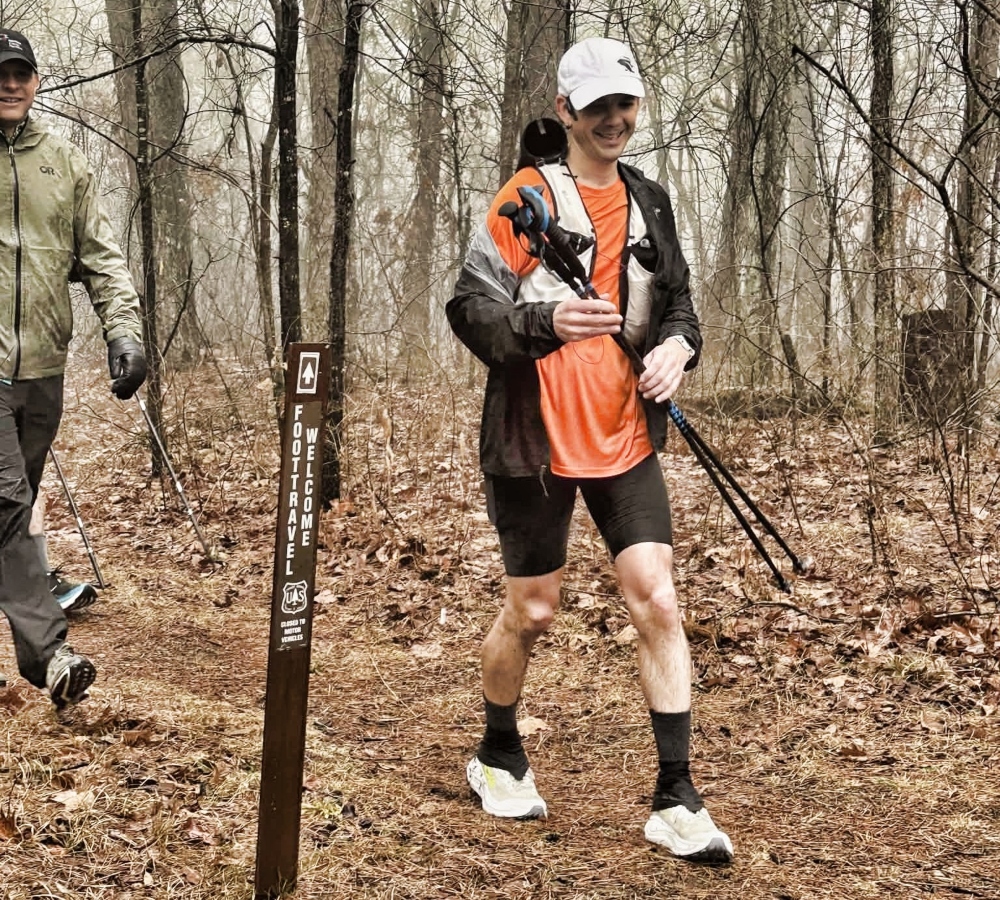
What Even Is an FKT?
The concept is deceptively simple: go from Point A to Point B as fast as humanly possible, document it, and submit it. The site was founded by outdoor enthusiasts Pete Bakwin and Buzz Burrell, who coined the term in the year 2000, and it has since become the de facto record book for the sport.
Think of it as Strava’s more serious, more adventurous older sibling. The one who actually sleeps on trail and eats cold ramen at 2 a.m. while hallucinating parked cars in the woods.
One key rule: elapsed time, not moving time. Every bathroom break, every gear fumble, every sit-down cry at mile 80 counts. The clock starts and does not stop until you’re done.
The Three Flavors of FKT
There are three categories, and none is considered better than the others.
Unsupported is the purist’s game. You carry everything from start to finish, with no external support of any kind. Water from natural sources is fine, but no commercial resupply. You can only carry so many tortillas and almond butter packets.
Self-Supported is the middle ground. You can resupply from public resources like stores and vending machines, but no crew, no pre-arranged caches, and no one handing you a fresh pair of socks at a road crossing.
Supported is where the real machines come out. Pacers and crew are unlimited, and they can carry whatever you need. They just can’t carry you. This is the category where crews of eight sleep in Walmart parking lots and live on beef jerky and love.
Gender categories include male, female, non-binary and mixed-gender teams, so every style has multiple distinct records up for grabs.
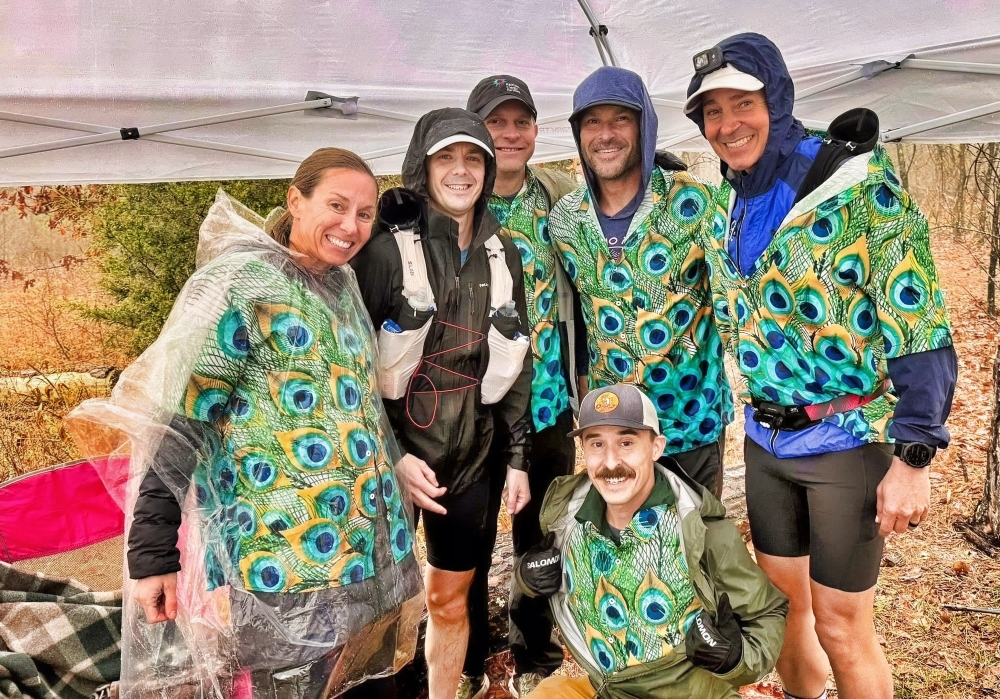
Does Your Trail Qualify?
Not just any path in the woods earns a spot on the leaderboard. Routes must be at least 5 miles long or have at least 500 feet of elevation gain, and even meeting those minimums doesn’t guarantee approval.
Each approved route must be notable enough that others will want to repeat it. Think beautiful scenery, historical or cultural significance, and a logical line on the landscape. Your favorite 6-mile neighborhood loop probably won’t make the cut, but a ridgeline traverse through a national forest? That’s a different story.
Routes must be accessible to all and can’t cross private property without permitted public access. The Natural State, with its vast stretches of national forest, has a natural advantage here.
How to Make It Official
Verification requires the original GPS data file in a format such as GPX, TCX or FIT, downloaded directly from your device, plus a link to your Strava or Garmin Connect activity and a trip report. Photos at recognizable landmarks help, too.
The community values transparency. Write it up. Be specific. Tell people about the mud.
For efforts longer than 24 hours, live tracking is recommended. And before you submit, make sure your time is actually the fastest. Only the fastest time is listed. If you ran hard but not hard enough, the route comments section is a genuine and welcoming place to share the effort.
Arkansas on the Map
Here’s where it gets good. Arkansas has a solid footprint on the FKT site, with routes across both the Ouachita and Ozark mountains drawing local legends and out-of-state hunters alike.
Ouachita National Recreation Trail (OK/AR), 223 miles. The granddaddy of Arkansas FKT routes, stretching from Talimena State Park in Oklahoma to Pinnacle Mountain State Park near Little Rock. Records have been chased here since 1991. Most recently, Matt Pruitt set a supported FKT in March 2025, completing the trail in 71 hours, 30 minutes and 9 seconds. Before him, Nick Fowler logged his 15th attempt at the unsupported record, finally cracking it after breaking a foot and tearing a quad on previous efforts. The man renamed Queen Wilhelmina State Park “Queen Will-I-Throw-Up State Park” and still came back. That’s the FKT spirit.
Ozark Highlands Trail (AR), 165 to 207-plus miles. The OHT stretches more than 200 miles through northwest Arkansas. One of its most iconic FKTs belongs to Ashley Nordell, who in October 2017 ran the trail in 2 days, 10 hours and 46 minutes, covering a distance most people would budget two weeks to hike. By the end, she was seeing vehicles parked in the woods that were definitely not there. That’s what 50-plus hours on trail will do to a person.
Arnold now holds the current record on the OHT and describes the terrain as among the most punishing he’s encountered anywhere.
“I really think we have some of the most technical trails I’ve ever been on, especially the Ozark Highlands Trail,” he said. “Just the chunky rocks, it’s so hard to catch a rhythm. The mountains we have here, you’re always up and down, up and down, and you never really get into a good flow.”
His OHT attempt came on Valentine’s Day weekend, a timing he’d recommend to anyone eyeing a fast effort in Arkansas.
“I think December, January, February are probably pretty good targets if somebody’s looking to do an FKT,” Arnold said. “If you went later in the spring, you’re going to have to deal with a lot more water, and the heat and the humidity. And you definitely don’t want to try to do it in the summertime.”
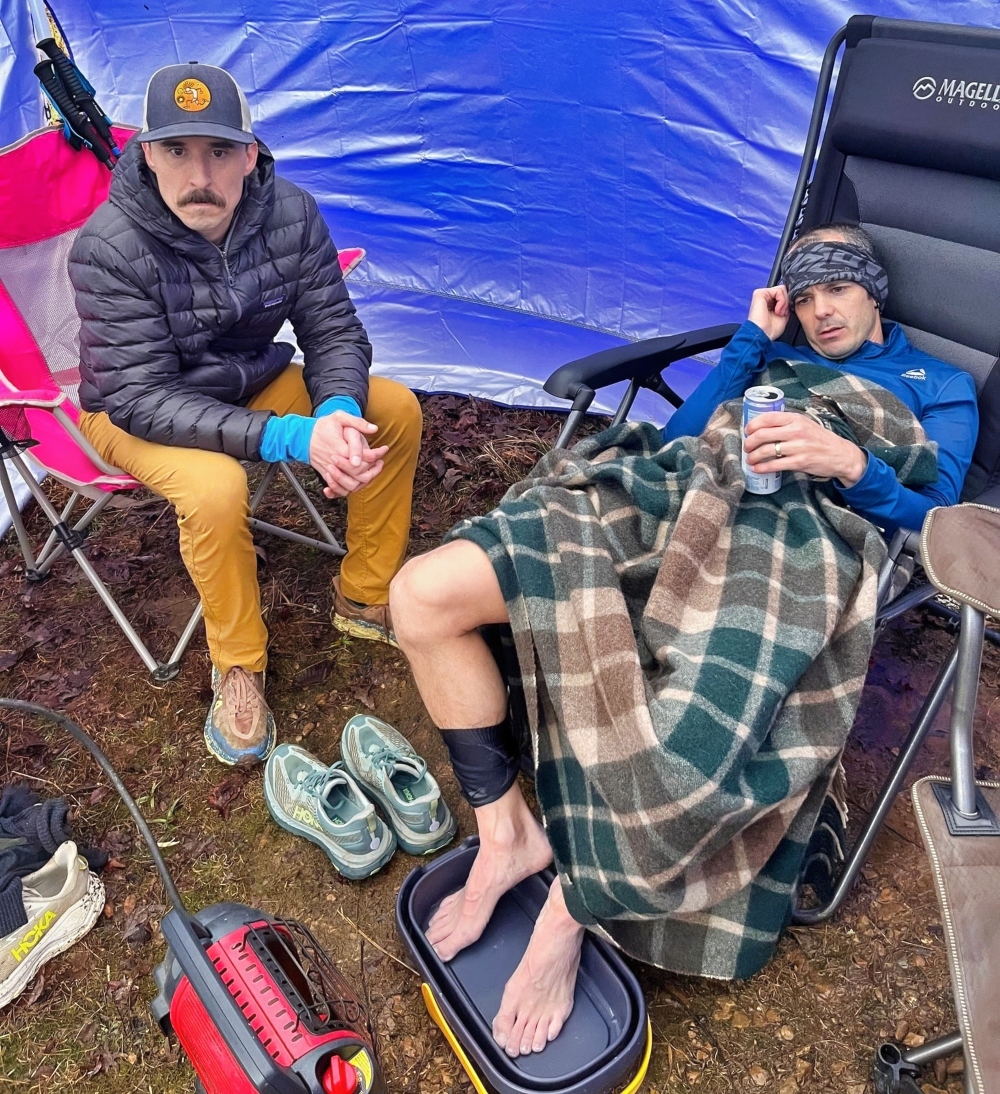
Even with favorable temperatures, the run wasn’t without drama. Rain soaked the trail nearly all of his first day and into the first night, leaving Arnold’s feet wet for hours and triggering nerve pain bad enough that he wasn’t sure he could continue at mile 80. A crew stop, dry shoes and a sunrise saved the effort.
“Sunday ended up being a really beautiful day, and that helped me a lot, just kind of raised my spirits,” he said. “The crew did an excellent job, and having them there was the difference for sure.”
Womble Trail (AR), 37 miles. A 37-mile Ouachita National Forest trail that offers one-way and out-and-back FKT categories. The “Double Womble,” an out-and-back covering roughly 74 miles of singletrack, is a legitimate and legitimately brutal option.
Eagle Rock Loop (AR), 26.8 miles. A 26.8-mile loop through the Ouachita Mountains that regularly tops “best hikes in Arkansas” lists. Three connecting trails, five trailheads, crystal-clear streams and an active FKT community make this one of the more welcoming entry points in the state.
Sylamore Ranger District (AR), 42 miles. A point-to-point route through the Ozark-St. Francis National Forest, from Sylamore Trailhead in Allison to Matney Knob Trailhead in Norfork. Approximately 42 miles with 6,500 feet of climbing through some of the best Ozark terrain in the state.
Pinnacle Mountain (AR), West Summit. Yes, even Pinnacle Mountain has an FKT, and yes, it absolutely counts. A short, sharp vertical effort on the centerpiece of Pinnacle Mountain State Park just west of Little Rock. It’s the kind of record a motivated local trail runner could go after on a Tuesday evening.
Back 40 Loop (AR), 21 miles. The outer loop of the Back 40 Trails system in Bella Vista, 21 miles of nearly all singletrack starting at Blowing Springs. Northwest Arkansas’s world-class mountain bike network gets a running FKT entry. Tucker Peitz holds the record at 2 hours, 30 minutes and 7 seconds, a pace that suggests he was, in fact, running and not merely jogging.
So… Want to Try?
The barrier to entry is lower than you might think. No fee. No governing body. Just a good trail, a GPS device, a willingness to suffer, and a solid trip report when it’s over.
Arnold’s practical advice for anyone attempting the OHT or a similar multi-day effort: bring gear you can swap out, pack plenty of food variety because you will get tired of your favorite thing after 30 hours, and don’t schedule sleep.
“Sleep when you have to, but don’t try to schedule sleep,” he said. “If you have sleep scheduled and you’re not tired, you’re just lying there wasting time and not sleeping. Keep going until you are literally falling asleep while you’re moving. That way, when you lay down, you’re out, and you can sleep for 20 to 30 minutes, and that’s enough to keep you going for a few more hours.”
On gear, he keeps it simple: a GPS tracker with the trail loaded, full stop.
“Just safety-wise and peace of mind, knowing you’re on the right trail, knowing that people know where you are and that you’re moving, or being able to send out an SOS if you need it,” Arnold said. “Especially if you were doing unsupported, that would almost be required gear.”
His parting thought for first-timers is the most useful of all.
“You’re definitely more capable than you realize,” Arnold said. “It’s hard to wrap your head around going that far if you’ve never done it before, but people are amazing creatures. You just kind of have to put your head down and grind it out.”
If you’re eyeing a record, announce your intentions in the route’s comments section as a show of good faith to the current record holder. Then go run. Document everything. Submit it.
And if you think an Arkansas trail deserves to be on the FKT map but isn’t yet, submit a route. Just make sure it’s one that others will want to chase you down on.
Now go find out how fast you actually are.
For the full list of Arkansas routes, current FKT holders and submission guidelines, visit fastestknowntime.com. FKTs change hands regularly, so always check the site before making your attempt.

Photos provided by Daniel Arnold.
This article was originally published on ArkansasOutside.com, your trusted source for outdoor news and updates in The Natural State. Unless otherwise credited, all photos included in this piece are the property of Arkansas Outside, LLC. We take pride in sharing the beauty and adventures of Arkansas through our lens. Thank you for supporting our work!
