

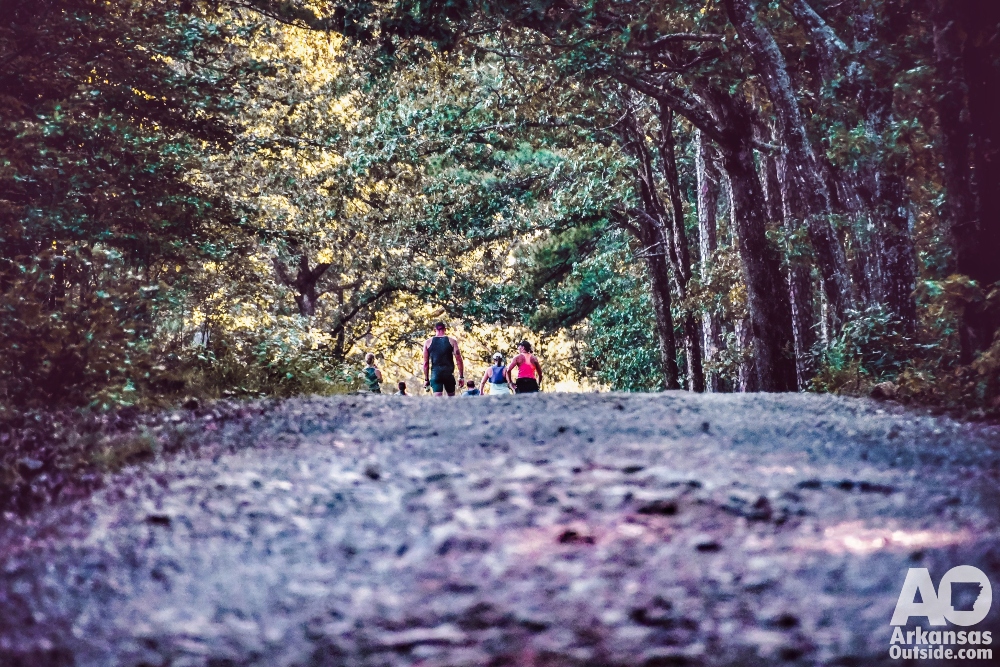


Volunteer directors Katie Helms, Sharon Bennett, and Stacey Shaver carry on a decades-long tradition of ultrarunning in the Ouachita National Forest
Deep in the hills of the Ouachita National Forest, about 30 miles west of Little Rock, a patch of central Arkansas real estate carries more history per acre than most places in the state. Lake Sylvia Recreation Area and its neighbor, Camp Ouachita, have served as a gathering place for Girl Scouts, Depression-era work crews, state park managers, and, for more than three decades, some of the most dedicated trail runners in the country. Three races organized by the Arkansas Ultra Running Association, known as AURA, call this land home. Each one reflects the spirit of the place itself: rugged, welcoming, and built on the labor of volunteers.
A Place Shaped by Hard Times and Hard Work
The development of Lake Sylvia began during the Great Depression when the federal government launched programs to provide jobs and improve public lands. In the early 1930s, the Civilian Conservation Corps, an initiative of President Franklin D. Roosevelt’s New Deal, was tasked with developing natural resources across the country. One of their projects in central Arkansas was the creation of Lake Sylvia.
Completed in 1937, Lake Sylvia was formed by damming a small tributary of the Maumelle River. The CCC workers built a stone dam and developed recreational facilities, including picnic shelters and trails, designed to blend harmoniously with the forest surroundings. Many of these original structures remain today.
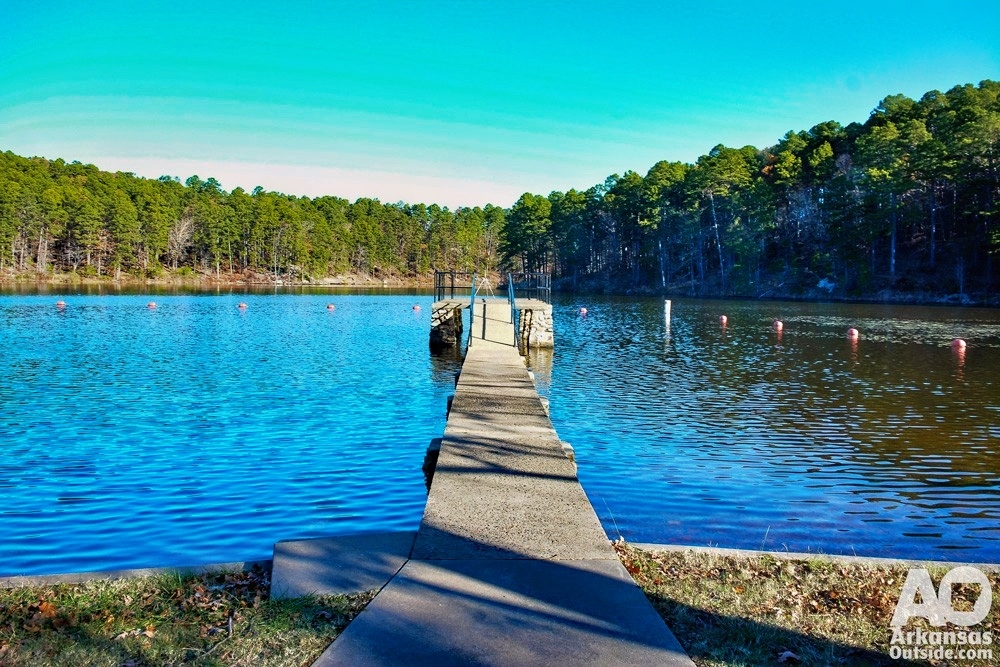
Across the lake, a companion project was taking shape simultaneously. Camp Ouachita is the only surviving Girl Scout camp in the nation constructed by the Works Progress Administration during the New Deal era. Built between 1936 and 1940, the camp served as a retreat for Girl Scouts, fostering outdoor skills and community spirit. Its rustic architecture, designed by Frank Ginocchio, features native stone and timber structures, including the iconic Ogden Hall.
The camp was established through the efforts of the Little Rock Area Girl Scout Council, which secured WPA grants, private donations, and a special-use permit from the U.S. Forest Service. Dedicated in 1937 during the 25th anniversary of Girl Scouts, Inc., Camp Ouachita was added to the National Register of Historic Places in 1992.
Challenges with water supply led to the camp’s closure in 1979, but preservation efforts since then focused on restoring key structures for modern use. The Arkansas Traveller 100 played a direct role in that restoration. For over a decade since the race’s inception, proceeds from the AT100 went to the effort to restore the camp, which had fallen into a critical state of disrepair after it became inactive around 1980.
The next chapter for the area arrived in the summer of 2021. The Arkansas Department of Parks, Heritage and Tourism held an event at Lake Sylvia Recreation Area to officially mark the beginning of operating and managing the area as a unit of Pinnacle Mountain State Park. ADPHT signed a historic property lease with the United States Forest Service to do so, with the USFS continuing to partner with ADPHT and Arkansas State Parks in the environmental management of the area.
Under state parks management, the facilities are maintained and currently being updated for contemporary recreational use while preserving their historic charm. The area is now open year-round with no fee for day-use, and the existing cabins have been renovated and brought up to state park standards including heat and air.
Three Races, One Sacred Place
This area has long been a sacred spot for Arkansas ultra runners, as many gather here in training for the Arkansas Traveller 100 Mile race. It is no coincidence that three of AURA’s signature events are staged on these very roads and trails.
The Catsmacker
The season ends where the year’s training began. The Catsmacker Trail Run, directed by Katie Helms, is a donation-based event staged each spring at the Lake Sylvia Day Use Area. The distance runs about 20 miles for the full Catsmacker, with a 12-mile Kitty Run option available for those wanting a shorter effort.

The course utilizes Forest Service roads and a portion of the Ouachita Trail, with a combination of pavement, gravel, and single and double track trail. Runners navigate a loop that takes them past Flatside Pinnacle and back through the forest to the lake. There will be at least three aid stations for the Catsmacker and two for the Kitty Run, and runners are encouraged to carry a water bottle and any snacks they want.
This is a no-UTS-points fun run that serves as a season-closer and celebration of the end of an amazing year of Arkansas ultrarunning, with a cookout-style lunch and the AURA Ultra Trail Series awards ceremony held after the run. The suggested donation to cover costs is $20, with any proceeds going to AURA. The next running of the Catsmacker is scheduled for May 23, 2026.
The Full Moon 50K and 25K
When summer arrives, so does the Full Moon. Race director Sharon Bennett oversees this nighttime event, which draws runners to Camp Ouachita every July for a moonlit tour of the Ouachita National Forest.

Full Moon starts at historic Camp Ouachita in Perryville, and its various distances provide runners a nighttime tour of Lake Sylvia, Lake Winona Vista, and Crystal Mountain areas of the Ouachita National Forest, via rugged forest roads and undulating hills.
Some of these roads were used as railroad logging tracks in the 1930s, and runners can still occasionally find an old railroad spike on the course.
Full Moon, which was first run in 1992, serves as the kickoff race for the Arkansas Ultra Running Association’s Ultimate Trail Series. The 50K race starts at 7 p.m. for all runners, with cutoffs at 10 p.m. for the outbound 25K turnaround, midnight for the 50K turnaround, and 2 a.m. for the inbound 25K turnaround. The 25K race starts at 8 p.m. Runners must carry a headlamp and a hydration device, as this is a nighttime race.
The Williams Junction Fire Department serves breakfast starting around 10:30 p.m., and runners continue crossing the finish line until 4 a.m. The 2025 running of the Full Moon 50K and 25K was held July 19-20. Registration information for 2026 is expected to be announced through the race website at fullmoon50k.com.
The Arkansas Traveller 100
The jewel of the Arkansas ultra calendar, the Arkansas Traveller 100 takes place the first weekend in October and draws runners from across the country to test themselves on 100 miles of Ouachita Trail and Forest Service roads. Race director Stacey Shaver leads the effort, backed by a race committee and more than 200 volunteers.
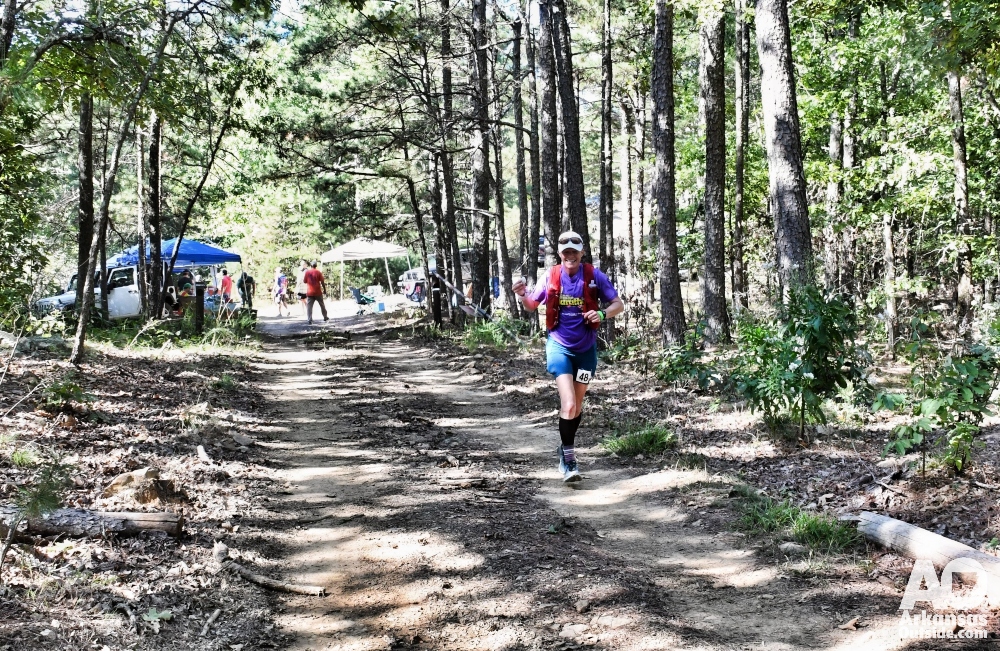
The Arkansas Traveller 100 was founded and directed for ten years by Lou and Charley Peyton of Little Rock, with the first running of the event on Oct. 5, 1991. In 1989, Lou Peyton was one of four women to complete ultrarunning’s Grand Slam, the first year this feat was accomplished by a female. It was the Peytons’ travels to 100-milers in other states that provided the inspiration for the Traveller.
Starting with the 11th running of the race in 2001, the Peytons turned over race-directing duties to Chrissy and Stan Ferguson. That same year, the Arkansas Ultra Running Association became a Road Runners Club of America club entity, providing a formal organizational foundation for the Traveller.
Starting with the 27th running in 2017, the Fergusons passed race-directing duties to Thomas Chapin, and then to Stacey Shaver in 2022.
What makes the AT100 unique among the many ultras today is the combination of volunteer support from many in the running community and beyond, the beautiful scenery of the Ouachita Trail and Forest Service roads, and the sneaky-hard runnable hills that will challenge runners from beginning to end. The race is considered by many to be a great first 100 for anyone looking to test themselves at the premier ultra distance.
The Arkansas Traveller 100 carries significance beyond Arkansas borders. The race is an official qualifier for the Western States 100-Mile Endurance Run, the oldest and most prestigious 100-mile trail race in the world. Runners who finish the AT100 within the time cutoff earn a ticket into the Western States lottery, making the October race in the Ouachita National Forest a strategic stop for ultrarunners with their sights set on the hallowed trails of California’s Sierra Nevada. For many, the friendly atmosphere and manageable course profile of the AT100 make it an ideal proving ground before taking on one of the sport’s most coveted starting lines.
The start, finish, and race festivities are held at historic Camp Ouachita, near Williams Junction, approximately 30 miles west of Little Rock on Highway 10. The race begins at 6 a.m. Saturday, and runners have until noon Sunday to complete the course, after which an awards ceremony is held where finishers receive their buckles.
The 35th running of the Arkansas Traveller 100 is coming up on October 3-4, 2026, with registration having opened on Valentine’s Day 2026. Runners can sign up at runsignup.com.
The Women Who Make It Happen
Each of these three races is directed by a woman who gives her time and energy to keep the events running. Katie Helms shepherds the Catsmacker with a low-key, community-centered approach that mirrors the run’s donation-based philosophy. Sharon Bennett manages the logistical challenge of a nighttime race in the heat of a July Arkansas summer, ensuring that hundreds of runners safely navigate miles of dark forest roads. Stacey Shaver, now in her fourth year directing the AT100, carries forward a tradition that Lou Peyton began more than three decades ago, one that has always placed friendliness and volunteerism at its center.
Together, the three reflect something essential about the Arkansas running community: that the best events are built not on corporate sponsorship or commercial infrastructure, but on people who care deeply about the land they run on and the community they run with.

At Lake Sylvia, that land has been shaped by the hands of CCC laborers, Girl Scouts, state park employees, and trail runners. The races that take place there every year are simply the latest chapter in a long story of people finding something worth preserving in the hills of the Ouachita National Forest.
This article was originally published on ArkansasOutside.com, your trusted source for outdoor news and updates in The Natural State. Unless otherwise credited, all photos included in this piece are the property of Arkansas Outside, LLC. We take pride in sharing the beauty and adventures of Arkansas through our lens—thank you for supporting our work!
