


This may ruffle some feathers, but I love these places too much to stay quiet. The truth is, we sometimes confuse protection with possession. We fence things off, hang signs, and call it conservation. But people do not protect what they are kept from. They protect what they know.
Recreation teaches people what to love. It does not start with a rulebook. It begins with an invitation: see why this place matters. Walk it, climb it, paddle it, sweat in it, care for it. That is how the connection begins.
For too long, conservation and recreation have been treated like opposing forces, but the science and the stories say otherwise. Research from the National Recreation and Park Association shows that people who regularly spend time outdoors are more likely to volunteer for cleanups, donate to park foundations, and support conservation at the ballot box. In Arkansas alone, outdoor recreation contributes more than $3.5 billion annually to the state economy, supporting over 40,000 jobs, yet its more profound impact cannot be measured in dollars. It is measured in stewardship.

When someone learns to climb at Rattlesnake Ridge, paddles the Caddo River, or hikes through Petit Jean State Park, they develop a personal relationship with those places. It becomes their trail, their crag, their river. Once that connection exists, the urge to protect it becomes instinctive.
Traditional fortress-style conservation, built on barriers, warning signs, and limited access, is born of good intentions. But it can also unintentionally exclude the very people we need as allies. Recreation changes that model. It replaces gates with gateways and transforms the outdoors from something distant and restricted into something shared and personal.
Responsible access still requires management, education, and care. But when you invite people into a landscape with trust, something powerful happens. They start to take ownership of it in the best possible way. They notice when the creek runs lower than usual. They speak up when a new development threatens a trail. They teach others to tread lightly.
Recreation works not because it is flawless, but because it gives people a reason to care deeply about the land. It builds a bridge between joy and responsibility. When you laugh on a trail, breathe deep at the top of a climb, or pause to listen to the quiet hum of a forest, you are not just enjoying nature, you are joining it.
That connection is what transforms individual passion into lasting stewardship. And that is where advocacy is born.

Why Balance Matters
Protection without participation becomes fragile. Participation without protection becomes destructive. The balance between recreation and conservation is what keeps both alive.
When conservation isolates land from people, it risks creating indifference. Fences and warning signs may shield a resource, but they can also separate it from the human heart. People rarely fight for what they have never experienced. When a place is kept at arm’s length, it becomes abstract, a line item on a map rather than a living landscape worth defending.
Recreation keeps that connection alive. It invites people in. It teaches them to see the details: the rhythm of water against stone, the way lichen rebuilds after rain, the soft return of birds at dusk. It turns curiosity into care, and care into stewardship.
Adding recreation to these places does not mean more crowds will suddenly flood the area. It means the people who do visit can experience the land in more ways. A climber connects through focus and movement. A birder connects through stillness. A hiker connects through rhythm and observation. Each form of recreation offers a different lens, a new language for loving the same place.

Of course, there are real fears about vandalism, misuse, and people who do not respect access. Those fears are valid and deserve attention. But closing the gate is not the only way to protect what we love. Most of the time, the people causing harm are not the ones invited to learn. They are the ones who have never been shown how to care.
Education changes that. Signs, community partnerships, stewardship days, and a sense of shared ownership turn visitors into protectors. When people feel like they belong, they are far less likely to destroy. Connection builds accountability, and accountability strengthens protection.
When managed with care, recreation does not overwhelm a landscape. It deepens the relationship between people and place. It transforms visitors into caretakers and activity into understanding.
But access without intention can cause its own harm. Trails erode, cliffs crumble, and wildlife retreats when use outpaces understanding. Conservation brings the science, planning, and restraint that let joy endure. It provides the boundaries that allow beauty to stay wild.
Each side completes the other. Recreation gives conservation its advocates, the people who know and love a place deeply enough to fight for it. Conservation gives recreation its longevity, the framework that keeps these experiences possible for generations still learning to care.
In Arkansas, this balance is already visible. Climbing areas like Rattlesnake Ridge and Jamestown Crag, mountain bike systems across Arkansas, and paddling trails in the Ouachitas all thrive on this principle. Access is managed, education is constant, and care is community-driven. These are places where joy and protection coexist.
This balance sustains both people and places. It transforms outdoor recreation from simple play into a public service. It reminds us that advocacy begins with experience, and stewardship begins with love.
Recreation gives people a reason to care. Conservation ensures there will always be something to care for. Together, they are the quiet heartbeat of every healthy landscape and the foundation of every thriving community.
For the Love of Advocates
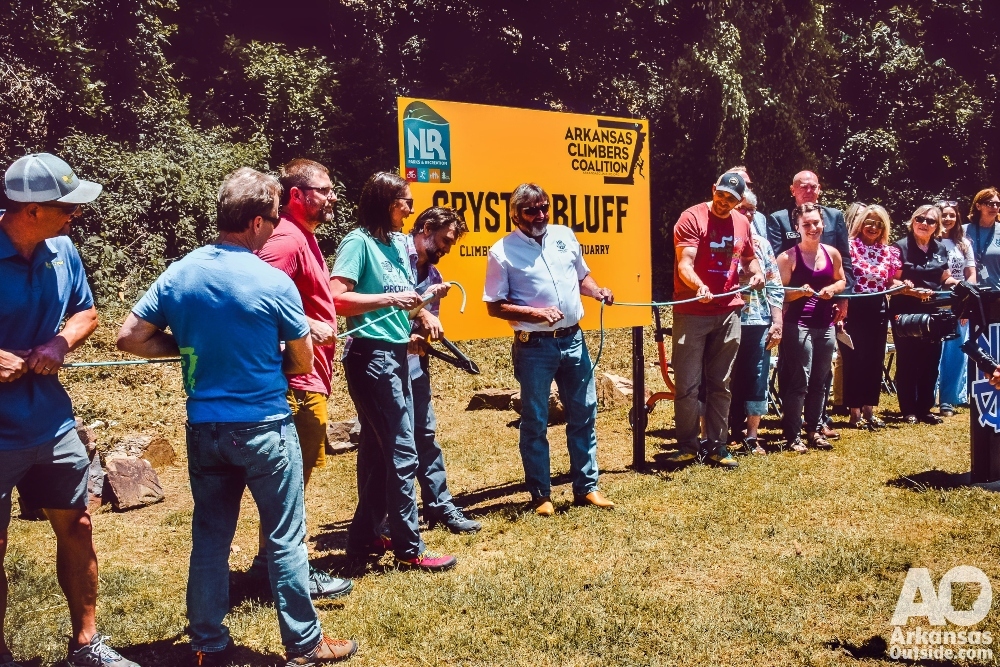
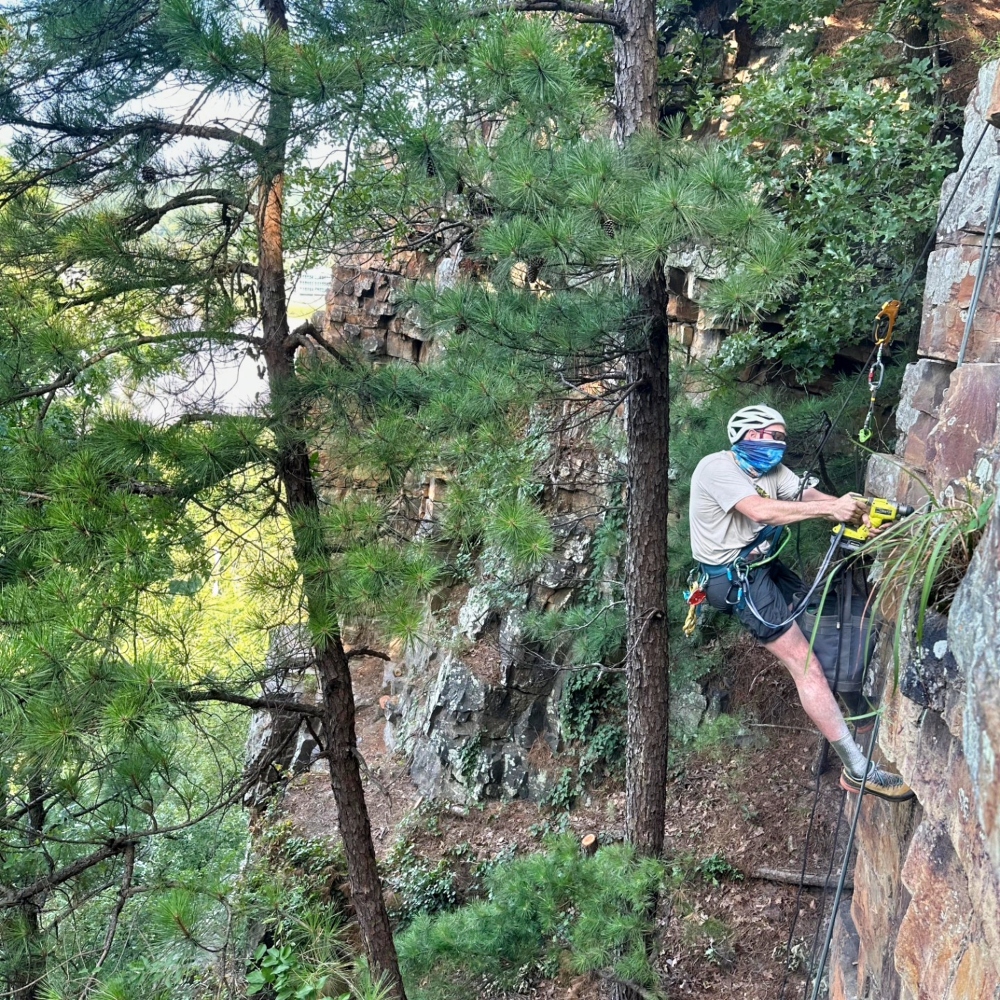
True advocacy is not just about policy or preservation; it is about people who believe a park can change a neighborhood. It is about those who show up for workdays with shovels and snacks, who write grants, sweep trails, and advocate for access when it would be easier to stay silent.
It is about giving people more of something. More space to live. More space to find joy. More space to belong.
Sometimes that something looks like just a park, but we know better. It is a lifeline. A gathering place. A quiet reprieve that holds the weight of a community’s hope.
For the love of advocates who show up when it is inconvenient, who believe small actions create lasting change, and who keep marching those inches even when no one claps. The world moves forward because of people like that.
It is service to your community. The work of the people. It is the love that keeps Arkansas’s wild places alive.

Other articles on the subject:
This article was originally published on ArkansasOutside.com, your trusted source for outdoor news and updates in The Natural State. Unless otherwise credited, all photos included in this piece are the property of Arkansas Outside, LLC. We take pride in sharing the beauty and adventures of Arkansas through our lens—thank you for supporting our work!
