

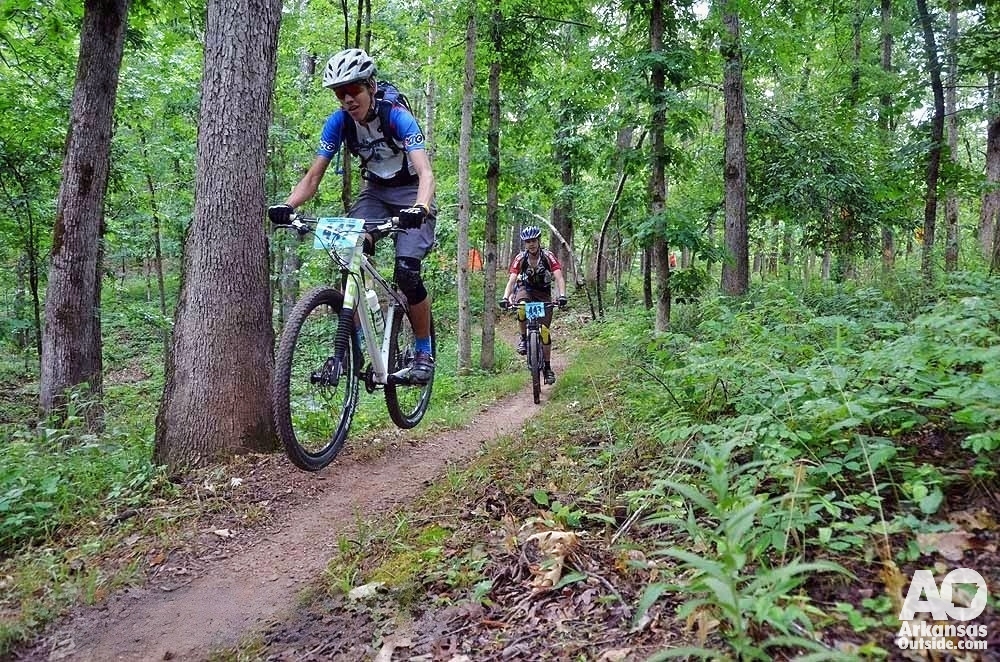


The Hidden Diversity Multi-use Trail at Hobbs State Park-Conservation Area is one of northwest Arkansas’s most rewarding outdoor recreation destinations. With 24 miles of natural surface paths threading through ridge tops, hollows, glades, and creek bottoms, this trail system invites hikers, mountain bikers, and equestrians to explore the unique ecosystems of the Ozarks. The diversity of habitats, wildlife, and terrain makes the trail a perfect choice for anyone looking for a quiet day in the woods, a challenging ride, or a long hike across one of the most ecologically rich parks in the state.
A Trail System Built for Adventure
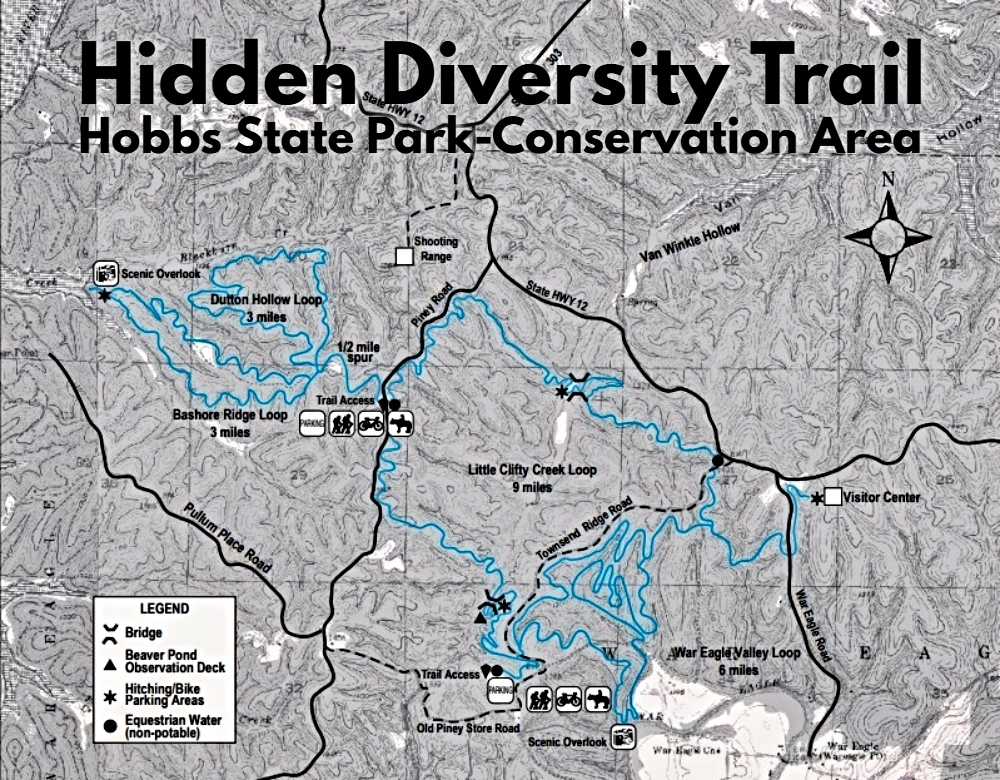
Hidden Diversity is carefully built for shared use. The entire system supports hiking, trail running, mountain biking, and horseback riding. Trailheads at the visitor center, Highway 12, Townsend Ridge Road, and Piney Road make it easy for groups of all types to access different loops and choose the route that best fits their plans.
Mountain bikers will find fast ridgeline miles mixed with rocky rollers, technical corners, and winding creekside sections. Hikers enjoy varied surfaces, natural rest points, and the quiet feel of deep Ozark forest. Equestrians make regular use of the wider, smoother portions of the routes, including water access points and designated areas for tying horses. Because the trail is natural surface from end to end, users are asked to respect closures during wet conditions and seasonal hunting periods to protect both the land and the trail tread.
Competitive and Community Events on the Trail
Hidden Diversity also plays host to some of the region’s standout outdoor events. The Battle for Townsend Ridge, a mountain bike race was held for years on the western side of the system, highlighting the rocky climbs and quick descents that make Hobbs popular among riders. The course typically incorporated loops and connectors around the Townsend Ridge access, giving racers an up close look at the unique mix of hardwood forest and shortleaf pine that define the area.
Trail runners know the system through the War Eagle Trail Run, a long running event that uses sections of Hidden Diversity along with other Hobbs State Park routes. The race draws runners from across the region and showcases the shifting terrain that makes the park a favorite training ground. The combination of ridgeline running, creek crossings, and short but punchy climbs gives participants a full taste of Ozark trail character.
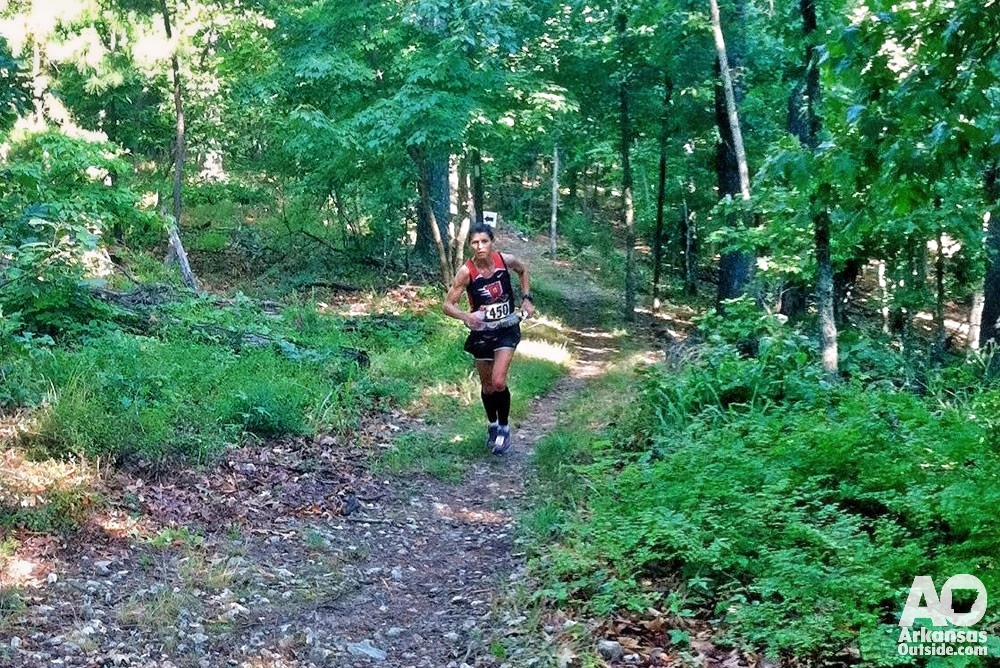
These events highlight how well the trails handle diverse uses and how deeply the system is integrated into northwest Arkansas’s outdoor recreation culture.
Flora and Fauna Along Hidden Diversity
The meaning of “hidden diversity” becomes evident as soon as visitors move from a dry ridge into a moist ravine or from a pine stand into a wildflower rich hollow. The trails pass through oak, hickory, and shortleaf pine forests, with understory trees such as dogwood, serviceberry, and redbud brightening the landscape. In spring, hikers may encounter wild geranium, blue phlox, trillium, dwarf larkspur, mayapple, large flowered bellwort, and other seasonal blooms.
Wildlife is plentiful. White tailed deer, squirrels, chipmunks, foxes, and rabbits are commonly seen along the loops. Beavers have built an impressive dam on Little Clifty Creek, creating a popular stop for families. Birdlife is especially noteworthy. Warblers, vireos, tanagers, wood thrushes, and other forest species thrive in the park’s varied habitats. Winter brings a chance to spot bald eagles near overlooks and around the edges of Beaver Lake. Salamanders and reptiles make their home in the moist hollows, and the park frequently interprets these species through guided programs.
A Landscape Shaped by Time
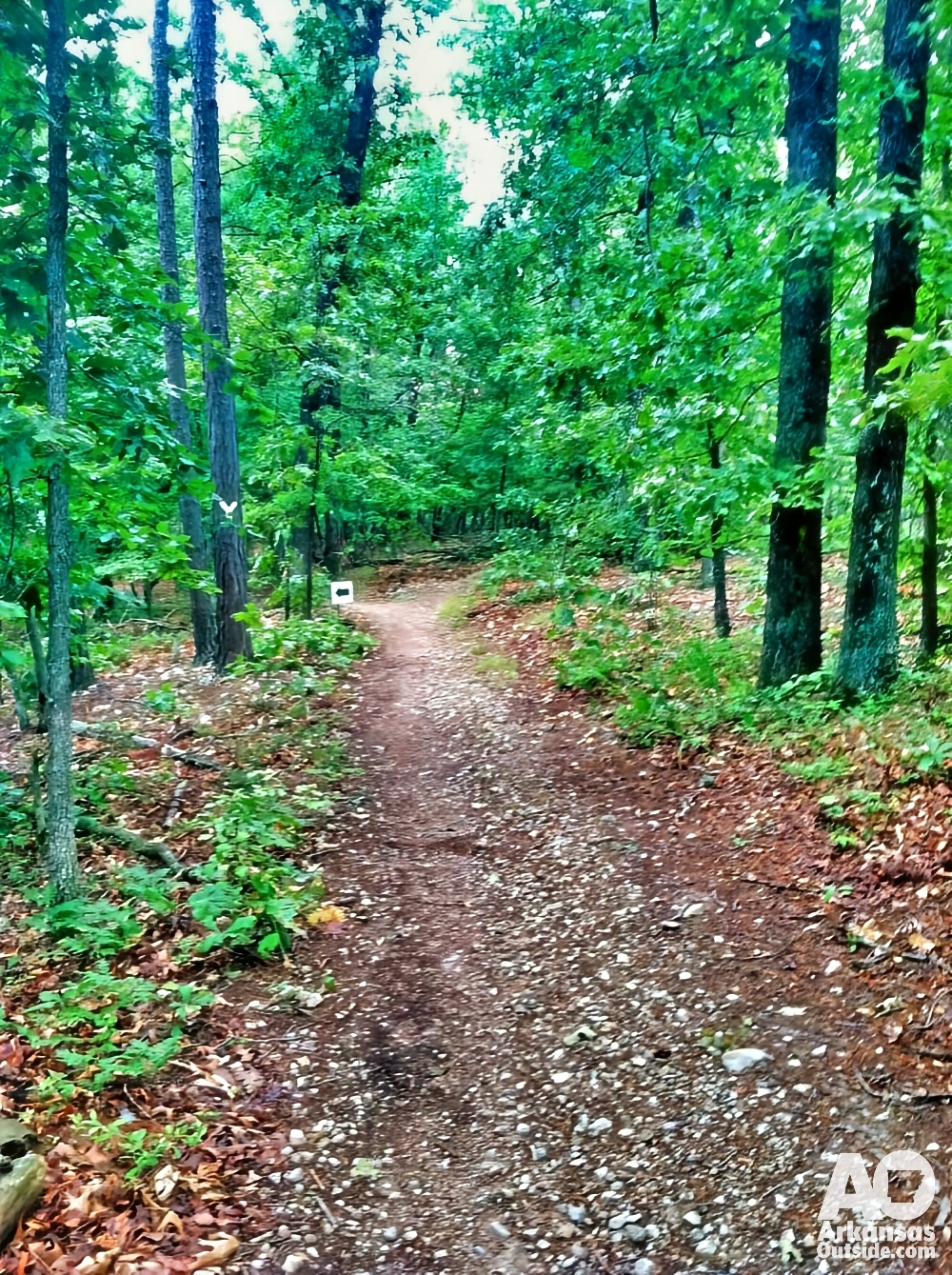
The geology of Hobbs State Park plays a major role in how well the Hidden Diversity trails hold up to weather. The park sits within the Springfield Plateau, a subdivision of the Ozark Mountains where ancient limestone and dolomite bedrock create a classic karst landscape. Water moves quickly through cracks, sinkholes, and underground channels, which naturally reduces surface pooling and allows many sections of trail to drain faster than those built on clay heavy soils. This karst topography shapes the hills, hollows, and springs that visitors see along the route, and it also helps return the trails to good condition soon after rainfall when park staff determine conditions are suitable for use.
This landscape supported Osage hunting and foraging traditions for generations. In the nineteenth century, logging and other industries reshaped the same ridgelines. The remains of Peter Van Winkle’s historic sawmill operation, which supplied lumber throughout northwest Arkansas, are still visible today and provide an important connection to the region’s early settlement history.
The land that now forms Hobbs State Park was originally part of the Roscoe C. Hobbs estate. The transition from private ownership to public parkland came through a combination of conservation leadership, state acquisition, and long term planning. Today, the park is jointly managed by Arkansas State Parks, the Arkansas Game and Fish Commission, and the Arkansas Natural Heritage Commission.
How the Hidden Diversity Trail Was Built
The Hidden Diversity Multi use Trail is the result of a collaborative planning process that brought hikers, mountain bikers, equestrians, volunteers, and multiple agencies to the same table. The system began with a 16 mile loop dedicated in 2006 before expanding to its current 24 mile layout.
Funding came from Arkansas’s voter supported conservation sales tax, known as Amendment 75. Volunteer support has been essential for ongoing maintenance, sign repair, habitat restoration, and education programs. The trail system has also benefited from prescribed burns, glade restoration, invasive species management, and native species conservation, including efforts to restore the Ozark chinquapin.
Planning Your Visit
Visitors can choose from multiple starting points, including Highway 12, Piney Road, Townsend Ridge Road, and the visitor center. The loops allow for short three mile outings, half day adventures, or full day tours spanning the entire system. Families often choose the hike to the beaver pond on Little Clifty Creek, while experienced mountain bikers may link several loops for longer efforts.
The terrain is rocky and natural, so sturdy shoes, plenty of water, and a map are helpful. Most of the trail lies within half a mile of a major road, offering a sense of remoteness without being completely isolated. Whether you are looking for a peaceful day in the woods or a challenging ride, Hidden Diversity lives up to its name with ever changing scenery, wildlife, and trail character.

Contact information for the park can be found here. There is also more information on Hobbs State Park-Conservation area on the Friends of Hobbs website.

This article was originally published on ArkansasOutside.com, your trusted source for outdoor news and updates in The Natural State. Unless otherwise credited, all photos included in this piece are the property of Arkansas Outside, LLC. We take pride in sharing the beauty and adventures of Arkansas through our lens—thank you for supporting our work!
