


The Trails Awaken
Editor’s Note: This is part two of the story. If you’d like to read from the beginning, start with “Finding Home at the Headwaters.”
Introduction
While the battle to protect the Buffalo Headwaters raged through the 1990s, something entirely unexpected began to take root. A new passion arrived almost by accident, one that would shape the next phase of my life and the future of recreation in this remote corner of the Ozarks. Part Two tells the story of how mountain biking entered the picture and how the trails of the Upper Buffalo began as nothing more than rediscovered homestead paths and long forgotten roads.
A Chance Encounter with a New Sport
In 1993, during a visit to a friend in New York City, I was introduced to mountain biking. My friend had recently returned from Moab and was completely consumed by the sport. I had no experience with mountain bikes. In Minneapolis, I had owned a ten-speed and used it constantly for city transportation. I loved riding, but when I moved to the Ozarks, that bike was practically useless on the dirt roads, rocks, and rugged terrain surrounding our homestead.
My friend insisted that we go riding in Central Park, so we grabbed two mountain bikes and took to the city streets. The experience was surreal. We rode down busy streets filled with taxis, pedestrians, and the hum of the city, then suddenly ducked into the park where a vast network of dirt trails, granite boulders, creeks, and wooded patches created a world entirely different from the skyscrapers just outside the trees.
At the time, mountain biking was allowed in Central Park. Today it is not. The park is now full of fences, barriers, and restrictions, but in 1993, it was an open playground. We rode for hours. I was stunned by what the bike could do. Climbing over roots, rolling over boulders, splashing through water, carving fast curves in soft dirt. By the end of the day, I knew something important had shifted.
I was hooked.
Bringing the Passion Home
When I returned to Arkansas, I went straight to Monty at the Bicycle Outfitter in Harrison and bought my first mountain bike, a fully rigid Trek 830 Antelope. It had no suspension, no modern geometry or components riders rely on today, but it felt like a rocket compared to anything I had ever ridden. I could not wait to take it into the Buffalo Headwaters.
The transformation was immediate. Trails that had taken me an entire day to hike, I could now cover in a few hours. Steep slopes that had once been grueling climbs on foot became thrilling challenges on two wheels. Rough homestead paths and faint traces through the woods became new possibilities.
Before long, I was clearing vegetation by hand, kicking out smoother riding lines, moving rocks, and cutting away downed trees. None of it felt like work. It felt like discovery. It felt like freedom.
What I did not realize at the time was that these early routes were laying the foundation for what would become one of Arkansas’ most iconic mountain biking destinations.
Riding Through History
The Buffalo Headwaters are filled with old homesteads and abandoned communities. In the late 1800s and early 1900s, families lived in scattered cabins throughout the hollows and ridges. The area had a hotel, a post office, several schools, cemeteries, and enough people to support a small network of roads and trails. Pettigrew, a nearby town along Highway 16, once had a major hardwood sawmill with a railroad line running to Fayetteville.
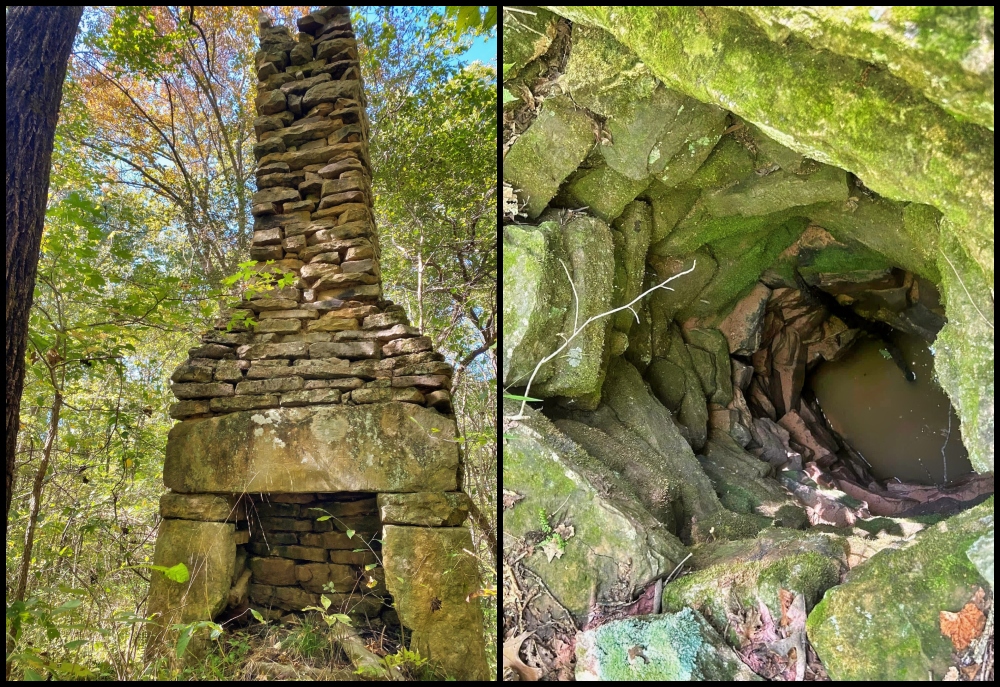
But the era of settlement in the Headwaters was short-lived. During the Oklahoma Dust Bowl years, drought hit the Boston Mountains hard. Natural springs dried. Farms failed. Timber jobs declined as the old-growth hardwood forests were heavily harvested. Families abandoned their homesteads, many never to return.
Much of the land eventually became part of the Ozark National Forest. The old wagon roads, mule tracks, hiking paths, and homestead traces remained. These routes formed the skeleton of what are now the Upper Buffalo Trails.
As I rode more, I began to explore deeper. I visited dozens of old homesteads. Some still had house foundations or stone fences. Others had ancient fruit trees that continued to grow in forest clearings long after families left. Springs still bubbled out of the ground. Cemeteries held names that once shaped these mountains.
Every ride was a journey through time.
Growing the Community of Riders
As my excitement grew, I began to introduce neighbors and friends to mountain biking. The trails were rough and raw, but that was part of the magic. Riders loved the challenge and the sense of discovery. Our crew slowly expanded.
We rode everything, from creek bottoms to ridgetops. We circled downriver to Hailstone, the highest kayak access point on the Buffalo National River. We rode to the Upper Buffalo Wilderness boundary and up to the Buffalo Fire Tower, known by the Osage name Wahzhazhe. The entire region became our playground and classroom.
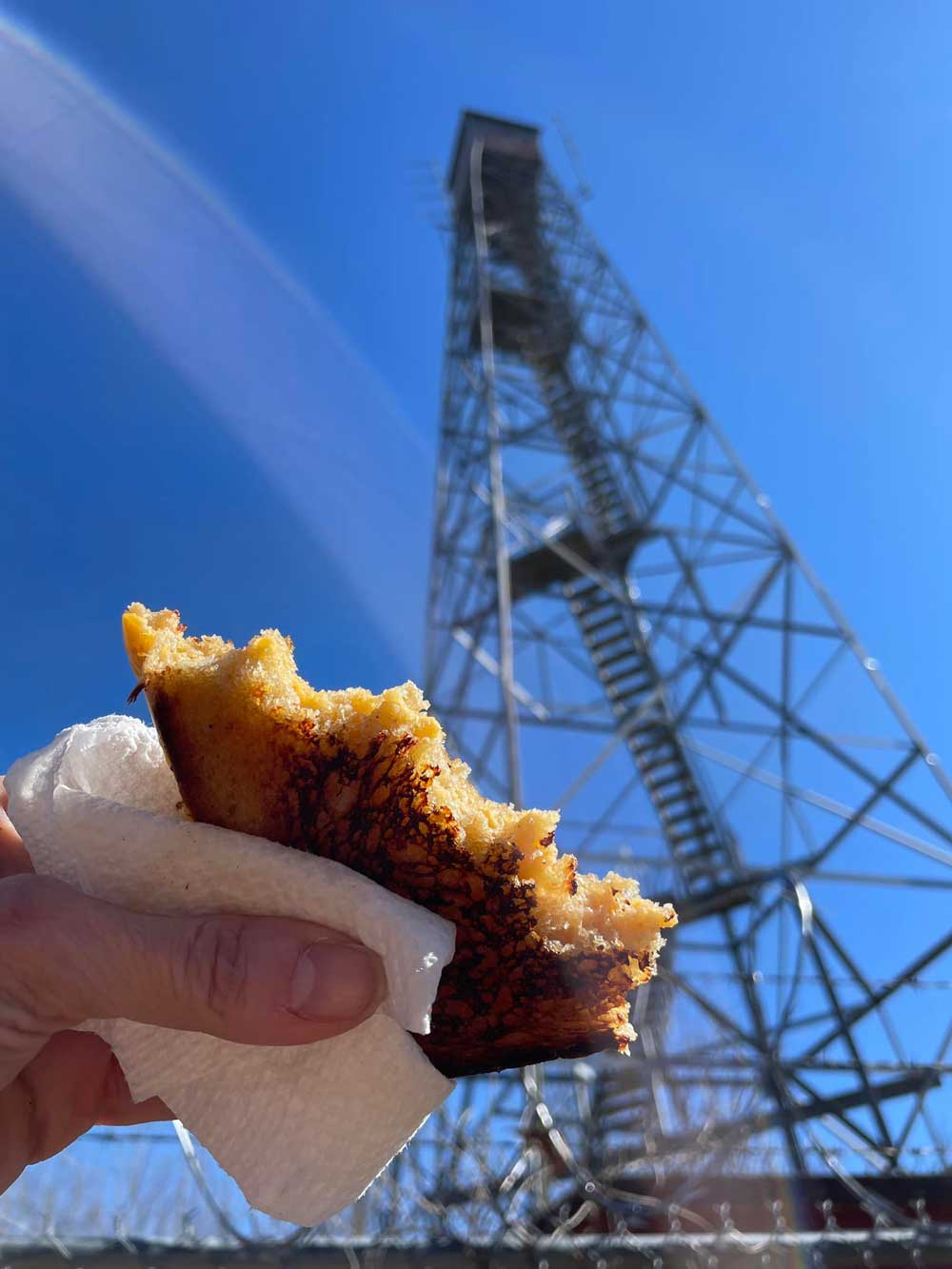
These early rides were not just recreation. They were exploration, connection, and community building. They were the start of something much bigger, although none of us fully realized it yet.
Learning From the Wider World
My passion for mountain biking did not stay local. I began traveling west whenever I could, often camping and riding alone for weeks at a time. I rode in Moab, Crested Butte, Gunnison, Steamboat Springs, Winter Park, Salida, and Boulder. I learned technical skills by watching and riding with others. I paid attention to how trail systems were created, maintained, signed, and managed.
Over the next decade, I expanded my travels even farther. I rode in Minnesota, Wisconsin, Michigan, Maryland, West Virginia, Tennessee, Florida, Alabama, Missouri, Kansas, Virginia, New Mexico, Arizona, Oklahoma, Nevada, California, North Dakota, South Dakota, Nebraska, Ohio, Montana, Idaho, Wyoming, Washington, and Oregon.
Each place taught me something new about trails, communities, and what makes a system work. I carried those lessons home.
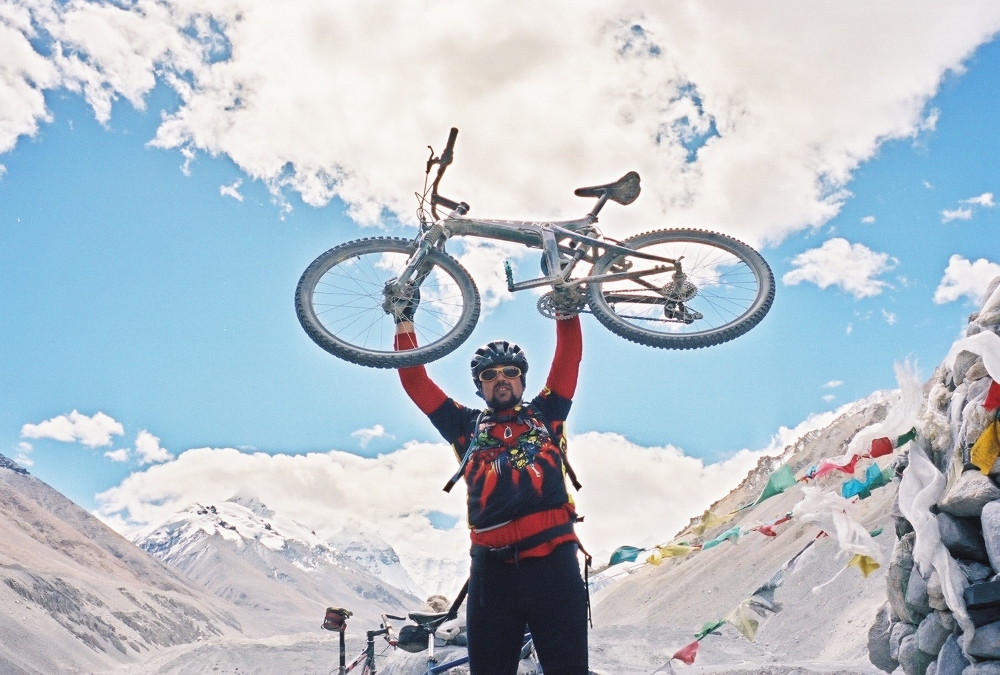
The highlight of my mountain biking years came in Nepal and Tibet. I spent days riding the foothills of the Himalayas before beginning a three-week, 500-mile ride from Lhasa, across the Tibetan Plateau. We took a side trip to the North Face base camp of Mount Everest. The journey ended with a 14,000-foot descent from Tibet into Kathmandu. It was the highest and most intense ride of my life.
All of these experiences shaped the vision that would eventually define the Upper Buffalo Trails.
The Rise of the OORC and the Headwaters Challenge
In the late 1990s, my friend Dave Renko founded the Ozark Off Road Cyclists, the OORC. I became an early member. The club quickly became a hub for riders in northwest Arkansas, bringing together people who loved adventure, conservation, and community.
Through the club, I began hosting large group rides in the Buffalo Headwaters. One of these rides grew into the Headwaters Challenge. It began as a small gathering of friends testing themselves on rough, remote trails, then celebrating afterward with food, drinks, and good company.
I chose to make it a mid-winter event to add an extra level of difficulty. Temperatures might drop into the teens. Snow or ice might cover the trails. But those challenges only made the event more memorable. Riders loved it.
This is a video taken at the 8th Annual Buffalo Headwaters Challenge in 2013.
All the while, trail use expanded. Riders from all over Arkansas and surrounding states began hearing about the Buffalo Headwaters. The trails were rugged, remote, and wild. They offered something few other places could match.
But there was a major problem. The system was huge, confusing, and unmapped. Riders frequently got lost. And although the Forest Service had backed away from logging plans, the trails still had no official recognition.
A transition was coming.
Conclusion
The trails were no longer just personal paths or local secrets. They had become a beloved resource that needed structure, support, signage, and official protection. The foundations had been laid by decades of exploration and countless hours of hand-built work. Read part three here on ArkansasOutside.com.
Next Installment
Part Three will tell the story of how the Upper Buffalo Mountain Bike Trails were formally created, funded, mapped, and opened to the public. It includes the partnerships, grants, construction, challenges, victories, and the final designation as an IMBA Epic. Also, learn more about the upcoming 21st Annual Buffalo Headwaters Challenge.

Photos courtesy of How Kuff, Kelly Newberg, and ArkansasOutside.com.
This article was originally published on ArkansasOutside.com, your trusted source for outdoor news and updates in The Natural State. Unless otherwise credited, all photos included in this piece are the property of Arkansas Outside, LLC. We take pride in sharing the beauty and adventures of Arkansas through our lens—thank you for supporting our work!
