



Few topics ignite debate among trail users and volunteers quite like leaf blowing on trails. Every fall, as predictably as the leaves dropping, discussions flare up on forums and around trailhead meetups: Should we clear fallen leaves off hiking and biking trails, or leave them be? The honest answer is often “It depends.” To help you make sense of it, let’s explore both sides of the issue and look at what science and experience say. We’ll also cover best practices for leaf removal when it’s truly needed, so you can minimize harm to the trails you love.
Pros of Removing Leaves from Trails
- Clearer Navigation and Safety: Blowing leaves off the trail creates a clearly defined path through the woods, making it much easier to follow. This can prevent hikers or bikers from getting lost when a thick carpet of leaves might obscure where the trail goes. A leaf-free trail also exposes obstacles, hidden roots, rocks, and uneven spots that could trip hikers or send a mountain biker over the bars. By clearing leaves, trail users can see hazards and pick better lines, leading to fewer accidents and a smoother, faster ride.
- Improved Traction: Anyone who’s walked on wet leaves knows they can be slippery. Removing leaves, especially in high-traffic or high-speed sections, can improve traction for runners and riders. The trail surface (usually dirt) offers more consistent grip than a layer of slick leaves. This is why some bike park crews or race organizers choose to blow leaves off key trail features, they want predictable, non-slippery conditions for users.
- Faster Drying (in Some Cases): Exposed soil and tread can dry out faster after rain when it’s not insulated by a layer of leaves. In well-designed trails with proper drainage, clearing leaves might help water evaporate and run off quickly, meaning the trail becomes usable sooner after wet weather. Some trail maintainers argue that leaves hold moisture on the trail and slow the drying process, so clearing them can be beneficial on trails that otherwise drain well. For example, in clay-heavy soils, leaf cover might trap moisture and keep the ground muddy longer. By removing leaves, sun and wind can reach the soil directly, potentially reducing the muddy spots (assuming the trail is built to shed water). In short, a leaf-free trail can dry more quickly, which might get you back out riding or running sooner.
- Keeps Users on the Trail: A clearly visible, leaf-free tread may help keep users on the actual trail. If the trail is obscured by deep leaves, people might unintentionally wander off the sides, widening the trail or creating new paths (trail “braiding”). By blowing leaves and defining the trail corridor, volunteers hope users will stay on the hardened path and not trample the delicate edges. This in turn protects surrounding vegetation. In this sense, a bit of leaf clearing can protect the environment around the trail by concentrating foot and bike traffic where it belongs.

It’s worth noting that many of these benefits are short-lived. A single windstorm or one week of steady autumn falling leaves can cover the trail all over again. If you clear too early in the season, you may be repeating the chore multiple times. Also, on well-traveled trails, hikers and bikers naturally grind leaves into the dirt or kick them aside over time. This means heavily-used trails often remain passable even without dedicated leaf blowing – the users themselves effectively “clear” some leaves just by using the trail.
Cons of Removing Leaves (Benefits of Leaving Them)
Before you rev up that leaf blower, consider the downsides. There are important scientific and ecological reasons to think twice about removing leaves from trails:
- Natural Erosion Control: Leaf litter is nature’s carpet, and it plays a vital role in protecting soil from erosion. A layer of leaves shields the trail from direct rain impact, much like mulch in a garden. This gives the soil more time to absorb water and prevents fast runoff. Studies have shown that leaf cover can significantly reduce soil loss, one experiment found that plots covered with leaf litter had around 80% less sediment erosion compared to bare soil. In practical terms, when moderate rain falls on a leaf-covered trail, much of the water soaks in slowly or is diverted off the trail without taking the soil with it. Remove that protective layer, and rain can more easily turn into rivulets that carve ruts in your trail and wash away the topsoil. Over an entire winter of precipitation, a blown-clean trail is at a higher risk of developing muddy gullies and potholes.

- Prevents “Trail Armor” Loss: Powerful backpack blowers don’t just move dry leaves, they can also blast away the trail’s fine layer of dirt if used carelessly. The smallest, most important soil particles (that pack between rocks and roots) are lightweight and dry out quickly, so a strong blower will send that stuff flying along with the leaves. Over time, each bout of overzealous blowing can literally strip the trail tread of its binding material, effectively lowering the soil level. The rocks and roots don’t blow away, so they become more exposed as the dirt around them disappears. The result? A rougher, rockier trail that’s harder to hike or ride. In other words, leaf blowing can unintentionally turn your smooth flow trail into a bumpy obstacle course by eroding the “fines” that keep the trail surface packed. Trail crews have observed this effect: regularly blown trails get degraded faster than those left alone. It’s like removing the mortar from between bricks, eventually the whole structure gets wobbly.
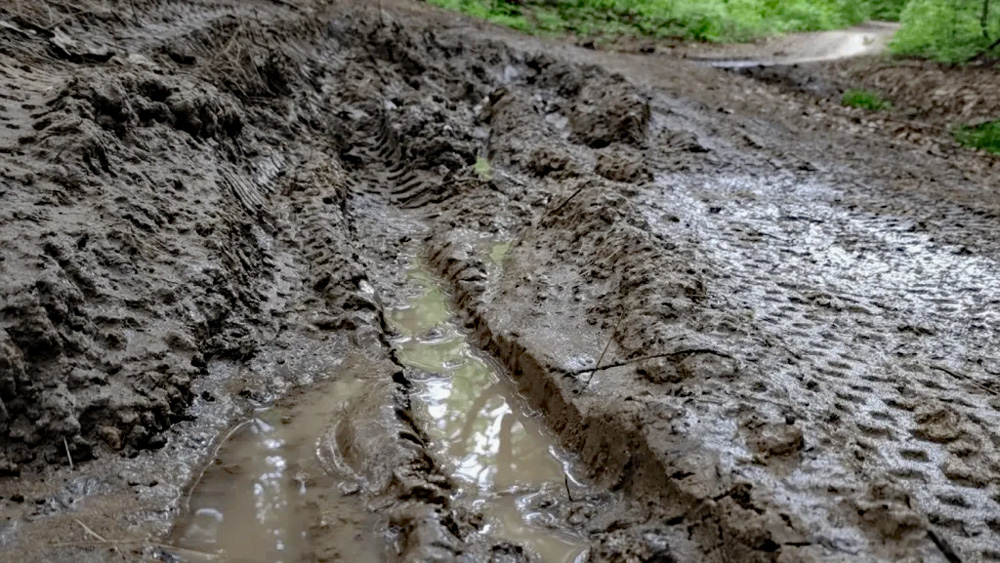
- “Frost Heave” and Winter Damage: In colder climates, leaves on the trail can actually help moderate freeze-thaw cycles. Fallen leaves act as an insulating blanket on the ground. This keeps the soil a bit warmer in winter and means the ground doesn’t freeze as deeply. When soil freezes and thaws repeatedly (the freeze-thaw cycle), it expands and turns into a mushy, muddy mess, a phenomenon called frost heave. If you’ve seen trails that look like a churned-up “peanut butter” surface in winter or early spring, that’s often due to deep freezing and heaving of the soil. Leaf cover can limit how deep the freeze goes, so the topsoil stays more stable. Many trail users report that sections of trail with leaves left on are firmer and less muddy during winter thaws, whereas cleared sections nearby became soft and sloppy. In one local experiment, a volunteer in Arkansas cleared leaves from one section of trail but not an adjacent section, and monitored them all winter. The leaf-covered section stayed in much better shape, clearly firmer, while the leaf-free section turned to mush whenever freezing temperatures hit. This counterintuitive result, leaves didn’t make it muddier; they actually preserved the trail, is a strong argument for leaving that natural insulation in place, at least on some trails or during the harshest months.
This video explains this in more detail:
You can also learn more about freeze-thaw issues at our “Peanut Butter” article.
- Habitat and Soil Health: Leaves aren’t just “debris”; they are an integral part of the forest ecosystem. That layer of organic material is home to countless small creatures and critters. Insects, spiders, salamanders, frogs, and other small fauna use leaf litter for shelter and foraging, especially in the winter months. Many beneficial insects actually overwinter in leaf litter. Removing all the leaves takes away habitat and can harm these little forest residents. Moreover, as leaves decompose, they return nutrients to the soil and contribute to the organic matter that can help maintain soil structure. While a thick mat of wet leaves on a trail might not be ideal for human use, a light layer of broken-down leaf material can actually help bind the trail surface and fill in gaps between larger particles (almost like a natural compost binder). By blowing off every leaf, we might be disrupting the soil food web – the fungi, microbes, and invertebrates that keep a forest floor healthy. It’s a bit like ripping out the carpeting that a host of species live in. Additionally, the act of blasting leaves away has its own environmental impact: leaf blowers (especially gas-powered ones) are noisy and can spew pollution, and even electric blowers produce wind speeds up to 200 mph, which can physically disturb topsoil and send dust and dirt airborne. All that dust isn’t just a nuisance to our lungs; it can also settle in nearby streams or vegetation. So, leaving leaves where they lie often means a healthier, more natural trail environment.
- Trail Widening and Drainage Issues: Paradoxically, partially clearing leaves can sometimes create new problems. If a blower pushes leaves to the sides of the trail and leaves a big wall of piled leaves along the edge, it forms a berm that can trap water on the trail. Instead of water sheeting off the side, it hits the leaf pile “wall” and gets forced to run down the trail, eroding as it goes. This is the worst-case scenario: a leaf windrow that channels water like a ditch. Also, when trails are half-cleared, say, a narrow strip blown down the middle, you might end up with a leaf build-up on the lower edge of off-camber trails. This is why simply blowing leaves and not disposing of them properly can sometimes make erosion worse than not blowing at all. If users encounter wet or muddy spots (perhaps because leaves held water or blocked a drain), they often step or ride around those spots, gradually widening the trail. That’s more damage in the long run. In short, bad blowing technique (or incomplete clearing) can defeat the purpose, causing the very erosion and braiding we’re trying to avoid. Leaving leaves untouched, on the other hand, avoids these manufactured drainage issues entirely – water will flow naturally over the leaves and off the trail, rather than being corralled by leaf piles.
Considering these cons, it’s clear that indiscriminate leaf blowing can harm trail sustainability. The leaves might be annoying in the short term, but they often benefit the trail in the long term. As one trail builder put it, ask yourself: “Am I sacrificing years of a great trail for a couple months of clear trail?” In many cases, patience and letting nature run its course is the wiser choice.
Finding the Right Balance
After weighing the pros and cons, you might wonder if there’s a middle ground. Indeed, the best approach is usually a balanced one: blow or rake leaves only where and when it’s truly necessary, and leave them alone elsewhere. “It depends” really is the answer, it depends on your local conditions, trail type, and priorities. Here are some guidelines to help decide:
- High-Use vs. Low-Use Trails: If a trail sees a lot of traffic (say, a popular mountain bike loop or a race course), strategic leaf clearing might be justified to keep it safe and fast. On flow trails or jump lines where riders need consistent surfaces at high speeds, removing leaves can improve the ride experience. However, on backcountry hiking paths or low-use nature trails, there’s often no need to remove leaves at all. In fact, those quieter trails can serve as “control” sections that remain more natural and resilient through winter. Some land managers adopt this exact strategy: for example, a trail system in Ontario, Canada decided to leaf-blow only the busiest trails and leave leaves on the lesser-used trails, especially in sensitive habitats. By doing so, the high-traffic routes stay clear for recreation, while the low-traffic ones retain their leaf litter to protect against erosion and support wildlife. Adopting a similar tiered approach in your area can satisfy both the thrill-seekers and the conservationists.
- Timing Matters: If you decide to clear leaves, the timing can greatly reduce or increase the impact. Fall is generally the preferred time if you must blow. Wait until the majority of leaves have fallen, then do one thorough sweep, rather than clearing too early or too often. This minimizes the number of times you disturb the trail. Importantly, avoid blowing in early spring, this is when many creatures are most vulnerable (e.g., salamanders migrating, insects still in diapause) and when trails are wet from snowmelt or rain. Blowing in spring not only disrupts wildlife but can expose a soggy trail to erosion right before the heavy summer use. Plus, spring is when any leaf litter has almost fully broken down into the soil, meaning if you blow then, you’re mostly blowing away soil, not just leaves. Many trail groups, like the Copeland Forest group mentioned above, explicitly recommend no leaf blowing during spring to protect emerging plants and animals. So, if you need to clear, do it in late autumn and then let nature be until next fall.
- Consider the Weather and Soil Conditions: Don’t blow leaves during extremely dry, dusty conditions or during a drought. If the ground is bone-dry, you’re almost guaranteed to send as much dirt into the air as you do leaves. As a rule of thumb, if your region is under a burn ban for fire risk due to dry weather, you should postpone any leaf blowing. Not only is the soil lighter and more likely to blow away in those conditions, but using gas-powered equipment when everything is dry can be a fire hazard (and at the very least, it’s obnoxious to create a dust cloud on a dry trail). It’s better to wait until after a light rain or when the ground is slightly damp, the leaves will be heavier, so they might not blow as easily, but the soil will stay put. You could also simply rake by hand in such spots to avoid blasting the dirt.
- Event Preparation vs. Routine Maintenance: Using leaf blowers might be warranted before a scheduled event on the trail, such as a trail run or mountain bike race. For one-off events, it makes sense to reduce slip hazards and help participants see the course clearly. In these cases, organizers sometimes clear leaves to make sure nobody gets hurt by a hidden root. If you do clear for an event, one creative idea is to put the leaves back afterward, basically raking or blowing them back onto the trail once the race is done. This way the trail isn’t left exposed all season; it gets its natural blanket returned to continue protecting it. It sounds funny, but it shows that the leaf removal was purely for temporary safety and that you still value the long-term health of the trail.
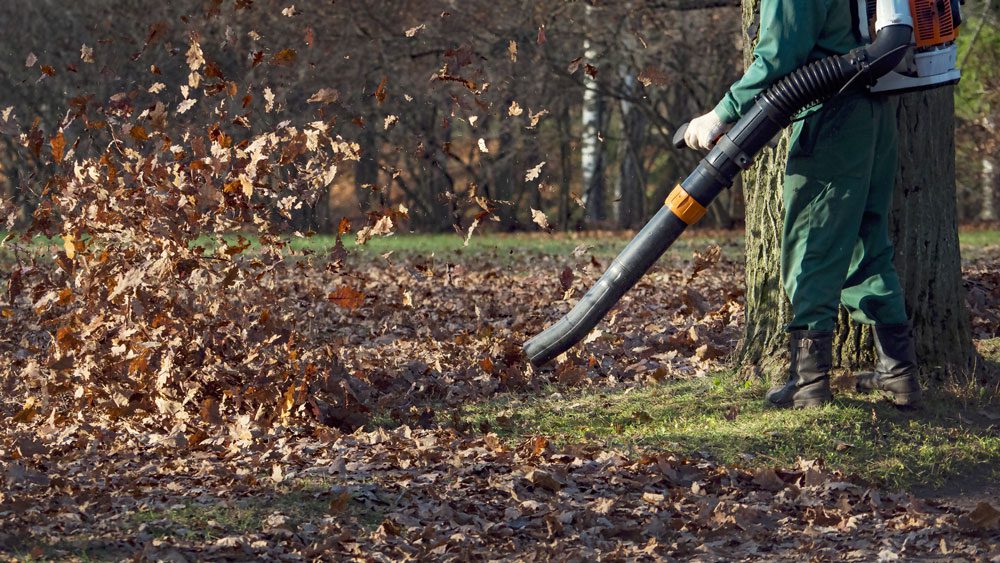
Now, if you’ve determined that leaf removal is appropriate in a given situation, it’s critical to do it the right way. Here are some tips to leaf-blow responsibly and with minimal harm:
Best Practices for Low-Impact Leaf Blowing
- Avoid Creating Leaf Berms: If you blow leaves off the tread, don’t leave a piled ridge of leaves along the sides of the trail. Take the time to disperse the leaves thinly or blow them well clear of the trail. A continuous wall of leaves at the trail edge will act like a dam, channeling water and causing erosion down the path. Ideally, blow leaves downhill off the trail so water can flow across the trail naturally. Break up any thick piles. The goal is a gentle scatter, not windrows of leaves.
- Don’t Strip it Bare: You’re not performing surgery – the trail doesn’t need to be squeaky clean. Resist the urge to remove every single leaf. Remove just enough so users can see the trail and its hazards. A few leaves left here and there (or a very thin layer) is fine. Remember, those modern backpack blowers are extremely powerful; if you aim one straight at the ground trying to get that last leaf, you’ll probably blow away the soil itself. So, lighten up a bit. Think of it as leaf clearing, not leaf polishing. Nobody’s trail experience will be ruined by a few scattered leaves.
- Pick Your Battles (Spot-Blow Only Where Needed): Focus on problem areas and skip the rest. If a section of trail is hard-packed dirt with no hidden rocks or roots, there’s little point in blowing it, it will be fine under a layer of leaves. Concentrate on spots where leaves truly pose a safety issue: for example, wooden bridges or features (where wet leaves can be especially slick), steep switchback turns where traction is critical, or known technical sections where hidden rocks could cause injury. Leave the benign sections alone. By only blowing the high-risk or high-traffic segments, you reduce labor and limit the disturbance to the trail.
- Mind the Moisture: We touched on this already, but it bears repeating: don’t blow when everything is bone-dry. Not only will you lose precious dirt to the wind, but the leaves themselves are lighter and will blow far off into the woods (removing nutrients from the trail system altogether). Aim for a day after some rain, when leaves are damp enough to clump a bit – you can then push them just to the trail edge or a little beyond, and they’re more likely to stay in place. Also avoid doing it during a hard freeze (frozen leaves might be stuck to the ground or, conversely, if you clear them, the exposed frozen soil might be prone to immediate damage when it thaws). A moderate, cool day with a bit of moisture in the soil is perfect.
- Use the Right Tools: A leaf blower isn’t the only way. Hand rakes or brooming can be effective for small sections or sensitive areas. Rakes give you more precision to peel off leaves without gouging the soil. They’re quiet and don’t spew exhaust, too. If using a blower, consider an electric or battery-powered model if available, it reduces noise and pollution (your lungs and fellow trail users will thank you). Always wear eye and ear protection, and be considerate with the noise if others are enjoying the trail nearby or if wildlife is present (maybe avoid early morning blowing near campsites or birding areas).
By following these best practices, you can significantly reduce the negative impacts of leaf blowing when you do choose to do it. Many trail advocates now preach a “minimal intervention” philosophy: do only what’s needed for safety and enjoyment, and otherwise let nature handle the rest.
“Leaf” Them Alone, Most of the Time
After exploring this topic, you can see that leaf blowing is neither an absolute good nor an absolute evil, but it’s often unnecessary. The leaves that fall on our trails each autumn are not just litter to dispose of; they play a protective and ecological role. Sure, a freshly blown trail looks inviting and can feel fast under your wheels or feet, but that short-term gain can lead to long-term pain for the trail’s health. Bare dirt without its leafy armor can erode faster, freeze harder, and bake in the sun, degrading the very trail we wanted to improve.
The next time you’re tempted to clear the trails “clean,” take a moment to assess the real needs of that trail. Is it a safety issue, or just an aesthetic one? Are you doing it for the trail’s benefit, or for your own immediate comfort? There may be cases, a big group hike, a race, an extremely leaf-choked path, where some removal makes sense. Go ahead in those cases, but do it thoughtfully and sparingly. And in all the other cases, consider embracing the season and “leaf it be.” Strap on your boots or hop on the bike and enjoy the unique challenge of rustling through the autumn woods. You might find it’s part of the trail’s character.
In the end, a little inconvenience in fall can mean a more sustainable, enjoyable trail year-round. As trail stewards, our job is to look out for the trail’s well-being in the long run. So, whether you decide to blow, rake, or leave the leaves, make sure the decision is informed and made with love for the trail. Happy trails (leafy or not)!
Sources:
X. Li et al. (2014) – The effect of leaf litter cover on surface runoff and soil erosion in Northern China. PLOS ONE, 9(9): e107789. This study showed leaf litter reduced runoff and soil loss by a significant amount, highlighting the protective role of leaves against erosion.
Friends of Copeland Forest (2023) – Copeland Forest Trail Plan (Draft, Nov 2023). Management plan recommending a balanced approach to leaf blowing. Suggests focusing on high-use trails only, keeping leaves on low-use or sensitive trails, and avoiding any leaf blowing in spring for wildlife protection.

L. Beida et al. (2022) – Blowing in the Wind: Leaf Blower Disservices for Human and Ecosystem Health in the City. The Nature of Cities (June 20, 2022). An essay by ecologists on the impacts of leaf removal. Notes that even electric blowers can erode topsoil and remove habitat for overwintering insects and other small wildlife. Focus is on urban settings, but the principles apply to natural trails as well.
This article was originally published on ArkansasOutside.com, your trusted source for outdoor news and updates in The Natural State. Unless otherwise credited, all photos included in this piece are the property of Arkansas Outside, LLC. We take pride in sharing the beauty and adventures of Arkansas through our lens—thank you for supporting our work!

3 Responses
at Camp Robinson- we only blow the less riden trails where you lose the trail or have ti ride real slow to see the trail. We will be blowing trails with a lot of small twigs and branches to clean them as this destroys derailers (been thru 3 this year). The more wheels on the ground the better, so on a good note, you will no longer be required to get a pass to get on camp in the near future as they will just scan your DL at the gate, the date of this change has not been published yet
IMBA trail construction guideline regarding soil types are specific. Trail tread should be constructed on inorganic soil. Organic soil, such as decomposed leaf litter, drains slowly and has little strength when wet. I’ve confirmed this to my own satisfaction over decades of trail construction. Trails built on organic soils are almost always inferior in durability. (Trails built on sand have different issues.)
The arguments around soil health as they relate to trails do not add up. Trails are not, and should not be expected to be biologically productive.
If you don’t want to blow leaves off of your trails, don’t. Trail maintenance is time consuming at best. Attempting to justify this with irrelevant arguments is silly.
I agree with Walter, why remove all the organic material when trail building to only let it build up with leaves? If we wanted organic material on the trails to absorb moisture and compact, we would have used organic soil when building Trails are not biologically productive, so all the habitat, insect, and salamander stuff is irrelevant. Blowing properly can actually knock down the berm on the lower lip of the trail, which, in my experience, is primarily formed by leaving the leaves on the trail and then getting pushed to the edges or the trail compacted in a cup with the lower edge raised from the organic material. I don’t observe the leaves change the frost heave cycle. Just like throwing a blanket on the trail, it just changes the temperature at which it occurs. I do agree it can remove soil and make them rockier. Finally, low use trails often need blowing most to allow users to see the trail