



In 2024, Arkansas’s national park and historic site properties continued to play a vital role as economic engines for the state. Across the seven NPS-managed locations, visitors spent an estimated $301.2 million in local gateway regions, supporting thousands of jobs and stimulating business activity in surrounding communities.
By comparison, in 2023, those same sites generated approximately $289 million in visitor spending, marking 2024 as a new high point in economic contribution for the state’s national park portfolio.
Arkansas National Park Sites: 2024 Economic Impacts
Here’s how each site fared in 2024 in terms of visitor spending, jobs, labor income, value added, and overall economic output:
Hot Springs National Park
In 2024, visitors to Hot Springs National Park spent $189.8 million, supporting 2,125 jobs. That activity generated $72.5 million in labor income, $141.3 million in value added, and $253.4 million in total economic output.
In 2023, visitor spending was slightly lower at about $183 million, with roughly 2,250 jobs supported. While spending and output increased in 2024, the job count edged downward.
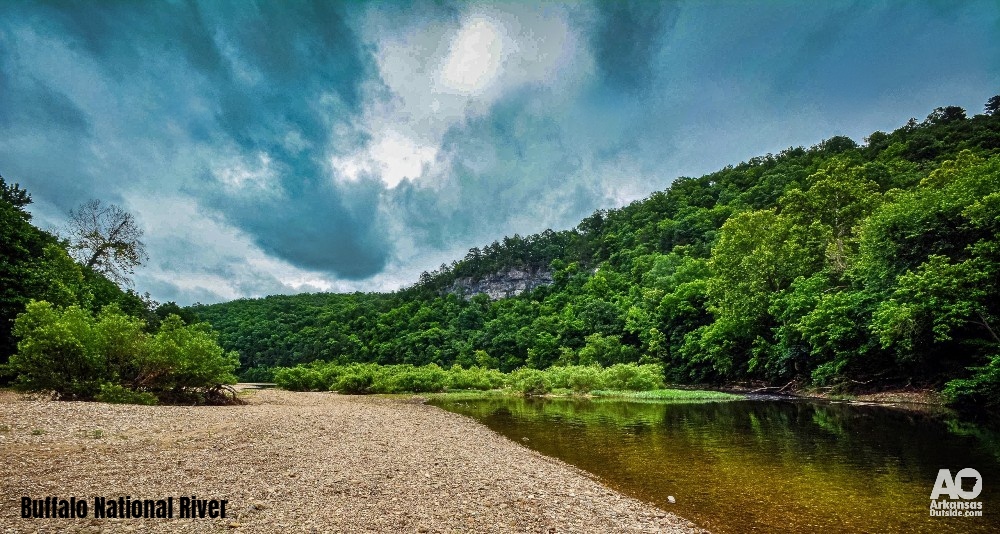
Buffalo National River
Visitors to the Buffalo National River contributed $88.7 million in spending in 2024, supporting 889 jobs. The park’s gateway economy saw $32.6 million in labor income, $60.0 million in value added, and $105.5 million in economic output.
In 2023, the park reported around $84 million in visitor spending and supported just over 1,000 jobs. Spending and economic output rose in 2024, but the total number of jobs supported declined.
Pea Ridge National Military Park
Pea Ridge generated $7.2 million in visitor spending in 2024, supporting 80 jobs. The park’s presence created $3.1 million in labor income, $5.5 million in value added, and $9.8 million in total output.
In 2023, the park contributed about $7 million in visitor spending and supported close to 90 jobs.
Fort Smith National Historic Site
Fort Smith’s gateway communities benefitted from $8.8 million in visitor spending during 2024. That spending supported 99 jobs, along with $3.4 million in labor income, $6.4 million in value added, and $11.5 million in economic output.
The previous year saw similar spending, around $8.5 million, and slightly higher employment support at just over 100 jobs.
Little Rock Central High School National Historic Site
In 2024, visitors to Little Rock Central High School NHS spent $4.5 million. This supported 53 jobs, producing $1.8 million in labor income, $3.4 million in value added, and $6.2 million in output.
For 2023, the site reported approximately $4.3 million in spending and about 60 jobs supported.
Arkansas Post National Memorial
Arkansas Post saw $1.8 million in visitor spending in 2024, which supported 20 jobs. The economic effects included $0.7 million in labor income, $1.3 million in value added, and $2.3 million in output.
In 2023, visitor spending was just under $2 million with a similar number of jobs supported.
President William J. Clinton Birthplace Home NHS
The Clinton Birthplace Home NHS generated $0.4 million in visitor spending in 2024, supporting 5 jobs. The site produced $0.2 million in labor income, $0.3 million in value added, and $0.5 million in economic output.
The 2023 figures were nearly identical, with $0.4 million in spending and 6 jobs supported.
Statewide Totals
Combined, Arkansas’s national park sites contributed $301.2 million in visitor spending in 2024. This spending supported 3,305 jobs, $114.0 million in labor income, $218.0 million in value added, and $391.1 million in economic output.
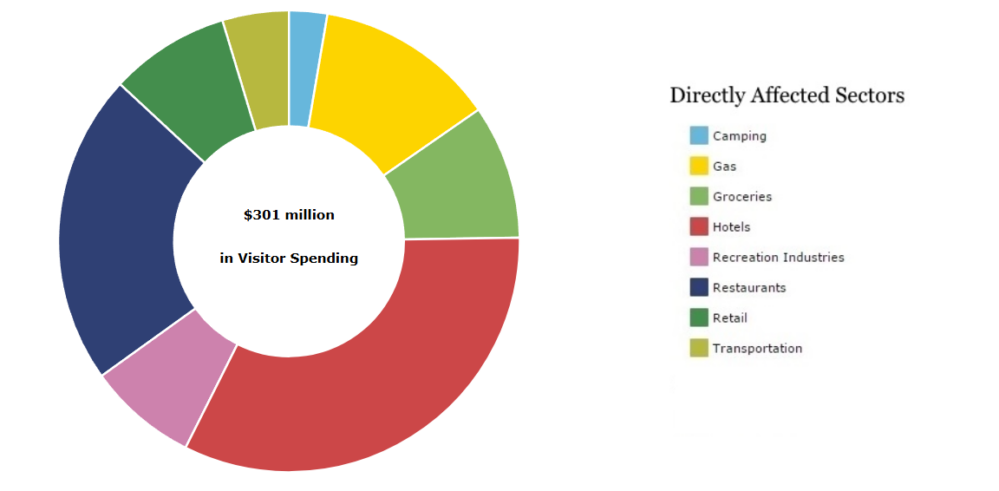
In 2023, the total was $289 million in spending, supporting around 4,020 jobs, with $111 million in labor income, $198 million in value added, and $375 million in economic output. More on 2023 here.
While spending, labor income, value added, and total output all increased in 2024, the total number of jobs supported fell, reflecting changes in local economies and how spending translated into employment.
What the Shifts Suggest
The 4.2 percent increase in visitor spending signals continued growth in visitation and local economic engagement with these parks.
Value added rose more sharply (10.1 percent), indicating that a greater share of the spending translated deeper into local GDP contributions.
Economic output increased in line with spending, though the drop in total jobs suggests efficiencies, shifts in mix of services, or methodological changes influencing estimations.
Hot Springs and Buffalo remain by far the largest contributors to economic activity, together composing nearly 91 percent of the total spending among the seven sites in 2024.
Why These Numbers Matter
Arkansas’s national park and historic sites are more than scenic or cultural assets—they are economic pillars in their gateway regions. The 2024 data underscore how investment in parks, amenities, and visitor infrastructure pays dividends in local jobs, business revenue, and regional vitality.
As Arkansas positions itself as an outdoor and heritage destination, these figures strengthen the case for continued support, strategic marketing, and infrastructure development around national park sites. For towns and counties adjacent to those parks, understanding these impacts helps guide local planning, tourism development, and community investment.

Data for this article was compiled from National Park Service website.
This article was originally published on ArkansasOutside.com, your trusted source for outdoor news and updates in The Natural State. Unless otherwise credited, all photos included in this piece are the property of Arkansas Outside, LLC. We take pride in sharing the beauty and adventures of Arkansas through our lens—thank you for supporting our work!
