

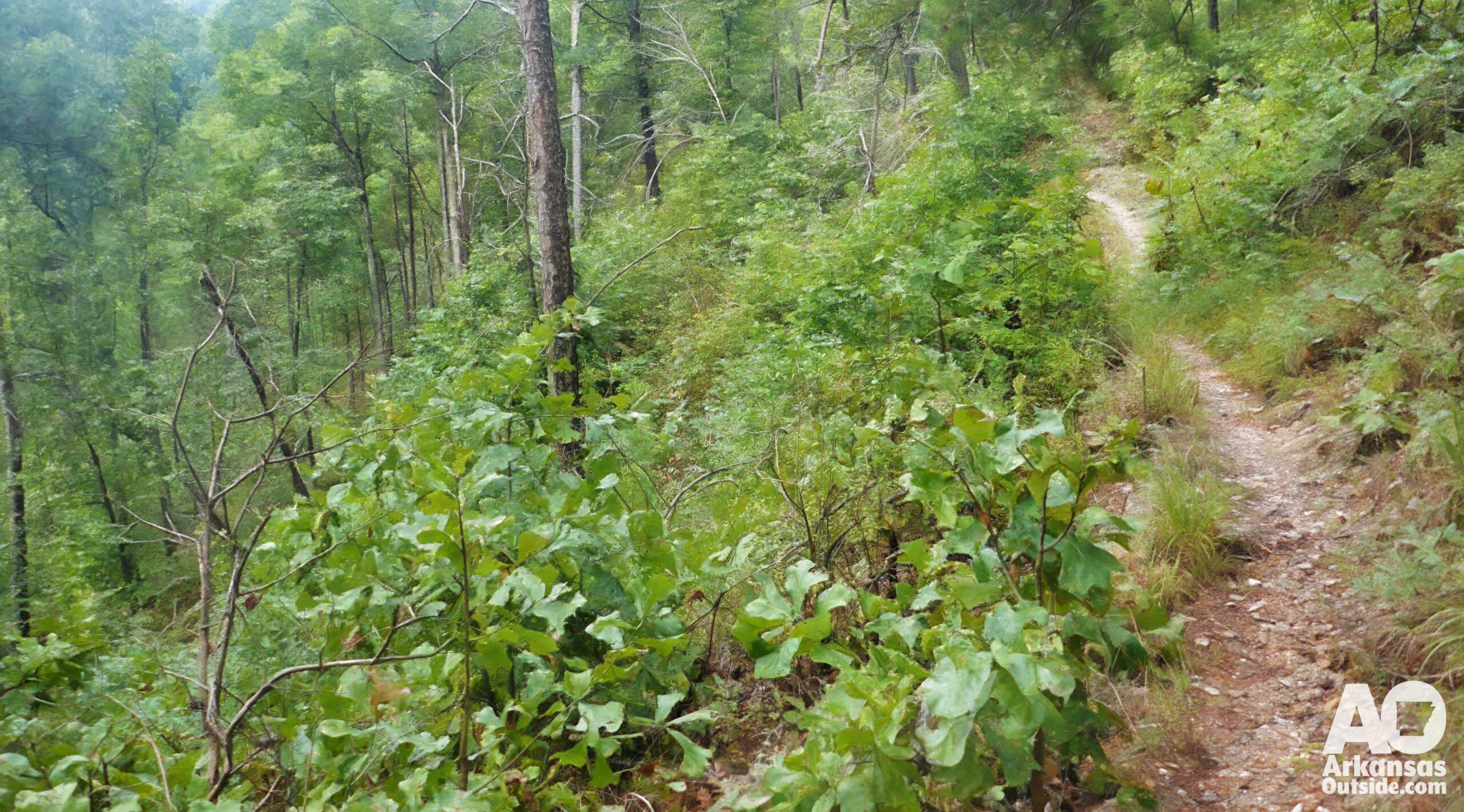


There are trails that showcase scenery. There are trails that carry history. The Womble Trail in the Ouachita Mountains does both.
Stretching across the ridgelines of western Arkansas, the Womble is one of the state’s most storied backcountry routes. Its narrow tread follows ancient geology, abandoned railroad grades, and hand built New Deal craftsmanship. Today, it remains a cornerstone of mountain biking and hiking in the Ouachitas, but its roots run much deeper.
An East-West Mountain Experience in the Ouachitas
The Womble runs through the Ouachita National Forest, the oldest national forest in the South. The Ouachita Mountains are unusual in North America because they run east to west rather than north to south. This distinctive alignment creates long, parallel ridges that define the character of the trail.
The Womble Trail typically ranges from about 600 feet to 1,600 feet in elevation and accumulates roughly 6,000 feet of elevation change across its full length. Riders and hikers move along rolling ridgelines, dip into shaded hollows, and emerge onto bluff sections with sweeping views of the Ouachita River.
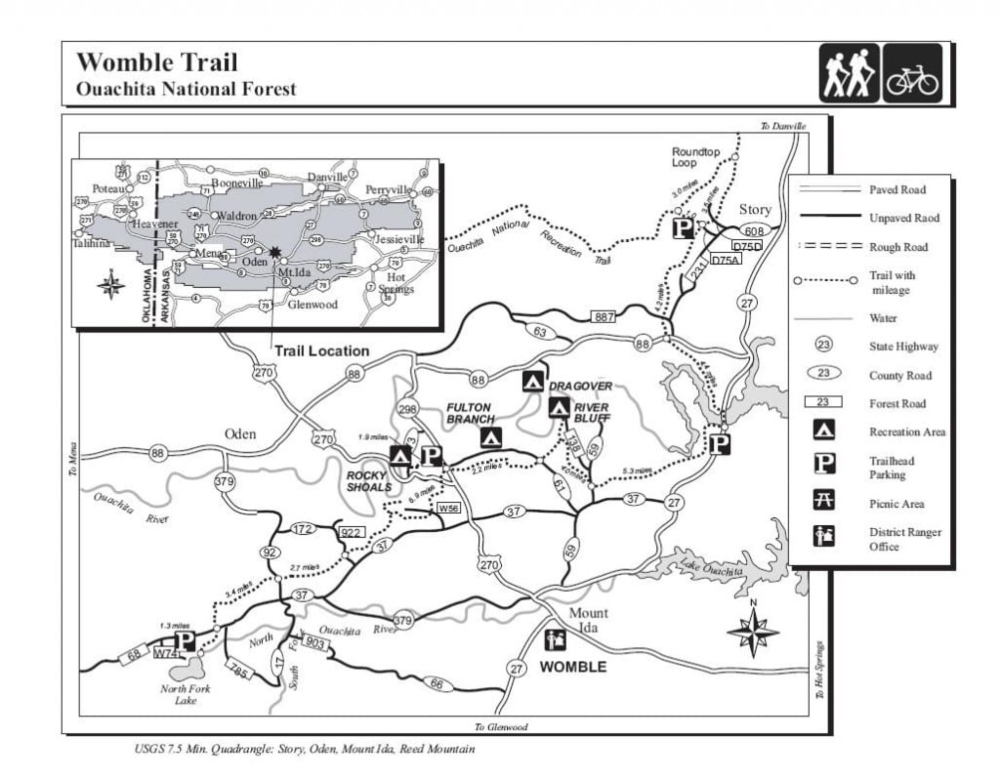
The Womble Trail itself measures about 32 miles from North Fork Lake east to its junction with the Ouachita National Recreation Trail at Muddy Creek. The commonly cited 37 to 38 miles includes additional connector mileage needed to reach the Highway 27 trailhead.
Approximately 95 percent of the route is singletrack, much of it bench cut into hillsides by hand.
From Timber Railroads to Forest Trail
Long before it became a recreational icon, this corridor served Arkansas’ timber industry.
In the early 1900s, logging operations expanded rapidly into Montgomery County. The town of Womble was founded in 1907 as a railroad and lumber hub. Mills and rail spurs pushed into the surrounding ridges to extract virgin timber.
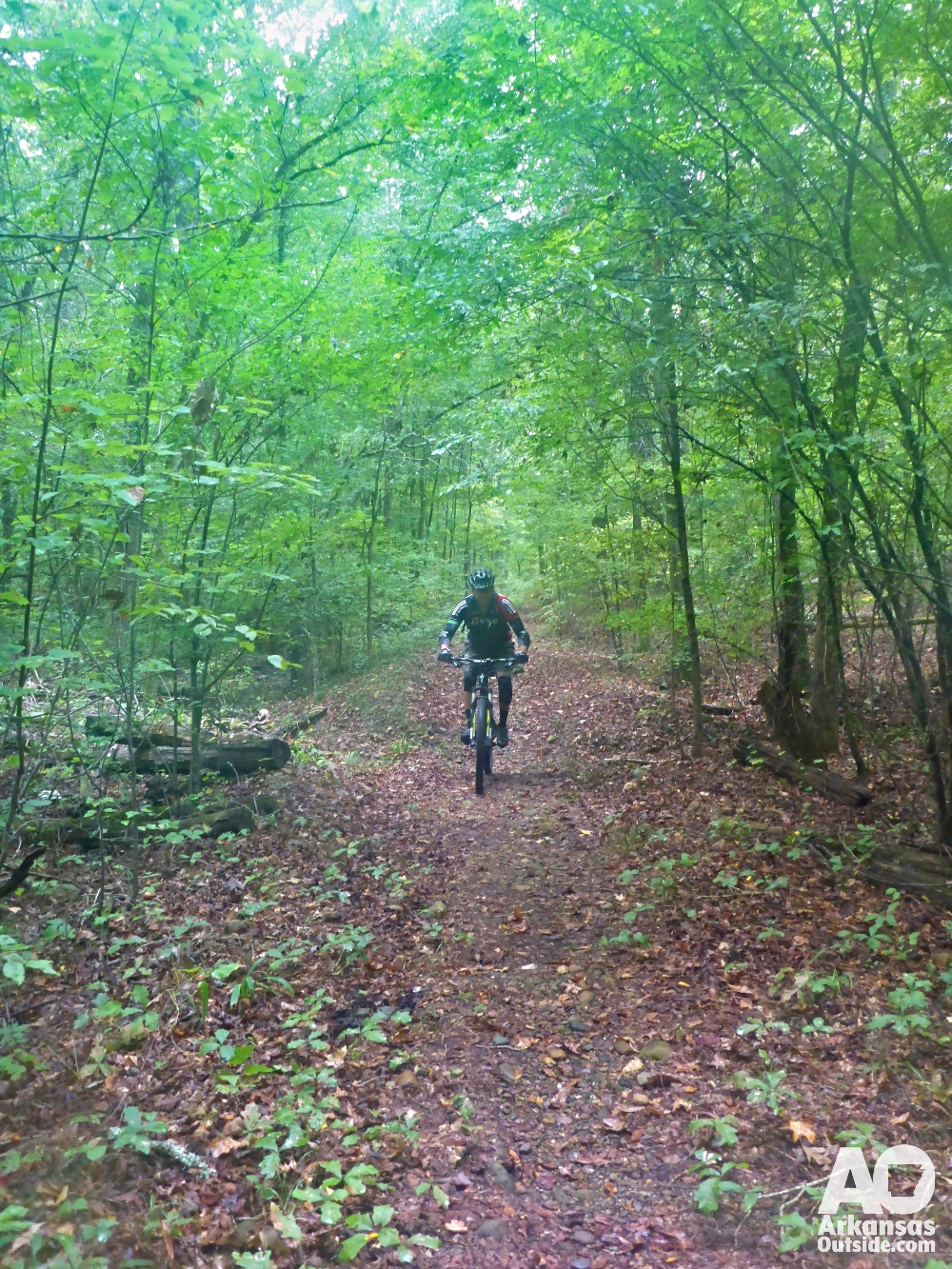
One of the most fascinating segments of today’s trail appears after descending Mauldin Mountain. There, the path flattens onto a raised embankment that once carried trains serving the Mauldin logging camp, established in 1918. When timber resources were exhausted, the camp was dismantled in 1936, leaving behind infrastructure that would later support recreation rather than extraction.
There is also a common misconception about the town’s fate. Womble was not renamed Mount Ida. It was officially renamed Norman in 1925 after a period of political rivalry with Mount Ida over the county seat. The trail preserves the memory of a name that disappeared from maps nearly a century ago.
The Civilian Conservation Corps Legacy
The modern Womble Trail took shape during the 1930s under the Civilian Conservation Corps, part of President Roosevelt’s New Deal programs.
The CCC did not set out to build a recreational trail. Their goal was practical, to create corridors for forest management, fire control, and administrative access. Using hand tools such as pick mattocks and McLeods, crews carved narrow bench cuts into the hillsides, carefully following natural contours and incorporating stone drainage features.
Those design decisions gave the Womble its defining character. The trail flows naturally with the terrain. Climbs and descents feel organic rather than engineered. Decades later, mountain bikers would discover that this fire control path translated beautifully into a long distance singletrack experience.
A Benchmark for Mountain Biking in Arkansas
By the mid 1980s, Arkansas riders had begun exploring the Womble as mountain biking grew in popularity. The trail’s length, remoteness, and scenic ridgelines made it stand out in the region.
In 2005, the International Mountain Bicycling Association designated the Womble as an IMBA Epic. It was the first trail in Arkansas to receive that honor. The designation recognized its physical challenge, backcountry setting, beauty, and sustained riding experience.
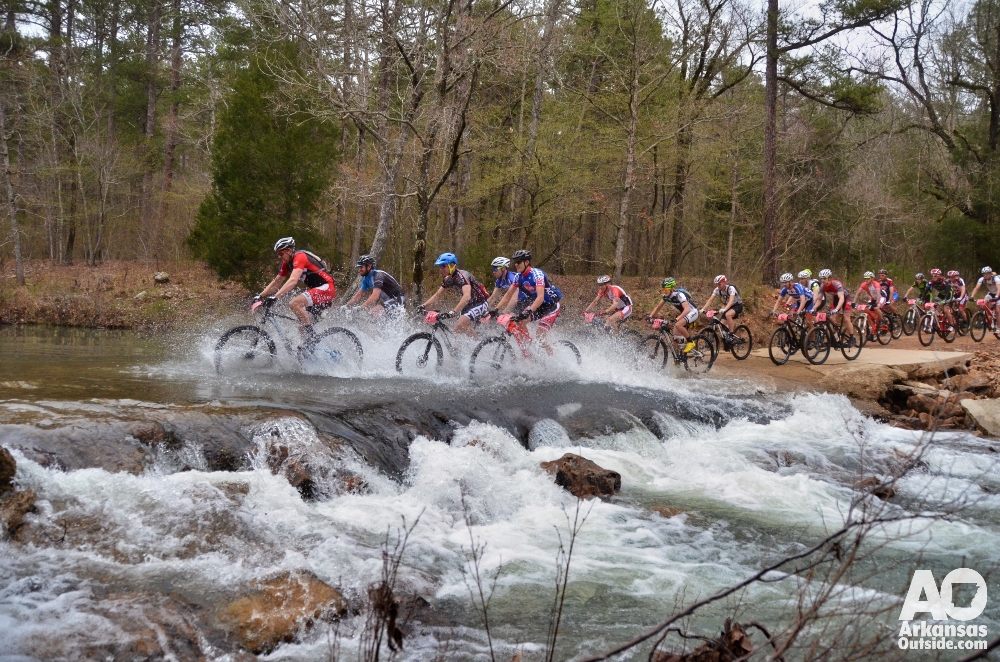
Unlike newer machine built systems, the Womble remains largely in its original form. Riders encounter narrow tread, natural rock features, bluff side exposure, and extended ridge riding. It offers a sense of immersion in the Ouachitas that feels both historic and wild.
Community, Stewardship, and Trail Care
Maintaining more than 30 miles of remote singletrack requires ongoing effort.
The U.S. Forest Service works closely with the Friends of the Ouachita Trail to care for the Womble and more than 200 miles of connected trails. Volunteers adopt sections, clear fallen timber, manage drainage, and help preserve the trail’s white blaze markings.
Because the trail is unsurfaced, responsible use is essential. Wet weather riding can cause erosion and rutting, so land managers encourage visitors to consider conditions before heading out. Sustainable trail features such as switchbacks and reinforced wet crossings help protect the tread for future users.
E-Bikes and the Trail’s Future
In late 2024, the U.S. Forest Service announced that all three classes of e bikes would be authorized on the Womble beginning in January 2025.
Under federal regulations, e bikes are categorized as motorized vehicles, so the trail corridor was reclassified as a limited motorized trail to allow access. Following environmental review, officials determined the change would not significantly increase adverse impacts while expanding opportunities for riders who may need pedal assist support.
The decision reflects the evolving nature of recreation in national forests while maintaining expectations of trail etiquette and responsible operation.
Why the Womble Trail Still Matters
Today, the Womble Trail connects visitors not only to scenic ridgelines and river views, but also to Arkansas history. It traces the arc of a timber boomtown, preserves the craftsmanship of the CCC, and anchors a culture of outdoor exploration in the Ouachitas.

For hikers, mountain bikers, and bikepackers, the Womble offers something increasingly rare, a long, continuous backcountry journey across the spine of the mountains. It is a living link between Arkansas’ industrial past and its thriving outdoor recreation economy.
This article was originally published on ArkansasOutside.com, your trusted source for outdoor news and updates in The Natural State. Unless otherwise credited, all photos included in this piece are the property of Arkansas Outside, LLC. We take pride in sharing the beauty and adventures of Arkansas through our lens—thank you for supporting our work!

One Response
That was interesting read! I didn’t know the history behind the Womble. Grew up in Mena with family still there. It’s been a bit since I’ve ridden it but every time that I get a chance to go, it does not disappoint.