
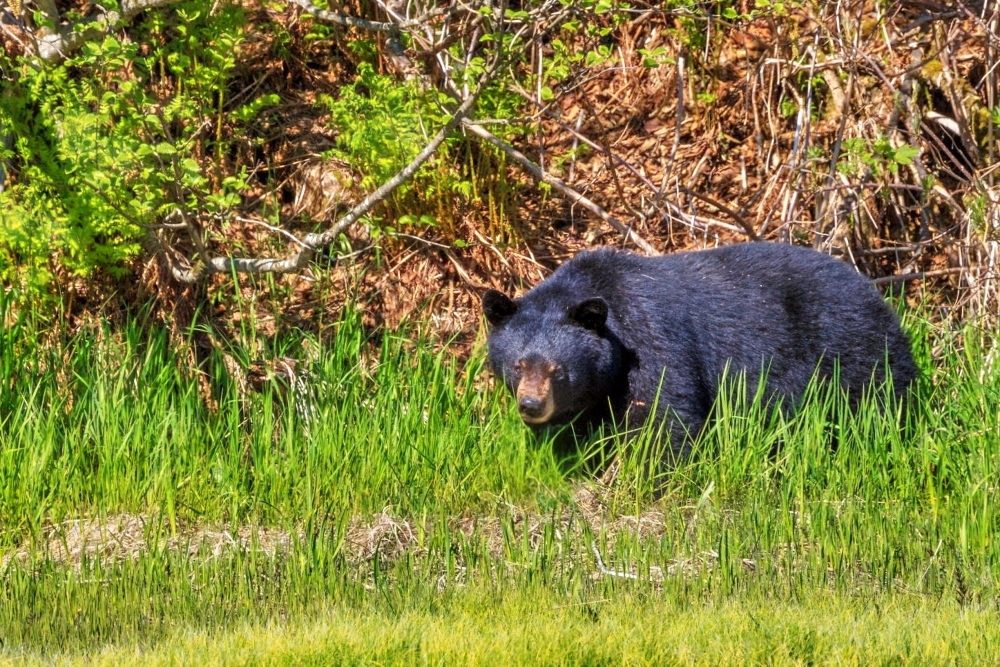

Arkansas earned the nickname The Bear State long before it became known as The Natural State, and today that nickname once again fits. After black bears were nearly wiped out in Arkansas by the early twentieth century, the Arkansas Game and Fish Commission restored the population by relocating bears from Minnesota and Manitoba between 1958 and 1968. That effort succeeded.
Today, Arkansas is home to more than 5,000 black bears, making it one of the top black bear states in the South. For hikers, backpackers, campers, trail runners, paddlers, and outdoor travelers, that means one thing: if you spend time outdoors in Arkansas, you should know how to safely recreate in bear country.
Seeing a black bear in the wild can be one of the most exciting moments on the trail. But bears are powerful wild animals that deserve space and respect. Whether you are hiking the Ozark Highlands Trail, camping in the Ouachita National Forest, floating the Buffalo National River, or backpacking deep in the Ozarks, these Arkansas bear safety tips can help you avoid problems and enjoy the outdoors responsibly.
Where Black Bears Live in Arkansas
Black bears are found across much of Arkansas, with the largest populations in the Ozark Mountains, Ouachita Mountains, and forested regions of south Arkansas. They also appear in parts of the Delta and wooded river corridors.
If you are exploring any of these popular Arkansas outdoor destinations, you are in bear country:
- Ozark Highlands Trail
- Ouachita National Recreation Trail
- Buffalo National River
- Ozark National Forest
- Ouachita National Forest
Black bears are especially active during spring, summer, and fall. During winter, some bears den, though warm Arkansas winters can lead to occasional activity.
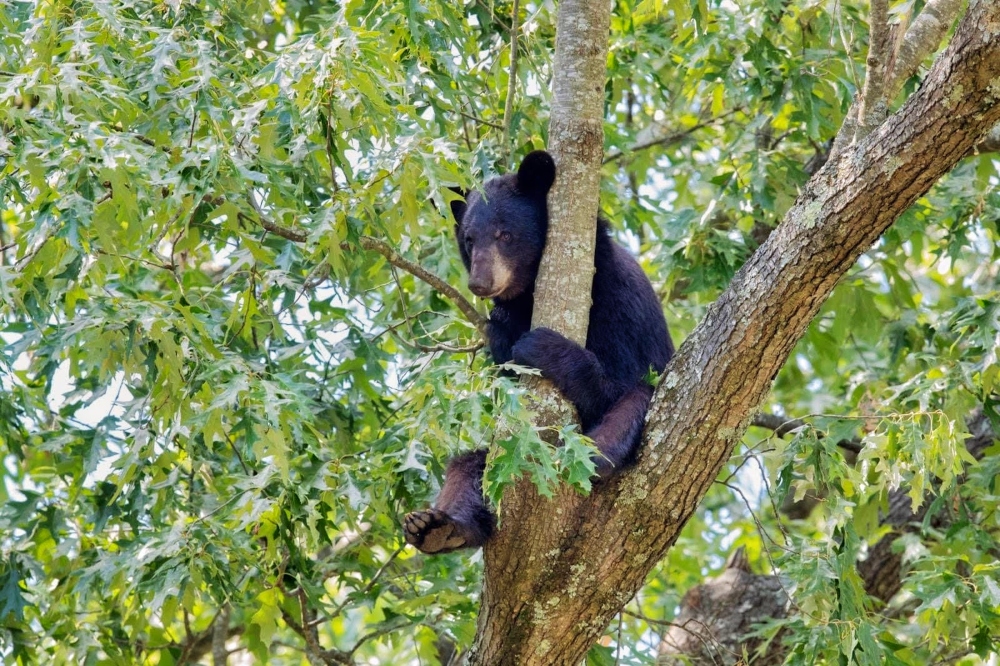
Make Noise While Hiking in Arkansas Bear Country
One of the best ways to avoid a black bear encounter while hiking in Arkansas is to let bears know you are nearby.
Most black bears prefer to avoid people. Surprise encounters are the most common cause of close-range conflicts.
When hiking or trail running:
- Talk with your group
- Clap or whistle occasionally
- Make extra noise in thick brush
- Be alert near creeks or waterfalls where sound is masked
- Hike in groups whenever possible
Human voices are often more effective than bear bells.
How to Store Food While Camping in Arkansas
Many bear problems begin when bears gain access to human food. Once a bear learns campsites provide easy calories, it may return repeatedly.
When camping in Arkansas:
- Never keep food inside your tent
- Keep trash secured
- Store toiletries and scented items away from where you sleep
- Clean cooking gear immediately
- Do not leave coolers unattended overnight
Scented items include toothpaste, sunscreen, wipes, snacks, drinks, and pet food.
If backpacking, hang food high and away from tree trunks, or use a bear-resistant container when possible.
Cook Away From Your Tent
Food smells linger long after dinner. Set your cooking area away from your sleeping area and food storage area.
A smart backcountry setup includes three separate zones:
- Sleeping area
- Cooking area
- Food storage area
This reduces the chance of attracting bears to your tent.
What to Do If You See a Black Bear in Arkansas
Most black bear sightings end peacefully. Stay calm and give the animal space.
If the bear has not seen you:
- Quietly back away
- Leave the area slowly
If the bear sees you:
- Do not run
- Stand your ground
- Back away slowly
- Speak firmly
- Make yourself appear larger
Never:
- Approach a bear
- Get between a sow and cubs
- Feed a bear
- Run from a bear
- Climb a tree to escape
If a black bear attacks, fight back aggressively.
Carry Bear Spray in Arkansas
Bear spray is one of the best tools for backcountry safety. Keep it accessible, not buried in a backpack.
Choose EPA-approved bear spray labeled for bears and know how to use it before heading outdoors.
Bear spray is especially smart for:
- Backpacking in remote Arkansas forests
- Solo hiking trips
- Primitive camping
- Trail work or photography in dense habitat
Watch for Bear Signs on Arkansas Trails
Pay attention to your surroundings. Common black bear signs include:
- Tracks
- Droppings
- Claw marks on trees
- Torn logs or stumps
- Fresh digging
- Flattened bedding areas
Fresh sign means a bear has been nearby recently. Stay alert and make extra noise.
Drought and Poor Acorn Years Increase Bear Activity
During dry summers or poor mast years, natural food sources such as acorns and berries may be limited. That can push bears closer to campgrounds, neighborhoods, and roads.
If Arkansas has experienced drought conditions, expect increased bear movement during late summer and fall.
Report Aggressive or Problem Bears in Arkansas
If you experience an aggressive bear encounter or wildlife emergency in Arkansas, contact the Arkansas Game and Fish Commission immediately.
For emergencies: 833-356-0824
For nuisance wildlife issues: 833-345-0315
Arkansas Bear Safety Checklist
Before your next outdoor trip:
- Make noise on the trail
- Hike with others when possible
- Store food properly
- Keep campsites clean
- Carry bear spray
- Stay alert for signs
- Give bears plenty of space
The Bottom Line on Arkansas Bear Encounters
Arkansas is black bear country again, and that is something worth celebrating. Healthy bear populations are a conservation success story.
With smart habits and a little preparation, hikers and campers can safely share Arkansas’s forests, rivers, and mountains with black bears.
Respect the wildlife, protect your campsite, and enjoy the adventure.
Information for this article was gathered from the University of Arkansas, Division of Agriculture and the Arkansas Game and Fish Commission.
This article was originally published on ArkansasOutside.com, your trusted source for outdoor news and updates in The Natural State. Unless otherwise credited, all photos included in this piece are the property of Arkansas Outside, LLC. We take pride in sharing the beauty and adventures of Arkansas through our lens—thank you for supporting our work!