
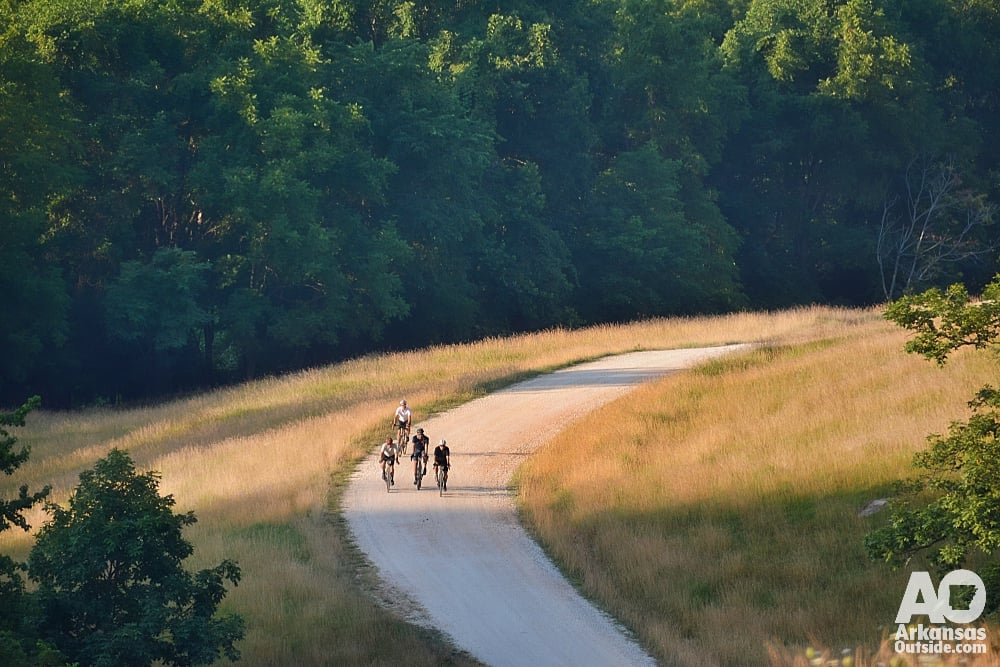

Mountain bikers have known about Arkansas for years. Road cyclists know the state for long climbs, quiet highways and an expanding network of paved trails. But between the pavement and singletrack is another side of Arkansas cycling that may offer more variety than either.
Gravel.
From steep Forest Service roads winding through the Ozark and Ouachita Mountains to arrow-straight farm roads across the Delta, Arkansas offers an enormous range of gravel cycling experiences. Add the rolling terrain of Crowley’s Ridge, thousands of miles of rural roads, the forests of South Arkansas and a growing collection of nationally recognized events, and it becomes clear why gravel cycling fits the Natural State so well.
The best part may be that Arkansas gravel does not have a single personality. Ride 100 miles in one part of the state, then drive a few hours and find something completely different.
Ozark Gravel: Climbs, Hollows and Rough Roads
For riders looking for elevation, the Ozark Mountains offer plenty of it.
Northern Arkansas is covered with county and Forest Service roads that climb ridges, drop into hollows, cross creeks and connect small communities. Gravel can range from relatively smooth county roads to rocky, lightly maintained routes where tire choice and bike handling become every bit as important as fitness.
Northwest Arkansas has become particularly well known for this style of riding. The gravel surrounding Bentonville, Fayetteville and communities farther east into the Ozarks gives cyclists access to routes that can quickly leave developed areas behind.
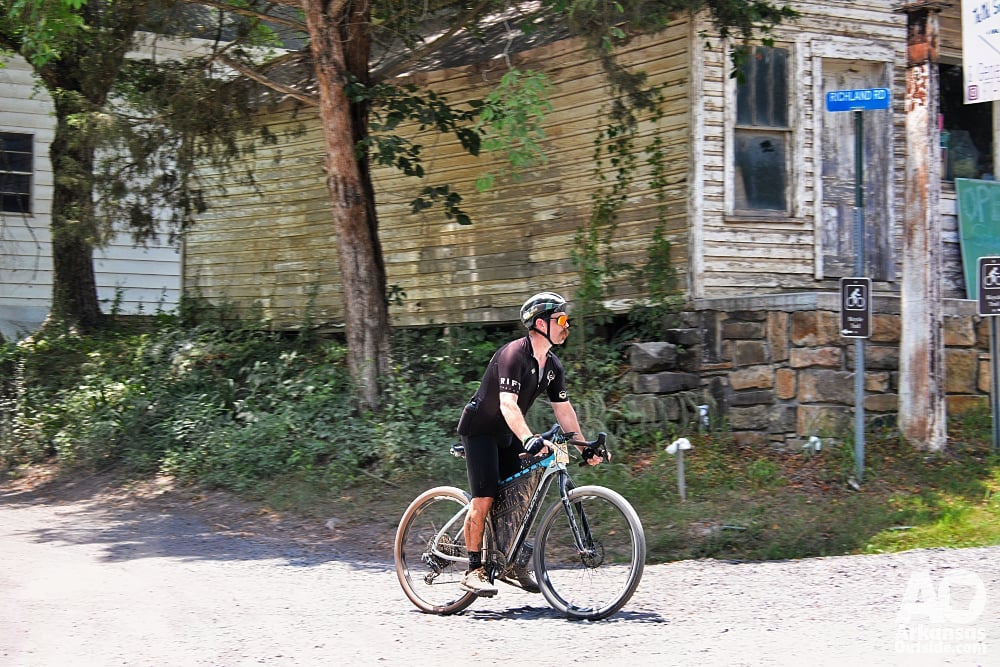
Those roads have also helped Arkansas attract some of the biggest names in gravel racing.
The Life Time Big Sugar Gravel race returns to Bentonville on October 17, 2026, offering 100, 50 and 25-mile distances. Riders encounter loose, rocky gravel, water crossings, steep terrain and the rugged Ozark landscape of Northwest Arkansas and southern Missouri. The 100-mile race also serves as the final event of the 2026 Life Time Grand Prix.
Farther south near Fayetteville, the Chinkapin Hollow Gravel Grinder starts at Lake Wedington Recreation Area and heads west toward eastern Oklahoma. Its 2026 routes range from 24 to 96 miles, providing several ways to experience Ozark gravel.
But racing is only part of the attraction. Pick almost any community bordering the Ozark National Forest and there are gravel roads waiting nearby.
The Ouachitas Offer a Different Kind of Mountain Gravel
Move south across the Arkansas River Valley and the terrain changes again.
The Ouachita Mountains run east to west, creating long ridges and valleys that give gravel riders a very different experience from the Ozarks. The network of roads through the Ouachita National Forest provides opportunities for everything from a few hours of exploring to multi-day bikepacking trips.
These can be remote rides.
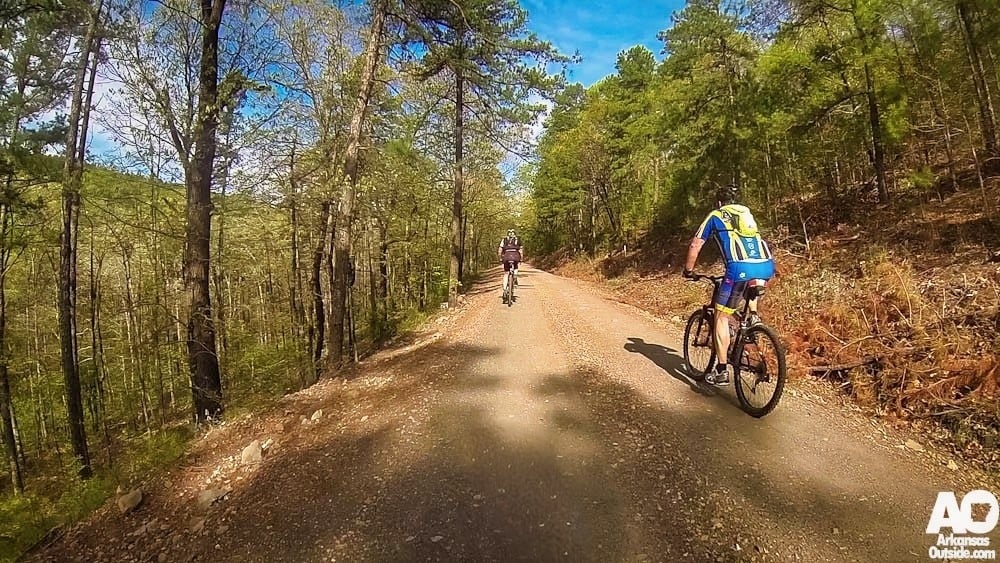
Services may be scarce, cell coverage can disappear and some roads can become rough depending on weather and maintenance. That isolation, however, is also part of the appeal. Riders can spend hours traveling through forested mountains with remarkably little traffic.
The Ouachitas also connect cyclists with destinations including Hot Springs, Lake Ouachita, Mount Ida, Mena, Mount Magazine and numerous recreation areas scattered throughout the national forest.
For gravel cyclists who like exploration as much as speed, the Ouachitas are difficult to beat.
The Arkansas Delta Changes the Definition of a Hard Ride
Head east and Arkansas gravel changes completely.
The mountains disappear. Roads straighten. The horizon gets bigger.
But flat does not necessarily mean easy.
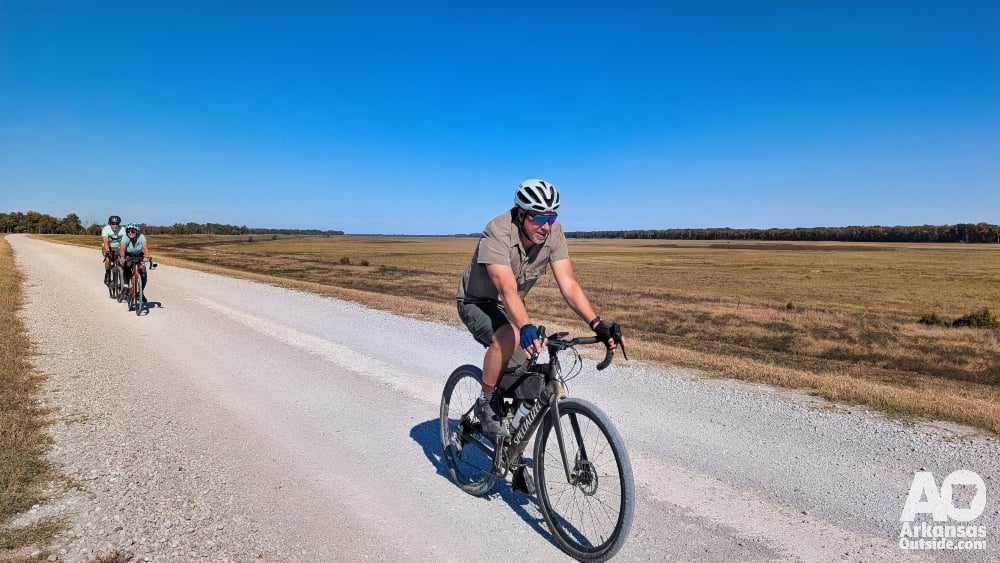
Gravel riding across the Arkansas Delta can involve long distances, wind, changing road surfaces and stretches with few services. Instead of managing thousands of feet of climbing, riders learn to manage pace, weather and exposure.
Crowley’s Ridge adds another dimension. Rising above the surrounding Delta, the ridge creates rolling terrain, forests and gravel roads that feel remarkably different from the farmland only a few miles away.
That landscape is becoming an increasingly important part of Arkansas gravel cycling.
The 2026 Arkansas Graveler is putting the Delta front and center. This year’s Delta Blues Edition will cover more than 300 miles during five days of riding, connecting gravel cycling with the region’s music, food, history and communities.
The Birdeye Gravel Festival near Birdeye offers another introduction to the region, combining gravel cycling and trail running with music, food and a community gathering on Crowley’s Ridge. For riders looking for something considerably bigger, the associated Birdeye 500 provides a roughly 500-mile unsupported endurance challenge.
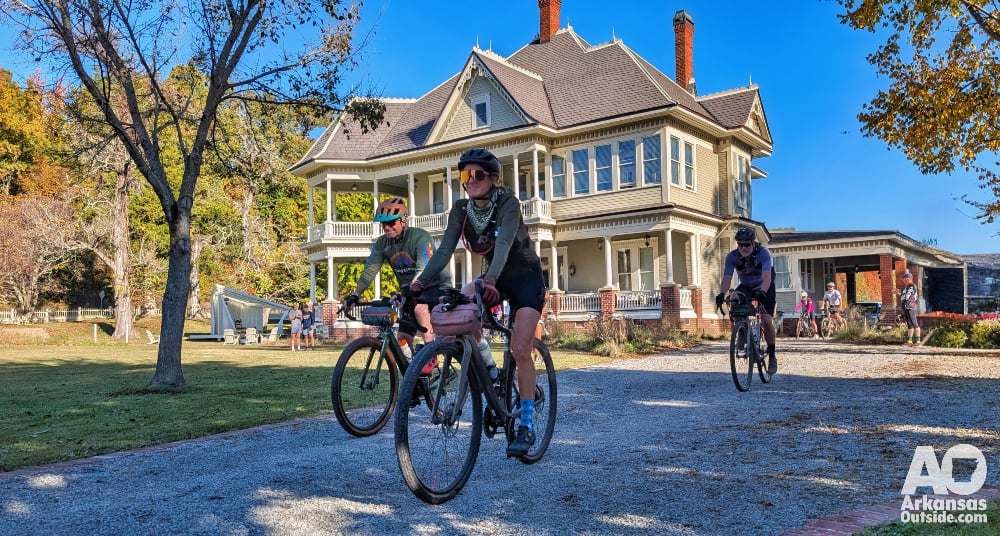
These events are helping riders discover something Arkansans have had in front of them for generations: an enormous network of rural roads that happens to be ideal for bicycles.
Gravel in the Arkansas Timberlands
Southern Arkansas adds yet another landscape.
The Timberlands region is dominated by forests, logging country, small communities and an extensive network of rural roads. Unlike the sustained climbing of the Ozarks and Ouachitas or the wide-open agricultural landscape of the Delta, South Arkansas can offer long stretches of rolling forest roads through pine country.
It is an area of the state that remains comparatively undiscovered by destination cyclists.
That may be part of its appeal.
Gravel riding has always had an exploratory side, and the Timberlands offer plenty of opportunities for riders willing to study maps, build routes and see where the roads go. It is another example of how much potential remains for gravel cycling beyond Arkansas’ best-known riding destinations.
The Arkansas High Country Route Ties It Together
No route demonstrates Arkansas’ gravel potential better than the Arkansas High Country Route.
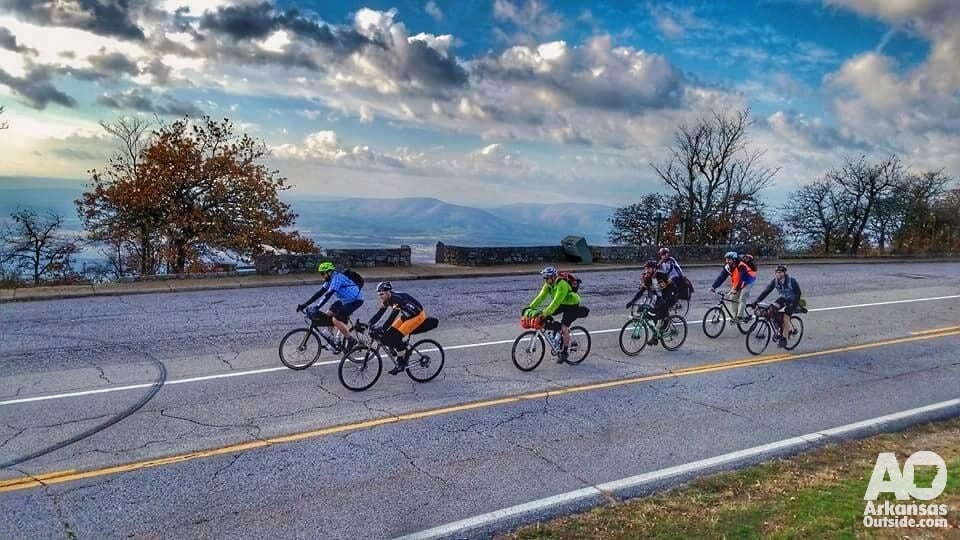
Developed by Arkansas cyclist Chuck Campbell with the Adventure Cycling Association, the route consists of three interconnected loops through the Ozarks, Ouachitas and Arkansas River Valley. The entire network is roughly 1,200 miles, with a mix of approximately 50 percent gravel and 50 percent pavement.
The South Loop begins and ends in Little Rock and travels through the Ouachita Mountains. The Central Loop explores the Arkansas River Valley and Boston Mountains of the Ozarks, while the Northwest Loop travels through Northwest Arkansas and portions of southern Missouri.
This is not rail-trail gravel. Riders can encounter grades approaching 20 percent, rough Forest Service roads, long distances between services and remote areas without reliable cell coverage.
The Arkansas High Country Route can be a multi-week bikepacking adventure, but it doesn’t have to be. Because it is divided into interconnected loops and passes through numerous communities, riders can use portions of the route to create shorter weekend trips or even day rides.
It provides something particularly valuable for Arkansas cycling: a mapped backbone connecting many of the state’s best gravel landscapes.
The Delta Heritage Trail Adds Something New
Arkansas’ next major cycling route will provide almost the opposite experience.
Delta Heritage Trail State Park is nearing completion, with the final White River bridge project expected to connect the entire 84.5-mile corridor from the Helena-West Helena area toward Arkansas City. Arkansas State Parks has said the trail is slated for completion in 2026.
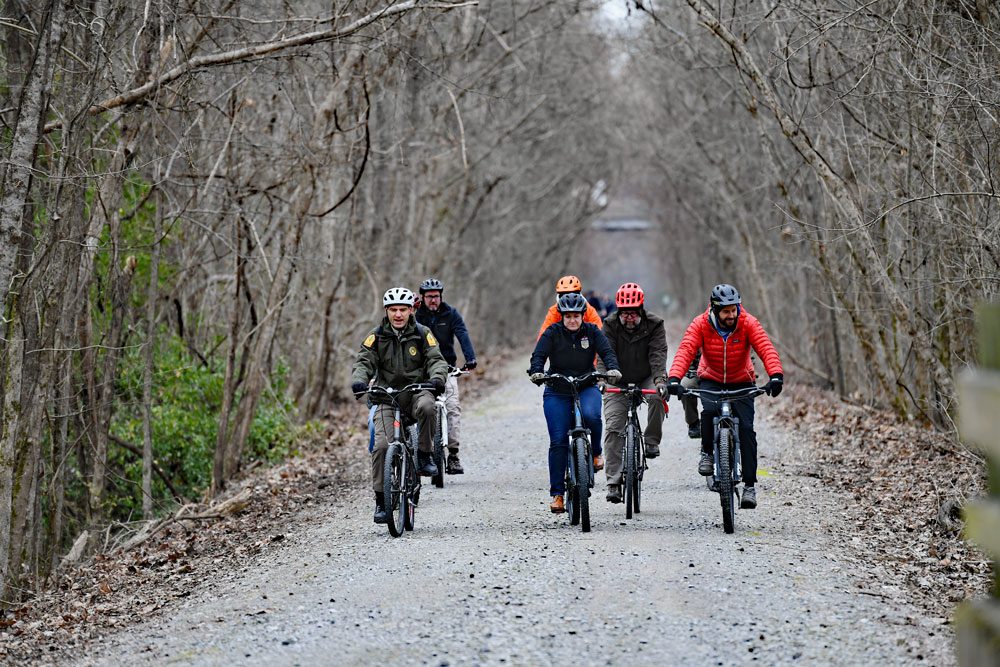
Built largely along a former railroad corridor, the Delta Heritage Trail offers cyclists a way to experience the agricultural landscapes, wetlands, forests, wildlife and small communities of eastern Arkansas.
It also opens interesting possibilities for longer gravel adventures.
Instead of thinking of the Delta Heritage Trail simply as an 84.5-mile trail, cyclists can begin thinking about it as a spine from which routes can branch onto the Delta’s extensive network of gravel roads, levees and rural highways.
The combination could eventually make eastern Arkansas one of the state’s most accessible destinations for multi-day gravel touring.
Arkansas Has Events for Almost Every Kind of Gravel Rider
The state’s event calendar reflects the diversity of the terrain.
At one end is Big Sugar, bringing professional racers and riders from around the country to Northwest Arkansas. At the other are community-focused rides and gravel festivals that are as much about spending a day outside with friends as finishing times.
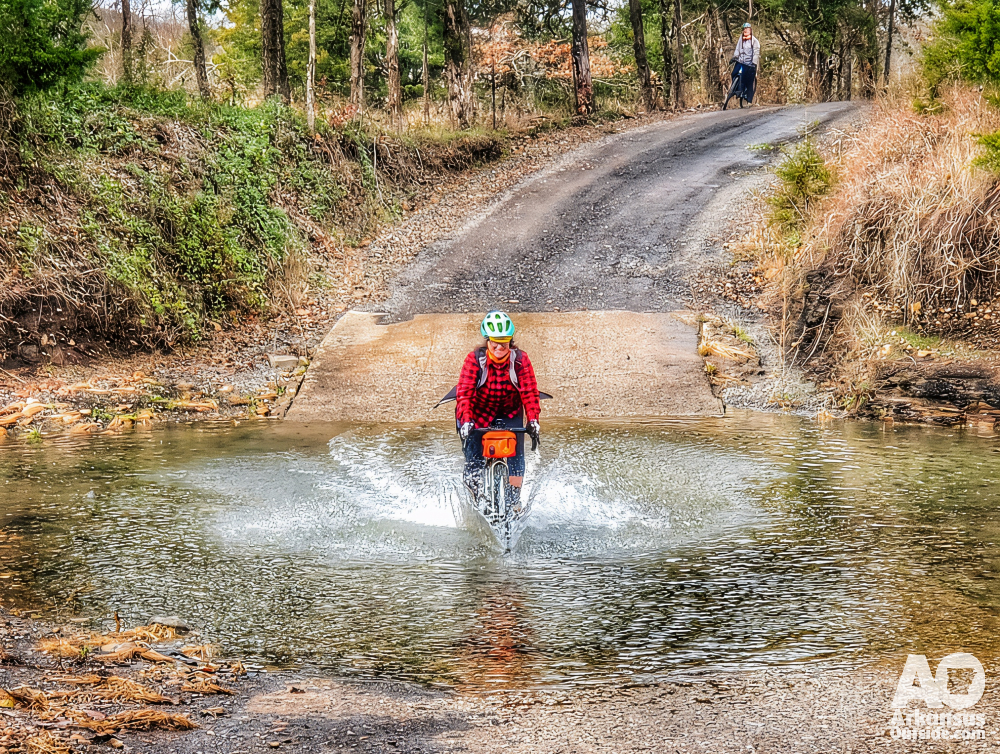
The Arkansas Graveler turns gravel cycling into a multi-day tour. Birdeye combines cycling with a broader outdoor festival. Chinkapin Hollow offers multiple distances in the Ozarks. The Arkansas High Country Race takes the concept to its extreme, challenging riders on the massive Arkansas High Country Route.
Other events, including the Lick Fork Gravel Grind near Witts Springs, add still more opportunities to explore different corners of the state.
Together, these events give beginners a place to start while offering experienced racers and bikepackers challenges that can take hours or days to complete.
Gravel Is About More Than Racing
Perhaps the biggest reason Arkansas works as a gravel destination has nothing to do with organized events.
You don’t need a starting line.
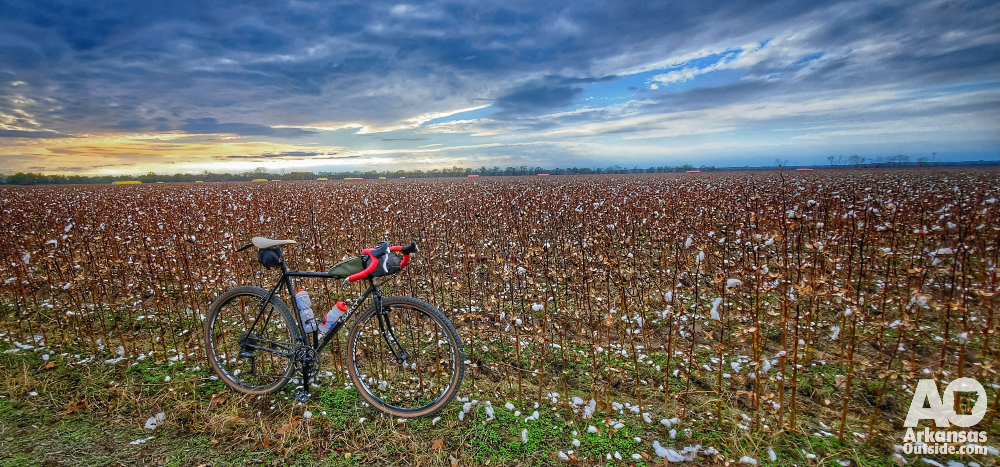
The state’s national forests, county roads and rural road networks make it possible to build routes almost anywhere. A cyclist can leave a small town, disappear onto gravel for several hours and return for lunch. Another rider can load camping gear onto a bike and disappear for several days.
Gravel also provides a different way to experience Arkansas communities.
These routes pass country stores, farms, historic sites, rivers, national forests, state parks and towns that most travelers simply drive past. At bicycle speed, those places become part of the trip rather than scenery outside a car window.
That may ultimately be Arkansas’ greatest strength as a gravel destination.
Pick a Direction and Ride
Want climbing? Head toward the Ozarks.
Want remote mountain roads? Try the Ouachitas.
Want rolling forest roads and territory few cyclists have explored? Look south toward the Timberlands.
Want big skies, long distances and a completely different cycling experience? Go east into the Delta.
Want to put everything together? Start exploring the Arkansas High Country Route, or wait just a little longer for the final connection of the Delta Heritage Trail.
Arkansas does not offer one great gravel experience.
It offers several of them, all within a few hours of each other.
For a gravel cyclist, that’s a pretty good reason to keep exploring the Natural State.
This article was originally published on ArkansasOutside.com, your trusted source for outdoor news and updates in The Natural State. Unless otherwise credited, all photos included in this piece are the property of Arkansas Outside, LLC. We take pride in sharing the beauty and adventures of Arkansas through our lens, thank you for supporting our work!