

Estimated reading time: 9 minutes
The Arkansas Parks & Recreation Foundation has helped direct millions of dollars in private funding into some of Arkansas’ most visible outdoor recreation projects, including Monument Trails, climbing areas and improvements within Arkansas State Parks.
Now, a lawsuit involving an undelivered sculpture at Pinnacle Mountain State Park is bringing additional attention to the nonprofit, how it is funded and its role in developing projects on public lands.
The Arkansas Democrat-Gazette reported Sept. 25 that the foundation sued New York artist DeWitt Godfrey and his business, Big State Art, seeking the return of approximately $110,000 paid toward a sculpture planned for the Monument Trail at Pinnacle Mountain State Park.
According to the lawsuit, as reported by the Democrat-Gazette, the foundation contracted with Godfrey in March 2023 for a sculpture costing $150,000, plus $36,000 for shipping and installation. The work was scheduled for completion in November 2023 but was never delivered.
The newspaper reported that the foundation alleges Godfrey acknowledged using some of the project’s money for other business expenses. Godfrey declined to comment on the lawsuit when contacted by the Democrat-Gazette.
The dispute provides an opportunity to look more closely at the organization behind the project and the larger public art initiative at Pinnacle Mountain.
A Private Partner for Public Recreation
The Arkansas Parks & Recreation Foundation was established as a 501(c)(3) nonprofit in 2017 to support recreation projects and provide a way for private contributions to help fund improvements to public recreation areas.
“Until now, there hasn’t been an effective way to channel private resources into our parks for worthy projects,” founding chairman John Gill said when the organization was announced.
The Walton Family Foundation provided a three-year, $310,000 grant to help launch the organization.
The Arkansas Parks & Recreation Foundation is separate from Arkansas State Parks, but the two organizations have worked closely together on projects located within the state park system.
That partnership has helped produce some of the state’s highest-profile trail projects.
Millions in Private Funding
The foundation’s recent revenues are relatively modest compared with its earlier years.
The Democrat-Gazette reported revenues of $295,869 in 2023 and $252,667 in 2024, based on public financial filings.
IRS Form 990 records provide a broader picture.
The foundation reported approximately $5 million in revenue in 2019 alone, including nearly $4.99 million in contributions and grants. Revenue was approximately $2.2 million in 2020 and $1.4 million in 2021.
From 2017 through 2024, the organization reported approximately $12.4 million in total revenue, with most of it coming from contributions and grants.
The pattern also helps explain why expenses have exceeded new revenue in recent years. The foundation can receive money for projects years before all of it is spent.
Net assets exceeded $5 million at the end of 2019 as major projects were being funded. Those assets subsequently declined as money was spent on trails, facilities and other projects. The foundation reported approximately $883,000 in net assets at the end of 2024.
Walton Family Foundation Has Played a Major Role
The Walton Family Foundation has been one of the most significant identifiable sources of funding for the Arkansas Parks & Recreation Foundation.
Beyond providing startup funding, Walton grants helped finance development of the Monument Trails at Hobbs State Park-Conservation Area, Mount Nebo State Park, Pinnacle Mountain State Park and Devil’s Den State Park. Another Monument Trail system has recently been announced for Petit Jean State Park.
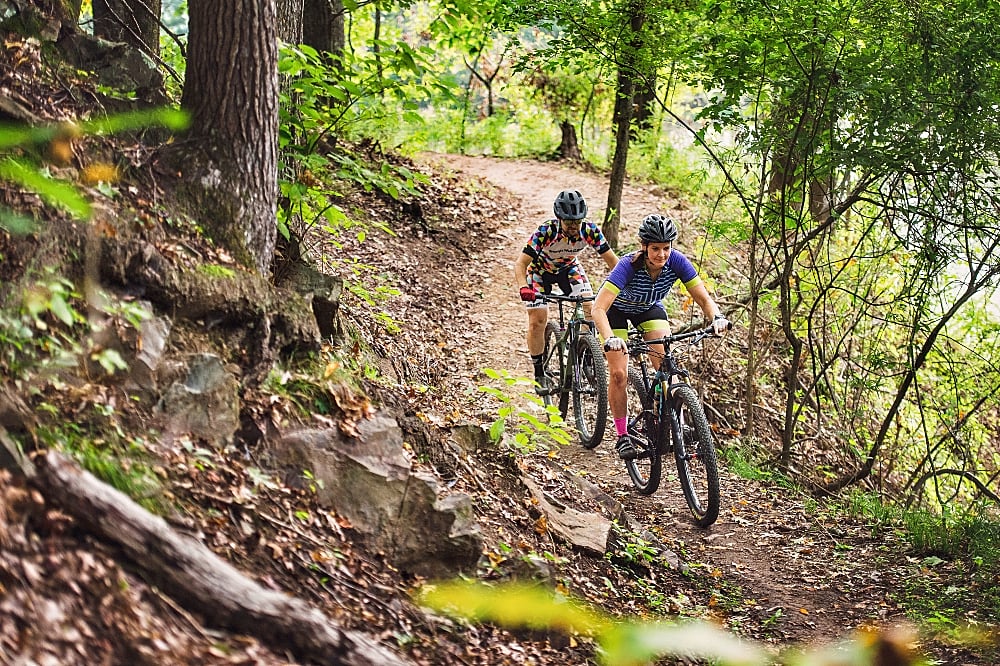
A $2 million grant helped develop the first Monument Trail at Hobbs. Additional Walton funding supported trail construction in Central Arkansas, planning and permitting for trails near Mena and development of climbing opportunities within Arkansas State Parks.
Arkansas State Parks describes Monument Trails as a partnership among Arkansas State Parks, the Arkansas Parks & Recreation Foundation and the Walton Family Foundation.
The model allows private philanthropic money to finance projects that ultimately become recreational amenities on public land.
Foundation Leadership Has Changed
The foundation’s original trustees included John Gill, Bryan Day, Ed Nicholson, Jane Rogers, Jim Shamburger and Craig Soos. Suzanne Grobmyer served as executive director.
The current foundation website lists Craig Soos of Bentonville as president, Dennis Nelms of Fayetteville as vice president, Chad Ware of Bentonville as treasurer and Cindy Simpson of Little Rock as a board member. Mitchell Allen of Little Rock serves as executive director.
The foundation’s 2024 Form 990 reported five voting members of its governing body and identified all five as independent.
Public records reviewed by Arkansas Outside do not appear to include foundation board meeting minutes or individual voting records showing how board members voted on particular projects or contracts.
Public records from the State Parks, Recreation and Travel Commission provide more information about the government side of the partnership.
Close Connections With Arkansas State Parks
The foundation and Arkansas State Parks have been closely connected since the nonprofit’s creation.
Founding chairman John Gill and founding trustee Jim Shamburger both served on the State Parks, Recreation and Travel Commission during the foundation’s early years.
State records provide examples of foundation projects coming before the commission for approval.
In January 2023, for example, Gill made the motion to approve an agreement between Arkansas State Parks and the foundation for trail design at Queen Wilhelmina State Park. Commissioner Bob Connell seconded the motion, which passed.
Gill’s term on the commission ended later that month.
A year later, the commission considered artwork planned for Pinnacle Mountain.
Commission Approved Pinnacle Mountain Artwork
In January 2024, Arkansas State Parks Director Jeff King asked the State Parks, Recreation and Travel Commission to approve the donation of two pieces of art from the Arkansas Parks & Recreation Foundation to Pinnacle Mountain State Park.
Commissioner Shash Goyal made the motion, Commissioner Trey Berry seconded it, and the motion passed.
The public minutes do not identify the artists or provide detailed descriptions of the two pieces.
Foundation financial records, however, describe a larger project involving the evaluation, design, commissioning and installation of three artworks along the Pinnacle Mountain Monument Trail.
According to the Democrat-Gazette, the foundation reported spending $281,829 on the art project in 2023 and another $164,980 in 2024.
The foundation worked with art curator KIN and three artists on the project.
Publicly available records reviewed by Arkansas Outside have not established the original source of the grant funding for the three artworks.
The Artwork Generated Opposition
Some of the art installed along the Pinnacle Mountain Monument Trail generated significant public criticism.
One of the completed works, “Crystallized Tears,” is located near the East Quarry along the Monument Trail system.
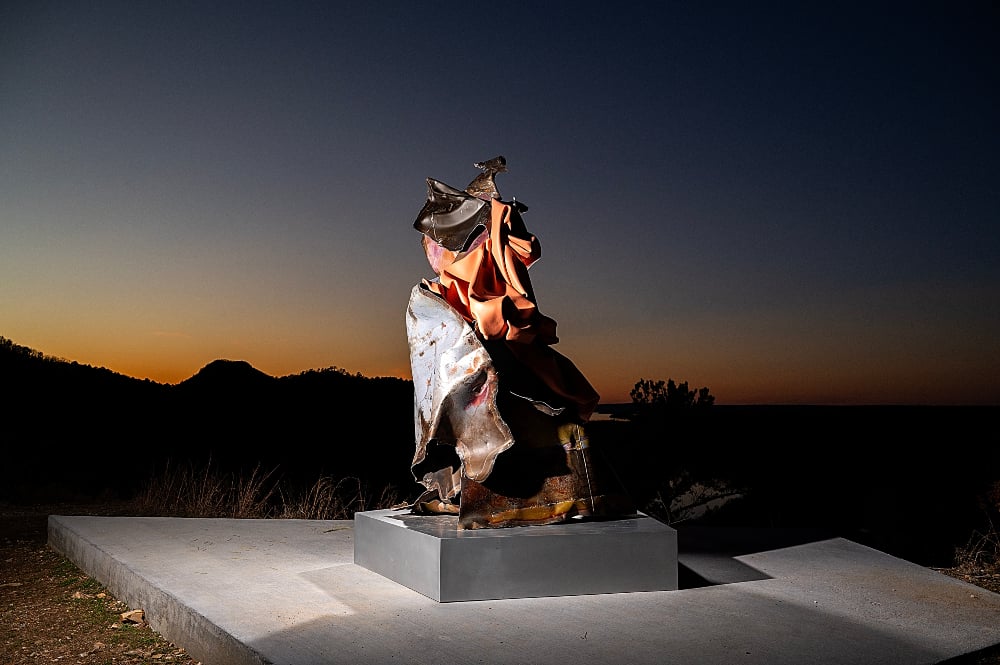
In 2024, Little Rock-area resident Joshua Hamilton started an online petition asking the Arkansas Department of Parks, Heritage and Tourism to stop installing sculptures along trails at Pinnacle Mountain and other state parks.
The petition had collected nearly 3,000 signatures by early April and was reported to have approached 5,000 signatures later that year.
Opponents generally argued that large contemporary sculptures were inconsistent with the natural experience they expected in a state park. Hamilton told KATV that one installation resembled “a jumble of trash,” a comment subsequently reported nationally by United Press International.
The Arkansas Department of Parks, Heritage and Tourism responded to the controversy by pointing out that taxpayer money had not paid for the sculptures. The artwork was funded through a private donation administered by the Arkansas Parks & Recreation Foundation.
Social media discussions also produced criticism of the artwork, although comments on Reddit and other platforms represent self-selected users and should not be considered a representative survey of Pinnacle Mountain visitors.
Arkansas Outside found no evidence of a formal public-opinion survey measuring overall visitor support or opposition to the installations.
The artwork remains in place.
Arkansas State Parks has since incorporated Crystallized Tears into interpretive programming. In 2026, Pinnacle Mountain State Park offered a ranger-led hike to the East Quarry that included interpretation of the sculpture along with the area’s geology, plants and wildlife.
The park has also offered a “Monumental Mountains: Sculpture Stroll” centered on Monument Trail artwork.
The foundation has described art and architecture as part of the Monument Trail concept since the program’s early development. Some visitors clearly disagree about whether those elements improve the state park experience.
The Sculpture That Never Arrived
Against that background came the commission of Godfrey’s sculpture.
According to the Democrat-Gazette’s review of the lawsuit, Godfrey’s agreement called for $150,000 for design, materials and labor, plus another $36,000 for shipping and installation.
The foundation paid a $60,000 deposit in February 2023, another $2,968 in August 2023 and $45,000 in January 2025, according to the newspaper.
The sculpture was never delivered.
The Democrat-Gazette reported that the lawsuit says Godfrey provided the foundation with a budget spreadsheet showing at least $47,000 had been used for unrelated projects and business expenses.
The foundation is alleging breach of contract, conversion and, alternatively, unjust enrichment. It is seeking repayment of approximately $110,000 plus interest and legal expenses, as well as potential punitive damages.
Those claims are allegations in a civil lawsuit and have not been adjudicated.
Questions Remain About the Pinnacle Mountain Art Project
The lawsuit provides a glimpse into a larger privately financed public-art program that has received relatively little attention compared with the Monument Trails themselves.
Several questions remain unanswered in publicly available records.
The original donor or donors who funded the Pinnacle Mountain art project have not been clearly identified. It is also unclear how the three artists were selected, what role curator KIN played in that process, what foundation board approvals were required, and whether Godfrey’s proposed sculpture was one of the two artworks formally accepted by the State Parks, Recreation and Travel Commission in January 2024.
There is also a broader question about public participation.
The artwork was privately financed, but it was intended for a publicly owned state park. The subsequent petition demonstrates that at least several thousand people objected to the addition of contemporary art installations within Pinnacle Mountain State Park.
At the same time, Arkansas State Parks has continued to incorporate the completed artwork into park programming.
The Arkansas Parks & Recreation Foundation’s public-private model has helped bring millions of dollars into Arkansas outdoor recreation and contributed to trails, climbing opportunities, facilities and other projects across the state.
The Pinnacle Mountain art project demonstrates another side of that model: private money can help create public amenities more quickly, but projects ultimately placed on public land can also generate questions about transparency, decision-making and how the public is included in determining what belongs in a state park.
Photos courtesy of the Arkansas Department of Parks, Heritage and Tourism.
This article was originally published on ArkansasOutside.com, your trusted source for outdoor news and updates in The Natural State. Unless otherwise credited, all photos included in this piece are the property of Arkansas Outside, LLC. We take pride in sharing the beauty and adventures of Arkansas through our lens, thank you for supporting our work!