

Estimated reading time: 1 minute
A proposed federal policy change could affect how thousands of acres in Arkansas’s national forests are managed, including landscapes near some of the state’s most popular hiking, mountain biking, hunting and camping destinations.
On August 18, 2026, the U.S. Department of Agriculture announced a proposal to rescind the 2001 Roadless Area Conservation Rule, commonly known as the Roadless Rule.
The rule currently applies to more than 44 million acres of the 193-million-acre National Forest System. In Arkansas, approximately 95,000 acres have historically been identified as Inventoried Roadless Areas covered by the rule.
For Arkansas outdoor recreationists, repeal would not mean immediate logging or road construction. But it could change how portions of the Ouachita National Forest and Ozark-St. Francis National Forests are managed in the future.
What Is the 2001 Roadless Rule?
The Roadless Rule was adopted in January 2001 to limit new road construction, road reconstruction and timber harvesting in designated Inventoried Roadless Areas within national forests.
Roadless areas are not the same as federally designated Wilderness Areas.
Wilderness areas receive stronger protections established by Congress. Roadless areas remain multiple-use National Forest lands where activities such as hiking, hunting, fishing, camping and, where permitted, mountain biking and motorized recreation can continue.
The Roadless Rule also allows some forest management, including certain projects involving wildfire mitigation, habitat improvement and ecosystem restoration.
Its primary purpose is to keep designated areas largely free of new roads and conventional commercial timber harvesting.
Why Does the Trump Administration Want to Repeal It?
The Trump administration argues that the nationwide rule limits the ability of local Forest Service managers to address wildfire, insects, disease and other forest health issues.
The USDA says more than 40 percent of Inventoried Roadless Areas nationwide are at high or very high wildfire risk, while only about 5 percent have received hazardous-fuels treatments since 2014.
Repealing the rule would give individual National Forest managers greater flexibility to consider roads, timber harvesting and other management projects.
Critics argue that removing the protections could lead to additional roads and logging in some of the country’s remaining relatively undeveloped National Forest landscapes.
About 95,000 Arkansas Acres Are Affected
Arkansas contains approximately 95,000 acres of Inventoried Roadless Areas, according to Forest Service data.
These lands are scattered across the Ouachita National Forest and Ozark-St. Francis National Forests rather than concentrated in one large area.
The Ouachita National Forest contains about 35,000 acres historically identified as Inventoried Roadless Areas. Much of Arkansas’s remaining roadless acreage is in the Ozarks.
Repeal would not automatically authorize projects on those lands. Instead, it would remove the nationwide Roadless Rule restrictions.
Future road construction, timber projects and other activities would still have to comply with National Forest management plans, federal environmental laws and other applicable protections.
What Could the Roadless Rule Repeal Mean for Arkansas Recreation?
Arkansas’s roadless areas overlap with or are near landscapes containing some of the state’s best-known outdoor recreation destinations.
That makes the proposal relevant to hikers, mountain bikers, trail runners, hunters, anglers and other National Forest users.
New roads can improve access for forest management, firefighters, hunters and recreationists. They can also fragment wildlife habitat, increase erosion and change the remote character of backcountry areas.
Timber and vegetation management can improve forest health and wildlife habitat, but projects near trails can also change viewsheds and the recreation experience.
The impact would depend on what projects are eventually proposed and where they occur.
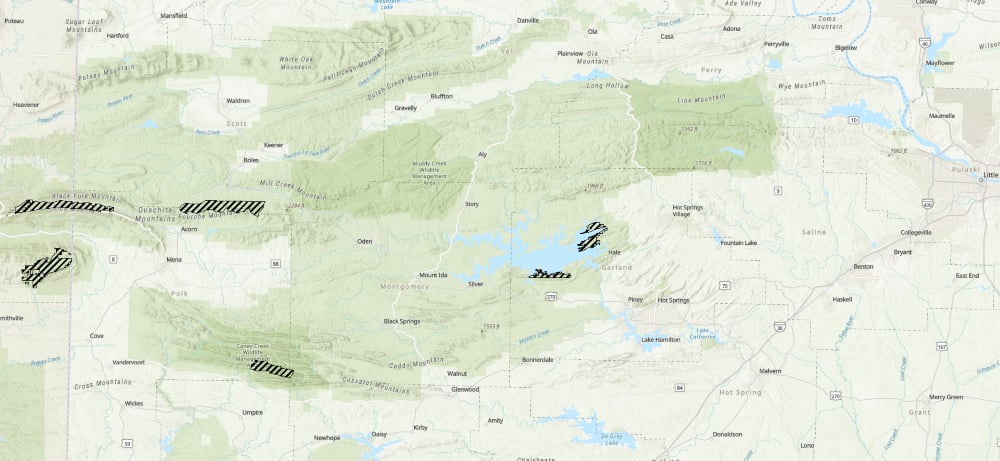
Lake Ouachita and the Ouachita National Forest
Several important recreation areas are located within the broader landscape of the Ouachita National Forest.
The Lake Ouachita Vista Trail, or LOViT, follows the southern shore of Lake Ouachita and is one of Arkansas’s premier mountain biking and hiking trails.
Nearby, the Little Blakely Trail system offers additional hiking and mountain biking opportunities.
Changes to surrounding National Forest management could affect viewsheds, wildlife habitat, streams and the undeveloped character that makes these trails attractive.
However, not every mile of LOViT or Little Blakely is necessarily within an Inventoried Roadless Area. The Roadless Rule applies to specific mapped parcels.
Ouachita National Recreation Trail
The Ouachita National Recreation Trail stretches approximately 223 miles from Pinnacle Mountain State Park through the Ouachita Mountains and into Oklahoma.
The trail passes through some of the most remote terrain in the Ouachita National Forest.
Repealing the Roadless Rule would not affect the trail’s National Recreation Trail designation. However, future roads or timber projects on surrounding National Forest lands could change the character of some sections.
Caney Creek Wildlife Management Area
The Caney Creek Wildlife Management Area covers approximately 85,000 acres in the Ouachita Mountains and is popular with hunters, hikers and other outdoor recreationists.
The larger landscape also includes Caney Creek Wilderness.
That distinction matters.
Repealing the Roadless Rule would not remove federal Wilderness protections. The Wilderness Area would remain protected under separate federal law.
Any potential change would apply to Inventoried Roadless Areas that rely specifically on the 2001 rule for restrictions on roads and timber harvesting.
Pedestal Rocks and the Ozark National Forest
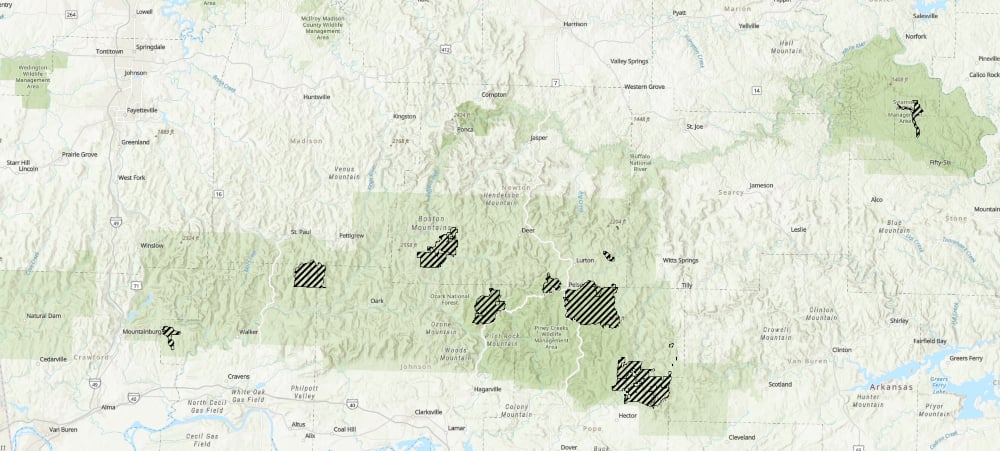
The potential impact is particularly easy to see at Pedestal Rocks in the Ozark National Forest.
Pedestal Rocks Scenic Area is known for its unusual sandstone formations, bluff lines and the popular Pedestal Rocks and Kings Bluff hiking trails.
More importantly, Pedestal Rocks is also the name of an approximately 21,957-acre Inventoried Roadless Area.
Future management would depend on the National Forest management plan, other existing protections and individual project decisions.
Ozark Highlands Trail
The Ozark Highlands Trail travels through some of the most remote terrain in the Ozark National Forest.
Some portions pass through federally designated Wilderness Areas, which would retain their protections regardless of what happens to the Roadless Rule.
Other sections travel through National Forest landscapes without Wilderness designation.
The concern is whether future road construction or timber projects in surrounding roadless areas could change the backcountry experience along portions of the route.
Sylamore Wildlife Management Area
The Sylamore Wildlife Management Area and surrounding North Sylamore landscape are another important recreation destination in the Ozark-St. Francis National Forests.
The region includes hunting areas, hiking and mountain biking trails, North Sylamore Creek and Blanchard Springs.
Like other National Forest recreation areas, Sylamore includes a patchwork of land classifications and protections.
Portions of the surrounding National Forest that depend on the Roadless Rule could become eligible for management activities that have been restricted for the past 25 years.
Repeal Would Not Immediately Open 44 Million Acres
The biggest misconception about the proposal is that repealing the Roadless Rule would immediately open 44 million acres to logging and development.
It would not.
Repeal would remove one layer of federal protection. Individual projects would still have to comply with applicable forest plans, environmental reviews and federal laws.
Wilderness Areas, Wild and Scenic Rivers and other lands protected under separate federal laws would retain those protections.
For Arkansas, the practical impact will depend on what happens after the rule is rescinded.
What Arkansas Outdoor Recreationists Should Watch
The most important changes would likely come later through individual Forest Service projects.
Arkansas outdoor recreationists should watch for proposals involving roads, timber harvesting and other management activities within the state’s Inventoried Roadless Areas.
Places including Lake Ouachita, LOViT, Little Blakely, the Ouachita National Recreation Trail, Caney Creek, Pedestal Rocks, the Ozark Highlands Trail and the Sylamore area demonstrate how the national Roadless Rule debate connects to Arkansas recreation.
The Roadless Rule has influenced National Forest management for 25 years. Removing it would not suddenly transform Arkansas’s forests, but approximately 95,000 acres of Arkansas National Forest land could lose a layer of protection that has restricted road building and timber harvesting since 2001.
For people who hike, ride, hunt, camp and explore Arkansas’s national forests, what happens to those lands next will be worth watching.
This article was originally published on ArkansasOutside.com, your trusted source for outdoor news and updates in The Natural State. Unless otherwise credited, all photos included in this piece are the property of Arkansas Outside, LLC. We take pride in sharing the beauty and adventures of Arkansas through our lens—thank you for supporting our work!