

Estimated reading time: 7 minutes
Arkansas has invested heavily in places to get outside. New trails are opening, existing trail systems are expanding, and communities across the state increasingly see outdoor recreation as part of their quality of life.
But building a trail is only the beginning.
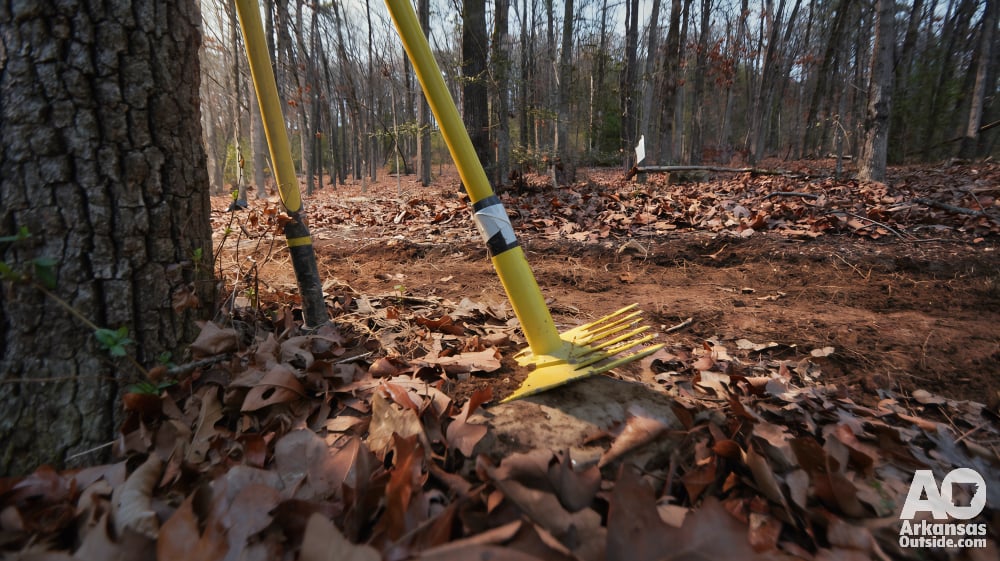
Every mile of natural-surface trail eventually needs attention. Vegetation grows into the corridor. Storms bring down limbs and trees. Water finds new paths across the tread. Litter accumulates. Drainage structures fill with leaves and sediment. Heavy use creates additional wear.
Keeping those trails open requires people willing to do the less visible work that comes after the ribbon cutting.
Across Arkansas this fall, volunteers are heading into parks, forests and neighborhoods with gloves, trash bags, loppers and trail tools. The concentration of volunteer events provides a reminder that much of Arkansas’ outdoor recreation infrastructure depends on a partnership between professional land managers and people who simply care about the places where they hike, run, ride, paddle and explore.
Fall Brings a Wave of Stewardship
Saturday, September 26, is National Public Lands Day, an annual event that the National Park Service describes as the nation’s largest single-day volunteer effort for public lands. The 2026 theme is “Caring for Our Shared America.”
In Arkansas, the event coincides with the Great Arkansas Cleanup, which runs from September 12 through October 31. Keep Arkansas Beautiful says thousands of Arkansans participate in the fall campaign, removing trash from roadsides, shorelines, parks and other public spaces.
That combination has produced volunteer projects across the state.
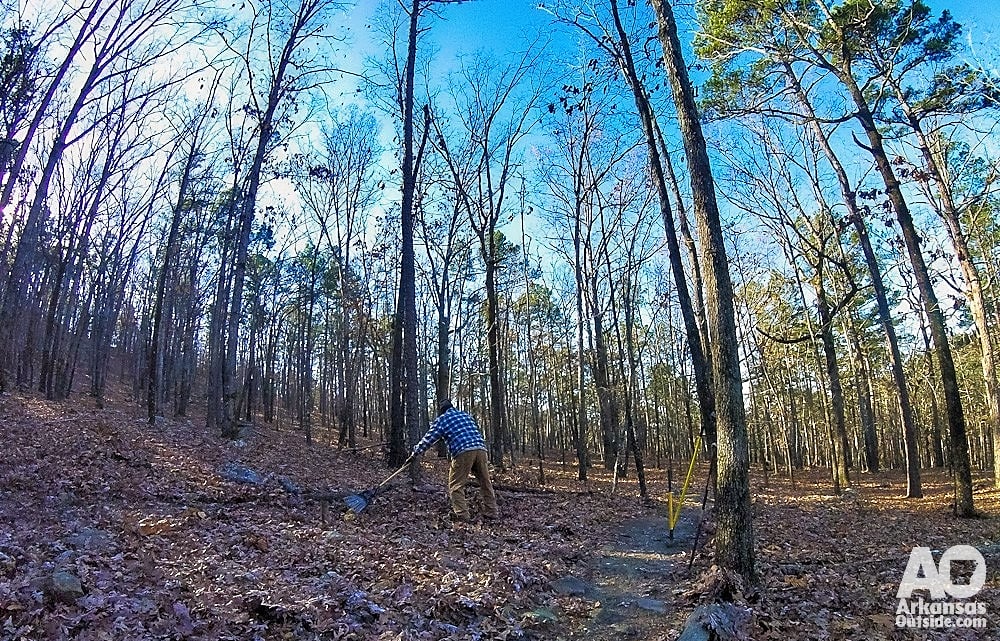
At Hobbs State Park-Conservation Area near Rogers, volunteers will work alongside the park’s trail coordinator on minor trail maintenance Saturday morning. Tools are provided, while volunteers are encouraged to bring water, insect repellent, gloves and appropriate clothing.
In Little Rock, the Pulaski Chapter of the Ozark Society will spend Saturday morning cleaning the 3.4-mile Rock Creek Trail. Volunteers will pick up litter along the urban trail, with buckets, grabbers, bags and some gloves provided.
The work extends beyond trails.
Volunteers at Lake Ouachita will clean shorelines and islands. Similar projects are scheduled at DeGray Lake and Beaver Lake, while Petit Jean State Park is hosting its own Great Arkansas Cleanup.
Taken together, the projects illustrate something easy to overlook while enjoying Arkansas outdoors: maintaining recreation areas is an ongoing job.
Trail Work Doesn’t End With a Workday
Organized cleanup days are the most visible form of volunteer stewardship, but Arkansas also has groups working throughout the year.
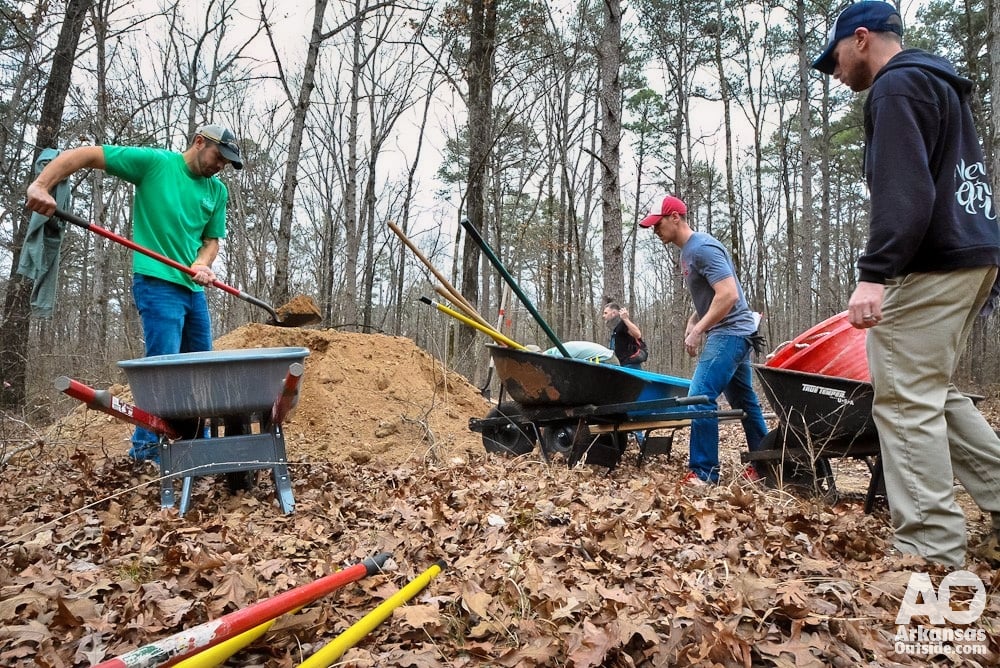
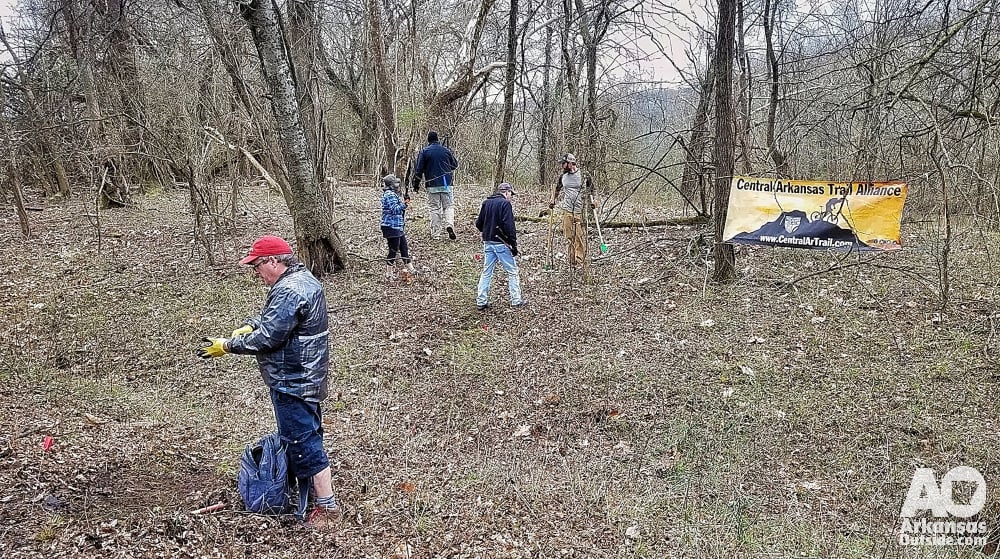
The Central Arkansas Trail Alliance, or CATA, works on natural-surface trails throughout the Little Rock area. Earlier this month, CATA and Arkansas State Parks began a three-part series of trail workdays at Pinnacle Mountain State Park, with additional workdays scheduled for October and November.
CATA is also taking the idea a step further in 2026 with a new Trail Steward pilot program.
Instead of relying entirely on occasional large workdays, individual volunteers can take responsibility for monitoring particular trail systems. CATA’s Trail Stewards are expected to visit their assigned trails at least weekly, provide condition reports and either perform reasonable maintenance themselves or help coordinate larger workdays when necessary.
That creates something trail systems need almost as much as workers: eyes on the ground.
A fallen tree, washed-out section or drainage problem can be reported before it becomes a larger issue. Trail conditions can be communicated to users, and maintenance can be organized based on actual needs rather than waiting for problems to become obvious.
The Same Model Works on Federal Lands
Volunteer stewardship is also important on Arkansas’ federally managed recreation lands.
At Buffalo National River, the National Park Service describes volunteers as an important part of accomplishing the park’s mission and maintaining visitor access. Volunteer opportunities include river cleanups, invasive plant removal, trail maintenance and other projects.
The park also maintains an Adopt A Trail program. Participants visit an assigned trail several times each year to remove trash and small branches, monitor trail conditions and report what they find to park staff.
It is a simple model that can have a significant effect.
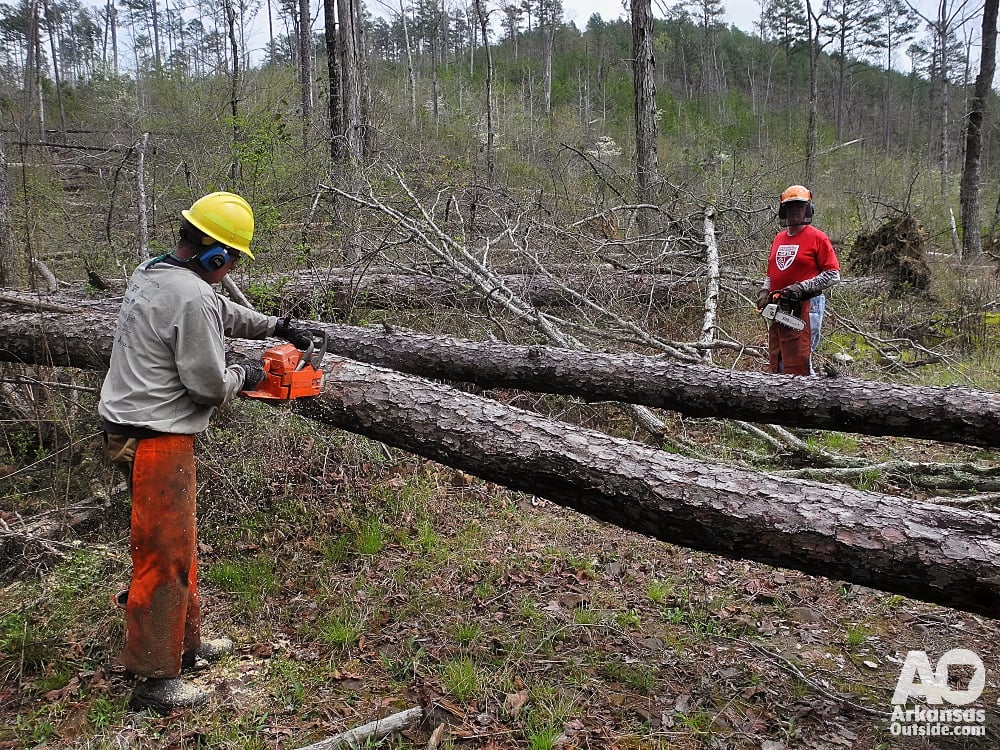
A volunteer does not need to rebuild a trail or operate heavy equipment to contribute. Reporting a downed tree, clearing small debris, removing litter or identifying erosion gives professional land managers information they can use to prioritize larger maintenance needs.
More Trails Mean More Maintenance
Arkansas continues to add recreation infrastructure.
New mountain bike trails, greenways, paved trails, water trails and hiking routes are appearing across the state. Existing destinations are also seeing improvements and expansions.
Those investments create recreation opportunities and can attract visitors, but every new mile also becomes another mile that someone must maintain.
Natural-surface trails are particularly dynamic. Rainfall, freeze-and-thaw cycles, vegetation, falling trees and regular trail use continually change them. Good trail design can reduce maintenance requirements, but it cannot eliminate them.
The result is a long-term responsibility that doesn’t always receive the same attention as construction.
A new trailhead or trail system makes for an easy photograph. Routine maintenance rarely does.
Yet maintenance ultimately determines whether those investments remain enjoyable and sustainable years after they open.
Stewardship Is Part of Outdoor Recreation
There is another way to look at volunteer trail work.
It is outdoor recreation.
A trail workday gets people outside, introduces them to other trail users and often provides a different understanding of the landscape. Someone who spends a morning clearing drains or repairing tread begins noticing water movement, soil conditions and trail design in ways they may never have considered while simply hiking or riding.
It also creates a direct connection between recreation and responsibility.
The hikers, mountain bikers, trail runners, climbers, paddlers and other users who benefit from Arkansas’ public lands have an opportunity to participate in caring for them.
That doesn’t mean every trail user needs to spend weekends swinging a Pulaski or moving rocks. Stewardship can be as simple as carrying out litter, staying off muddy trails when use could cause damage, reporting problems to land managers, following trail closures or joining an occasional cleanup.
For those who want to do more, organizations throughout Arkansas offer opportunities ranging from a few hours on a Saturday morning to ongoing trail stewardship.
The Work Continues After September
National Public Lands Day puts volunteer stewardship in the spotlight for one weekend, but Arkansas’ fall cleanup season continues through October.
Keep Arkansas Beautiful already lists upcoming projects at state parks and recreation areas including Woolly Hollow State Park, Lake Catherine State Park, Lake Frierson State Park, Village Creek State Park, Delta Heritage Trail State Park and Queen Wilhelmina State Park.
And for groups such as CATA, the Ozark Society and the volunteers working alongside state and federal land managers, stewardship doesn’t really have a season.
Arkansas’ trails may be public, but keeping them in good condition is often a community effort.
The next time you hike, run or ride a well-maintained trail, consider the work behind it. Somewhere along the way, there is a good chance a volunteer helped make that experience possible.
This article was originally published on ArkansasOutside.com, your trusted source for outdoor news and updates in The Natural State. Unless otherwise credited, all photos included in this piece are the property of Arkansas Outside, LLC. We take pride in sharing the beauty and adventures of Arkansas through our lens, thank you for supporting our work!
One Response
You might want to write an article about Arkansas Master Naturalists’ trail volunteers, not to mention the other work they do across the state. I’ve been a member of the North Central Arkansas Master Naturalist trail patrol for 15 years. I’m also the chapter’s communications coordinator and have written stories about and taken photos of our work for area print and broadcast media, not only on trails but on area creeks, in several pollinator and native plant gardens, and with programs for children and their families.
In addition to clearing 60-70 miles of trails in the Ozarks annually, we are currently building a trail that will connect Arkansas’s 325-mile Ozark Highlands Trail to Missouri’s 430-mile Ozark Trail, alongside volunteers of the Ozarks Keystone Trail Foundation (formerly David’s Trail Foundation). In 2024, we cleared over 600 trees that tornadoes had thrown across trails in our area.
Here’s our chapter’s website address: https://arkansasmasternaturalists.org/content.aspx?page_id=22&club_id=250502&module_id=345017
Several NCAMN trail volunteers are also members of the Ozark Highlands Trail Association, which takes care of over 300 miles of trails from Lake Fort Smith to Norfork Lake. Here’s their web address: https://ozarkhighlandstrail.com/.
And in general Arkansas Master Naturalists do a lot of work to preserve, protect, and promote nature in the natural state. In 2025, we worked almost 47,800 hours with 96 agencies, valued at $1.66 million. Learn more here: https://arkansasmasternaturalists.org/content.aspx?page_id=0&club_id=250502