


New regulations in Bentonville and Fayetteville target powerful electric motorcycles, while other Arkansas communities have established their own rules for electric bicycles.
Estimated reading time: 6 minutes
As electric bicycles become increasingly popular on Arkansas trails, cities are facing a new challenge: distinguishing traditional pedal-assist bicycles from powerful electric motorcycles that can travel at much higher speeds.
On Nov. 10, the Bentonville City Council unanimously approved an ordinance prohibiting gas-powered vehicles and electric vehicles with motors exceeding 750 watts of continuous power from operating on city sidewalks and trails.
The ordinance follows complaints from residents about high-speed electric vehicles using trails shared by pedestrians and cyclists.
According to KNWA/KFTA, city officials said the changes were intended to improve safety, address recurring public concerns and encourage responsible use of shared public spaces.
The restrictions do not prohibit conventional Class 1, Class 2 or Class 3 electric bicycles simply because they have electric motors. Those bicycles fall within the power limits established under Arkansas law.
The Bentonville ordinance includes exemptions for emergency vehicles, authorized city maintenance vehicles and contractors performing approved work.
Fayetteville Takes Similar Action
Just days before Bentonville’s vote, the Fayetteville City Council unanimously approved new regulations targeting high-powered electric motorcycles and similar devices.
On Nov. 5, the council voted 7-0 to approve the ordinance, which took effect immediately under an emergency clause.
Fayetteville’s regulations prohibit high-speed electric devices and electric motorcycles from operating on city sidewalks and paved or natural-surface trails.
The ordinance identifies high-speed electric devices using several characteristics, including vehicles capable of traveling faster than 28 mph, motors rated at 750 watts or more, and certain modifications that increase power or speed.
Operators of these vehicles must be at least 16 years old to ride on city streets and must comply with applicable motor vehicle laws. Riders and passengers younger than 21 must wear helmets.
Mayor Molly Rawn told the City Council that complaints about electric motorcycles on trails prompted the city to develop the new regulations.
The ordinance preserves access for conventional electric bicycles. Class 1, Class 2 and Class 3 e-bikes remain permitted on Fayetteville’s paved trails, while natural-surface trails continue to be limited to Class 1 e-bikes.
Fayetteville previously updated its trail regulations in 2023 to address electric bicycles and high-powered electric vehicles.
What’s the Difference Between an E-Bike and an Electric Motorcycle?
Arkansas law recognizes three classes of electric bicycles.
- Class 1: Electric bicycles that provide assistance only while the rider pedals, with motor assistance ending at 20 mph.
- Class 2: Electric bicycles equipped with motors that can propel the bicycle without pedaling, with assistance ending at 20 mph.
- Class 3: Pedal-assist electric bicycles with assistance ending at 28 mph.
Under Arkansas law, electric bicycles must have fully operable pedals and motors within the state’s 750-watt power limit.
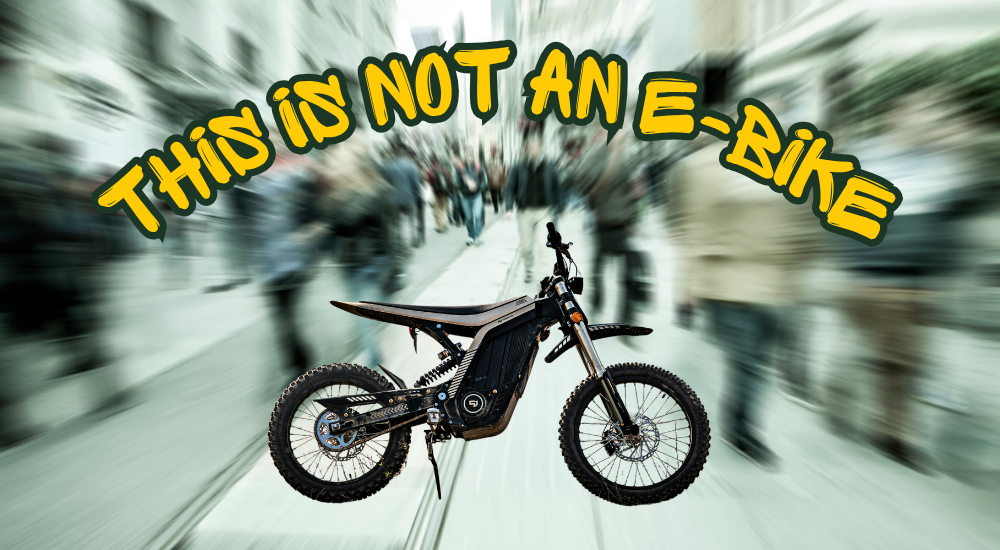
Vehicles that exceed the legal definition of an electric bicycle are not automatically entitled to the same access as conventional bicycles.
This distinction has become increasingly important as electric dirt bikes and other high-powered vehicles have entered the market.
While these machines may resemble bicycles, their power, speed and operating characteristics can place them in a different legal category.
Other Arkansas Cities Have E-Bike Restrictions
Bentonville and Fayetteville are not the only Arkansas communities with regulations governing electric bicycles and motorized vehicles on public trails.
Hot Springs
The Hot Springs Parks and Trails Department permits Class 1 electric bicycles on its parks and trails system but prohibits Class 2 and Class 3 e-bikes.
The city also maintains a maximum speed limit of 20 mph on its parks and trails.
Unlike the new Bentonville ordinance, Hot Springs’ policy restricts certain classes of conventional electric bicycles, not just higher-powered electric motorcycles.
Rogers
Rogers has established rules governing vehicles on city trails.
The city’s published code permits bicycles, Class 1 electric bicycles and pedestrians on natural-surface trails unless otherwise designated.
On Nov. 10, the Rogers Police Department issued public guidance explaining the differences between electric bicycles, motorized bicycles, electric scooters and motorcycles under Arkansas law.
The department confirmed that gas-powered vehicles are prohibited on Rogers trails and that regulations concerning certain electric vehicles are currently under review.
Rogers has not announced adoption of a new ordinance equivalent to Bentonville’s November restrictions.
A Regional Trail System With Different Rules
The new ordinances highlight a challenge for Northwest Arkansas, where the Razorback Greenway connects multiple communities.
Although the trail provides a continuous regional transportation and recreation corridor, individual municipalities establish regulations for their portions of the system.
That means riders should not assume the rules governing electric bicycles and other motorized devices are identical throughout the Greenway.
The differences are particularly important for people using electric bicycles for commuting or traveling between communities.
Education Will Be Part of the Process
During Fayetteville’s City Council discussion, officials emphasized the importance of educating riders and retailers about the new regulations.
Mayor Rawn said city staff were developing a public education campaign, including communication with retailers and additional trail signage.
Council members also discussed the need to help young riders and their parents understand the differences between conventional electric bicycles and electric motorcycles.
The city emphasized education as a priority while implementing the new rules.
In Bentonville, local bicycle retailers have also encouraged parents to understand the specifications of electric vehicles before purchasing them for children.
What Does This Mean for Arkansas Trail Users?
For most riders using conventional electric bicycles, the new Bentonville and Fayetteville ordinances are not intended to eliminate access to shared-use trails.
Instead, they establish clearer restrictions on vehicles that fall outside the state’s conventional electric bicycle classifications.
However, local rules still matter. A Class 2 or Class 3 electric bicycle may be legal under Arkansas law but prohibited on certain city trails.
As more communities address the growing variety of electric-powered vehicles, understanding those distinctions will become increasingly important.
Whether you’re riding a traditional bicycle, an e-bike or simply enjoying a walk, one principle remains the same: Share the trail responsibly.
Related posts:
- E-Motorcycles Stir Restrictions on Arkansas Trails
- Parent Arrest Highlights Growing Crackdown on Misused E-Motorcycles, What Arkansas Riders Should Know
- Does Arkansas Need an E-Moto Law Like Hawaii?
This article was originally published on ArkansasOutside.com, your trusted source for outdoor news and updates in The Natural State. Unless otherwise credited, all photos included in this piece are the property of Arkansas Outside, LLC. We take pride in sharing the beauty and adventures of Arkansas through our lens—thank you for supporting our work!