
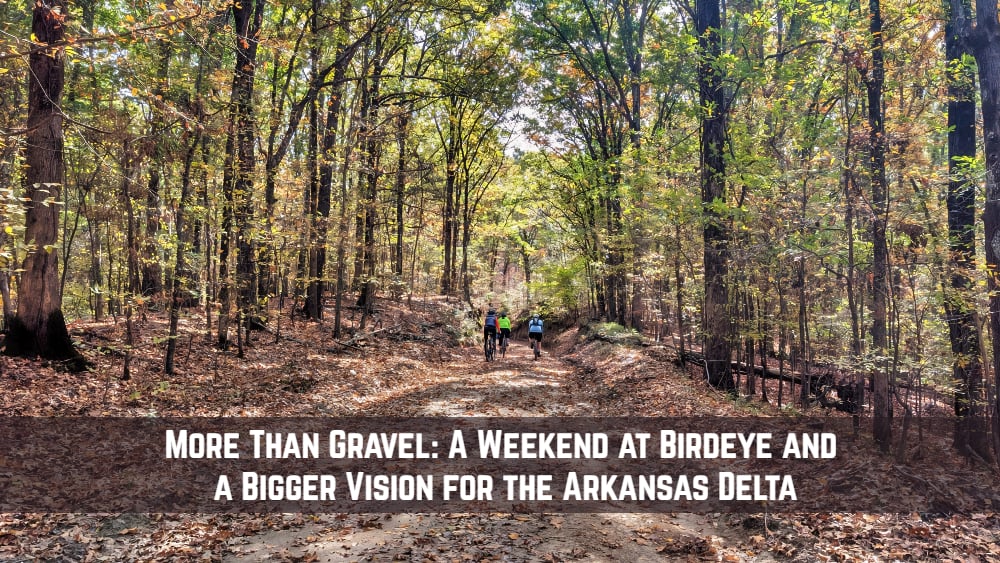

The Birdeye Gravel Festival brings cyclists together for a weekend of adventure, food, music and Delta hospitality. Behind the celebration, nonprofit studioDrift is working to turn outdoor recreation into lasting opportunities for rural communities.
Estimated reading time: 18 minutes
There are some places you visit once, check off your list and move on. Then there are places that get into your soul, places where the people, landscape and experiences keep calling you back.
The Smith Family Farm in Birdeye, Arkansas, is one of those places that calls you back.
Lisa and I have been visiting the farm for years including just last month during the Arkansas Graveler, but apparently, several times wasn’t enough. When the Birdeye Gravel Festival rolled around this past weekend, we packed the tent, sleeping bags and a few extra blankets and headed back to the Arkansas Delta.
The Birdeye Gravel Festival is not your typical cycling event. Sure, there are plenty of gravel roads, challenging climbs and routes that can keep even the strongest riders busy all day. But the real magic happens off the bike.
The magic is found in conversations on the porch of a century-old farmhouse, around tables filled with homemade food, and among people who might have arrived as strangers but leave feeling like family.
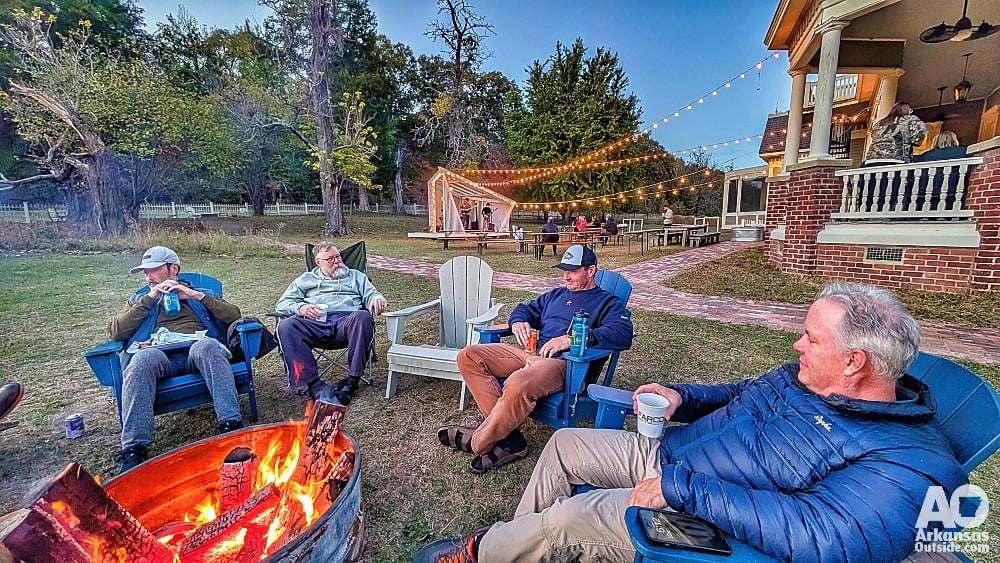
And while the weekend is a celebration of cycling, music, food and friendship, it also serves a larger purpose. The festival supports studioDrift, a nonprofit working to strengthen communities and create new opportunities in the Arkansas Delta.
This year, the organization is working toward a $250,000 fundraising goal to provide bicycles, develop trailheads and install safety and navigation signage along the Crowley’s Ridge Gravel Trail.
It’s a mission that fits this place perfectly.
A Family With Deep Roots and Big Ideas
To understand Birdeye, you need to know a little about Martin Smith and his family.
Martin is a Delta native whose family roots in the area stretch back generations. He and his wife, Kara, live in a historic farmhouse built by his ancestors in the early 1900s. Rather than allowing the aging structure to disappear, the family restored it, creating a gathering place that has become something of a headquarters for their vision of a revitalized Arkansas Delta.
Martin is also a landscape architect and co-founder of Ecological Design Group (EDG), which he established with Tanner Weeks in 2008. The firm specializes in environmentally responsible design, combining landscape architecture, engineering and outdoor recreation planning.
Its work can be found across Arkansas, including projects at Coler Mountain Bike Preserve in Bentonville, the Pinnacle Mountain State Park Visitor Center and Osage Park. The firm’s approach is built around the idea that thoughtfully designed public spaces can improve communities while respecting the natural environment.
But Martin’s ambitions extend well beyond designing parks and trails.
In 2015, he developed a vision for revitalizing the Arkansas Delta through outdoor recreation, sustainable agriculture, tourism and the preservation of the region’s cultural heritage. That vision eventually led to the creation of studioDrift in 2020.
The name stands for Developing Rural Infrastructure For Tomorrow.
Martin and Kara, along with Tanner and Paulina Weeks and other supporters, have helped build the organization into a nonprofit focused on using the Delta’s existing assets to create new opportunities.
The goal is to build on what makes the Delta special.
studioDrift: Building a Future for the Delta
The Arkansas Delta is rich in natural beauty, history and culture, but many of its rural communities have struggled with population loss, declining economic opportunities and limited investment.
studioDrift sees outdoor recreation as one way to help reverse those trends.
Ammen Jordan, director of studioDrift, says the organization’s long-term vision includes transforming communities along the Crowley’s Ridge Gravel Trail into destinations similar to the trail towns found along Missouri’s Katy Trail.
“We would love to see boutique hotels, coffee shops and cafes develop in these communities,” Jordan said. “We’d love for those amenities to strengthen the local economy.”
He imagines vacant buildings finding new purposes, perhaps an abandoned cotton gin becoming a cafe or an old grain silo being converted into lodging.
But economic development is only part of the equation.
“We want people to recognize that they truly live somewhere beautiful, somewhere people from all over the world want to come and experience,” Jordan said.
That sense of community pride is central to studioDrift’s mission. Jordan hopes the projects will encourage residents to explore their own communities, form walking and cycling groups, and take greater ownership of the places they call home.
The organization also understands that building trails and securing funding aren’t enough. Communities need the resources and technical assistance to turn plans into reality.
Crowley’s Ridge Gravel Trail: A $250,000 Goal
One of studioDrift’s primary initiatives is the approximately 250-mile Crowley’s Ridge Gravel Trail, which follows existing roads and rural corridors from Piggott in northeastern Arkansas to Helena in the southern Delta.
The route connects approximately 18 communities and provides access to state parks, forests, agricultural landscapes and some of the most distinctive terrain in Arkansas.
Rather than building hundreds of miles of new trail, the project takes advantage of existing gravel roads, with improvements designed to make the route safer, easier to navigate and more welcoming to visitors.
Jordan said studioDrift is currently raising $250,000 for a package of improvements that includes 500 bicycles, 500 pairs of shoes, seven trailheads, and safety and navigation signage along the entire route.
Potential trailhead locations include Piggott, Harrisburg, Wynne, Forrest City, Marianna and Helena. A location in Lafe is also under consideration. Jonesboro already has a trailhead, with Craighead County developing another.
The proposed improvements would help transform what is currently a collection of excellent gravel roads into a more recognizable regional recreational destination.
The vision goes beyond attracting visiting cyclists.
Jordan hopes residents will embrace the trail as a community asset, using it for recreation, exercise and connections between neighboring towns.
Over time, increased visitation could create demand for restaurants, lodging, bicycle services and other small businesses.
It’s an ambitious vision, but one that begins with practical investments.
Big Woods Water Trails: Exploring the Delta by Water
studioDrift’s work isn’t limited to gravel cycling.
The organization is also developing the Big Woods Water Trails initiative in the lower White River Basin, an area known for its extensive bottomland hardwood forests, wetlands and wildlife habitat.
The Cache River Water Trail is one component of that broader effort.
Jordan said studioDrift is also working with community members in Clarendon, near the mouth of Bayou De View, with the long-term goal of establishing several water trails throughout the greater Big Woods region.
The projects are intended to improve paddling access, establish recreational infrastructure and create opportunities for communities to benefit from visitors exploring the area’s rivers and wetlands.
The waterways themselves are remarkable destinations, but developing them into accessible recreational opportunities requires planning, partnerships and funding.
That’s where studioDrift plays an important role.
Helping Small Communities Turn Grants Into Projects
One of the organization’s less visible accomplishments may also be among its most important.
Through its work with local governments, the Arkansas Game and Fish Commission and other partners, studioDrift has helped secure state and federal funding for recreational infrastructure projects in the Delta.
That includes grants administered through the Arkansas Department of Transportation’s Transportation Alternatives Program and Recreational Trails Program.
But securing funding is only the beginning.
“The reality is that securing the money is only part of the challenge,” Jordan said. “That money can be difficult to spend.”
Anyone who has worked with federal transportation grants knows that the application process can be complicated. Even after funding is awarded, projects must navigate engineering requirements, construction document approvals, environmental reviews and other administrative hurdles.
Small communities often lack the staff and technical resources needed to manage those requirements.
Jordan said studioDrift frequently writes the grant applications and then works alongside the sponsoring communities to help them meet the requirements necessary to complete the projects.
The goal is to develop practical projects that meet community needs without unnecessary complexity or expense.
Just as importantly, studioDrift wants local communities to maintain ownership of the projects.
Jordan used the Cache River Water Trail as an example, explaining that the counties involved should ultimately be responsible for the project and its long-term maintenance.
“It’s not what studioDrift did for them,” Jordan said. “It’s what they accomplished with studioDrift’s help.”
That philosophy may be one of the organization’s greatest strengths. Rather than arriving with a predetermined solution, studioDrift works to help communities accomplish projects they can take pride in.
A Pick-Your-Own Adventure
Of course, one of the best ways to understand why studioDrift is doing this work is to get out and explore the landscape yourself.
That brings us back to the Birdeye Gravel Festival.
This year’s event, held Nov. 6-8, offered gravel routes ranging from relatively short outings to long-distance challenges, along with running opportunities.
The concept is billed as a pick-your-own adventure, and participants are encouraged to explore at their own pace. Routes are unmarked, with downloadable maps guiding riders through the area’s maze of gravel roads.
Lisa and I weren’t entirely sure we were going to ride.
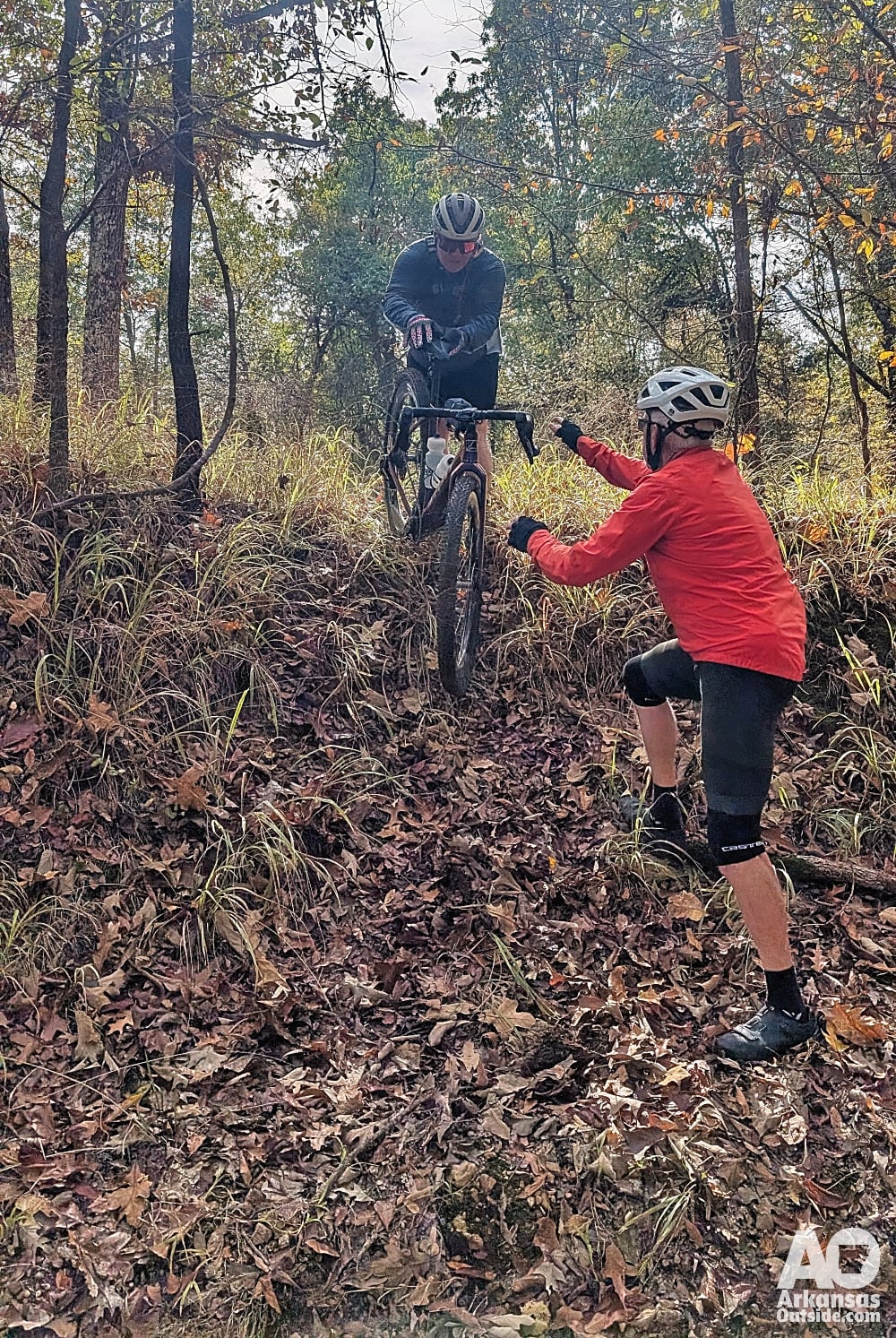
Our original plan involved hanging around the farmhouse, catching up with friends, taking photographs and spending some quality time with the farm’s multitude of semi-domesticated animals. Frankly, that sounded like a pretty good weekend.
But Friday night conversations have a way of changing plans.
Our friend Randy Jackson, who had come down from Northwest Arkansas, suggested a 32-mile route that included a section Lisa wanted to see again after our Arkansas Graveler experience.
That was all it took. We were going riding.
Five Riders, 32 Miles and a Road Through Time
Saturday morning, five of us loaded up and drove to Forrest City, where we parked at the St. Francis Historical Museum.
We headed south through town and found gravel a few miles into the ride.
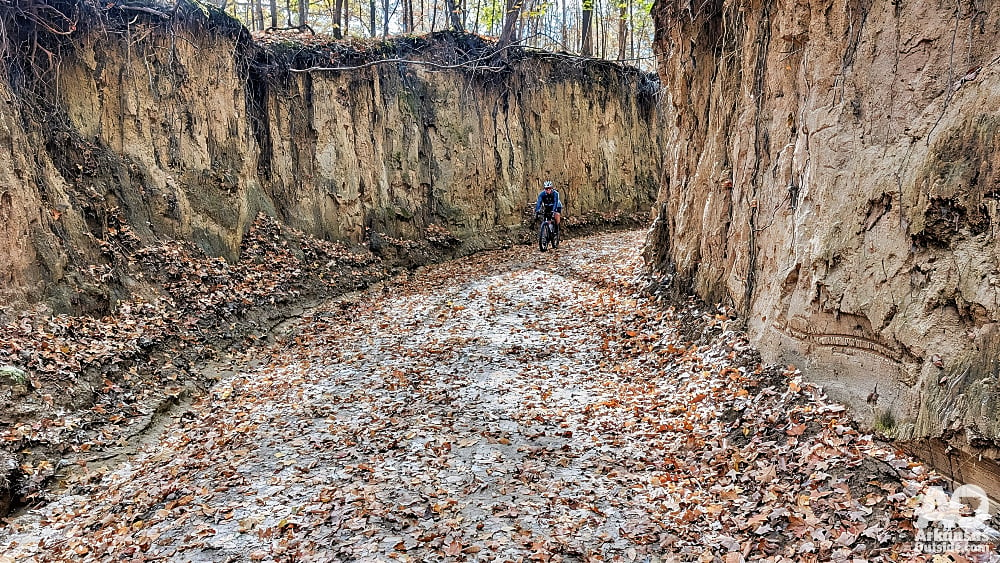
Our route followed some of the same roads we had ridden during the Arkansas Graveler, including a visit to Tuni Canyon, one of the most unusual road features I’ve encountered anywhere.
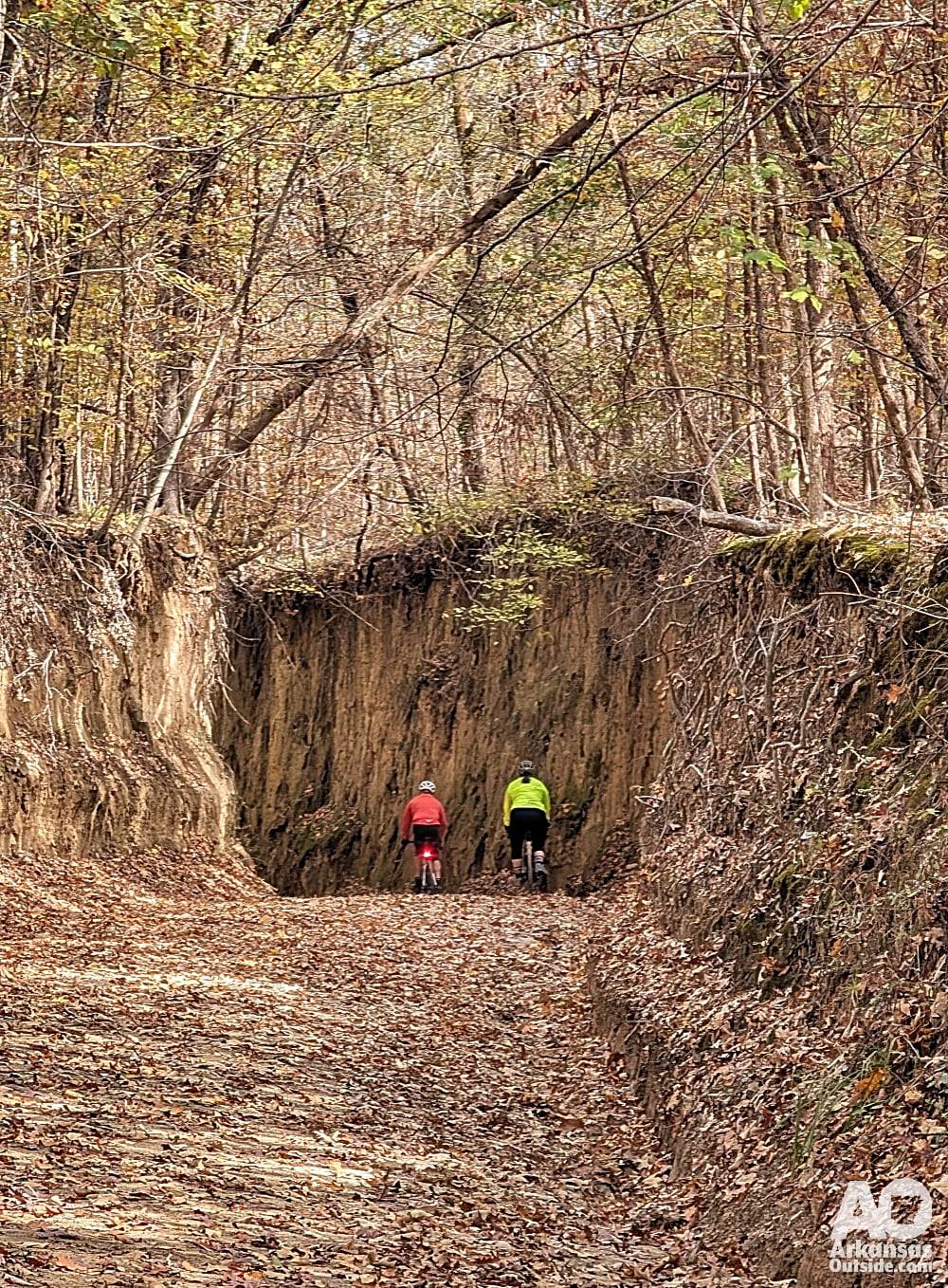
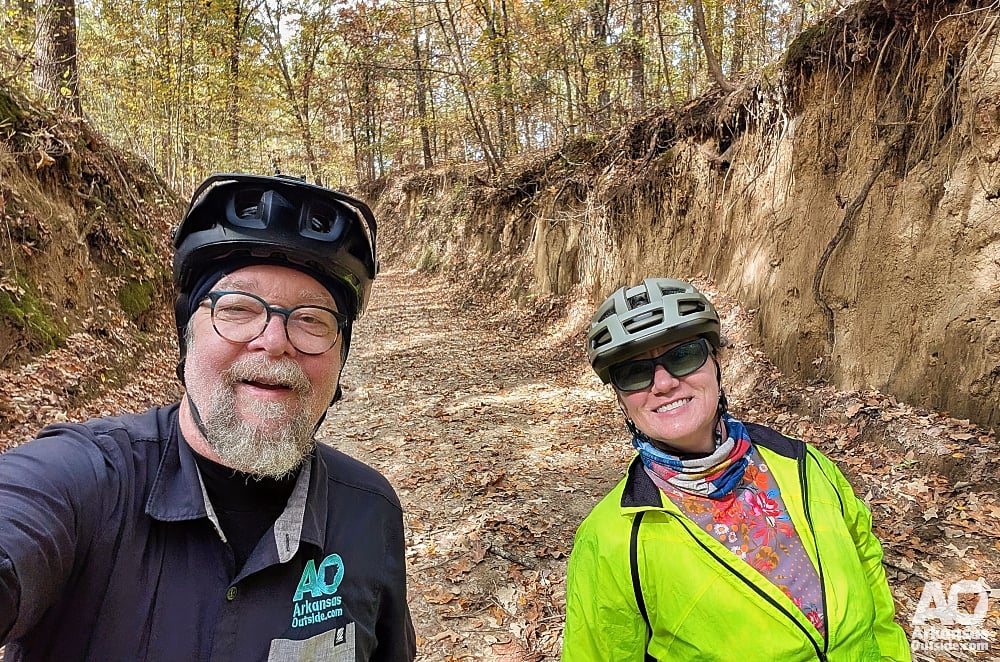
Tuni is a sunken road, carved deep into the loess soils of Crowley’s Ridge. The walls tower above the road, with large hardwood trees clinging to the edges. Exposed roots twist through the earth, creating a scene that feels almost mythical.
During the Graveler, we had zipped through without spending much time taking in the surroundings. This time, we planned to stop.
The place is spectacular, but cyclists should keep their eyes on the road. Washed-out sections and deep ruts can easily grab a wheel, and it’s hard to concentrate on riding when the scenery keeps demanding your attention.
Fortunately, we made it through without anyone becoming a permanent part of the landscape.
From there, the route turned north, and the wind decided to remind us that we were still in eastern Arkansas.
We put our heads down and pushed through the headwind, eventually reaching Madison, where we had hoped to stop at a convenience store.
Unfortunately, it had closed.
It was a small disappointment for a group of cyclists hoping for a break, but it also illustrated a larger challenge facing rural Delta communities. Businesses close, services disappear and residents and visitors alike are left with fewer options.
It’s exactly the kind of economic challenge studioDrift hopes to address.
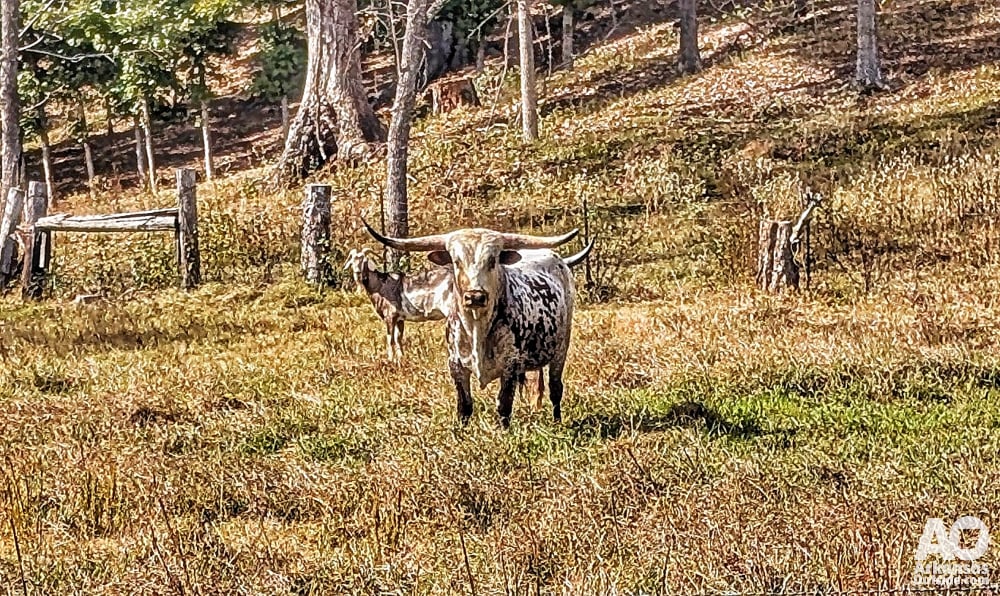
Jordan’s vision of trail towns with cafes, lodging and other amenities suddenly seemed a little less theoretical. A thriving gravel route could give visitors more reasons to stop in communities like Madison, potentially creating opportunities for businesses that serve residents and travelers alike.
Of course, no single trail is going to solve the Delta’s economic challenges, but creating reasons for people to visit and spend money is a reasonable place to start.
We continued north, passed beneath Interstate 40 and eventually turned west, where a steep climb reminded us that Crowley’s Ridge is not to be underestimated.
People who think the Arkansas Delta is flat clearly haven’t spent much time riding gravel on the ridge.
Once back on top, the route wound through farmland and hardwood forests, with occasional steep drops along the road’s edge. It was beautiful riding, the kind of scenery that makes you wonder why more people aren’t exploring this part of Arkansas.
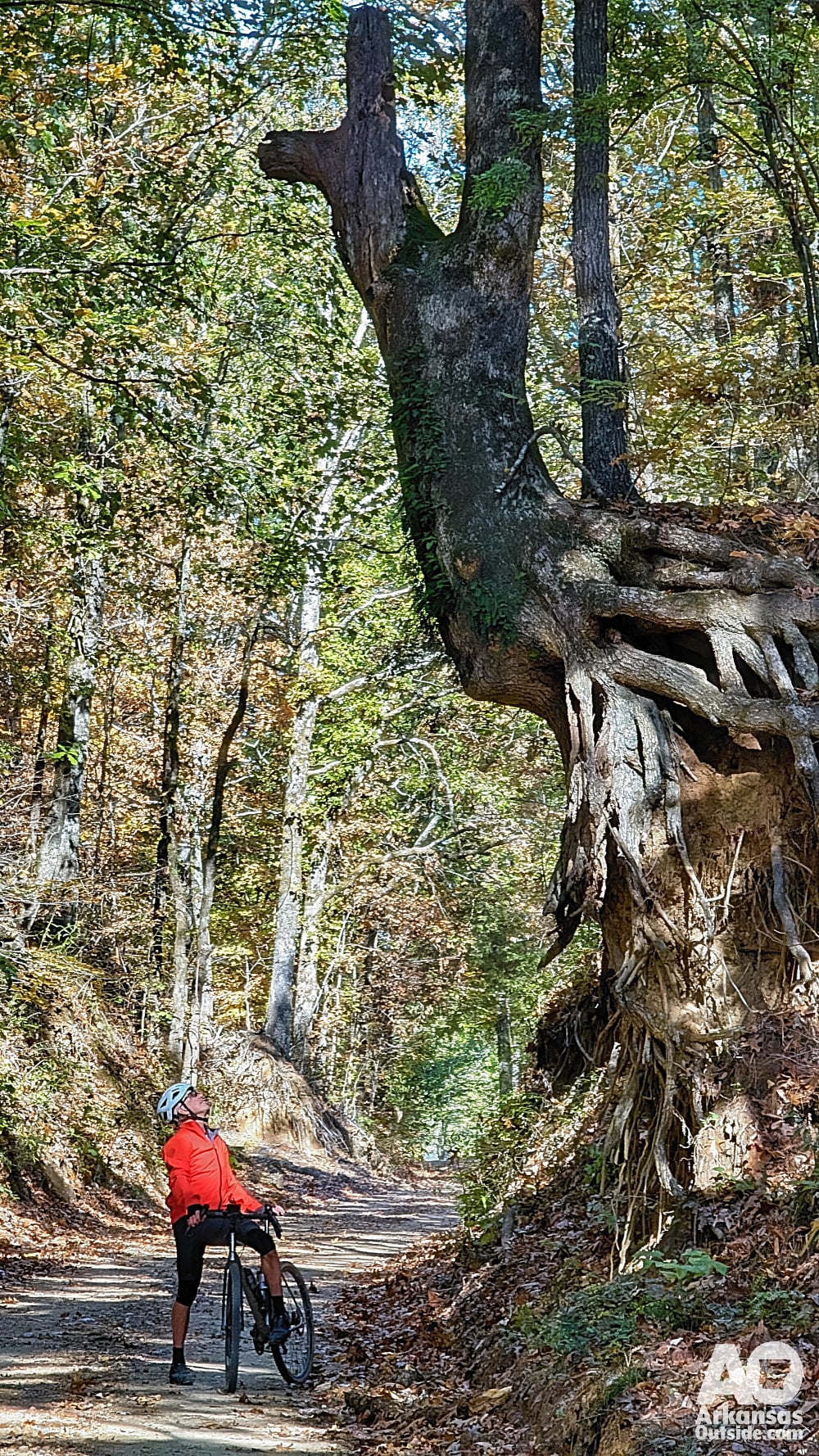
We eventually dropped into another section of sunken road, surrounded by unusual trees and dramatic terrain.
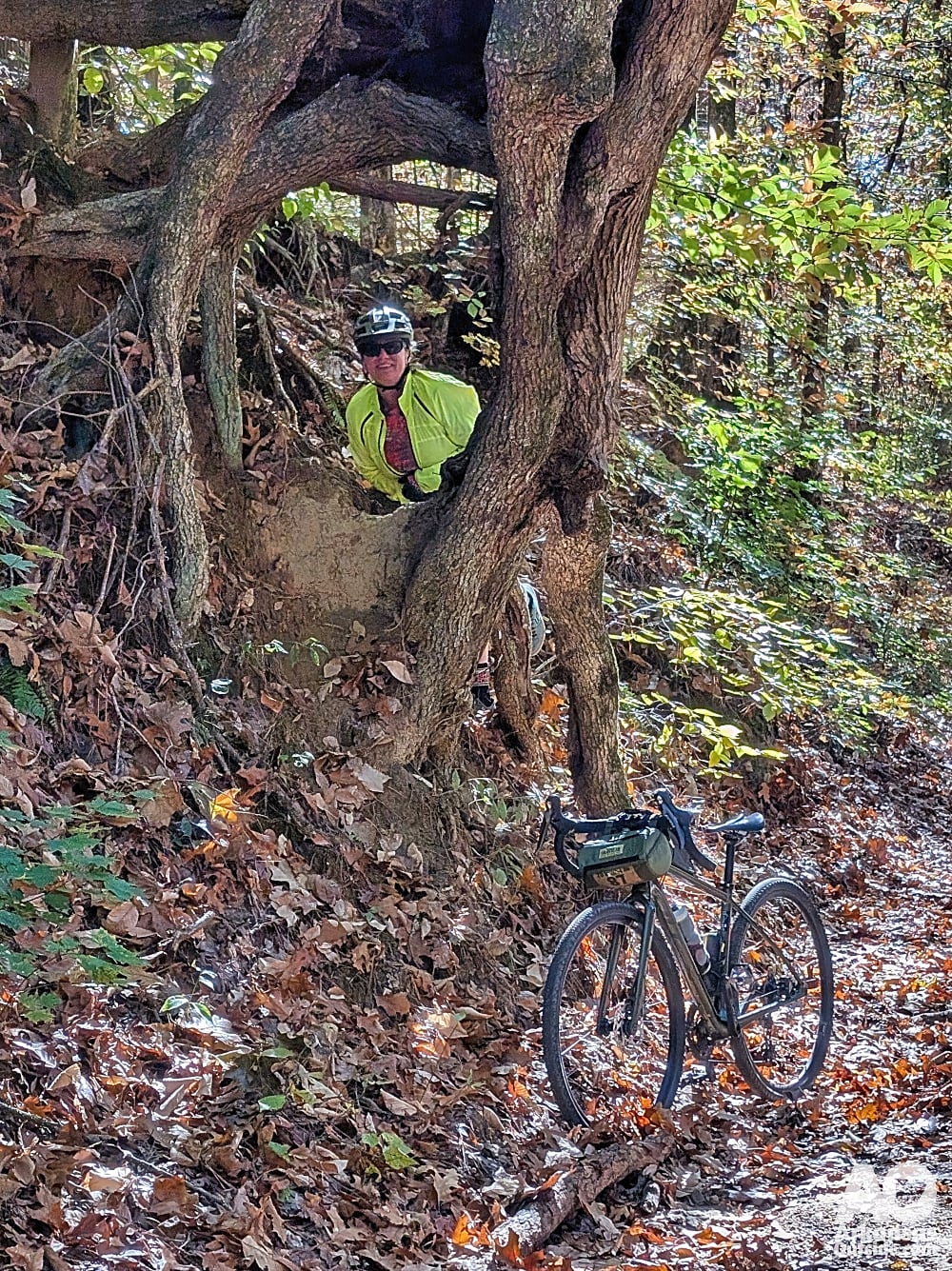
We stopped for more photographs, convinced we had discovered something new.
Later, while looking through photographs from the Arkansas Graveler, I realized we had ridden through the same area just a month earlier.
Apparently, sometimes the best way to discover a place is to slow down enough to notice it.
The Perfect Ride, and a Cooler Named Randy Special
Eventually, the gravel gave way to pavement, and we headed south toward Forrest City.
Before leaving Birdeye that morning, the festival organizers had provided sandwich makings so participants could pack lunches for their adventures. We had stashed ours in a cooler labeled “Randy Special.”
Back at the museum, we found picnic tables, pulled out our lunches and settled in for what turned out to be one of the most enjoyable parts of the day.
We talked about the ride, the scenery, the roads and the people.
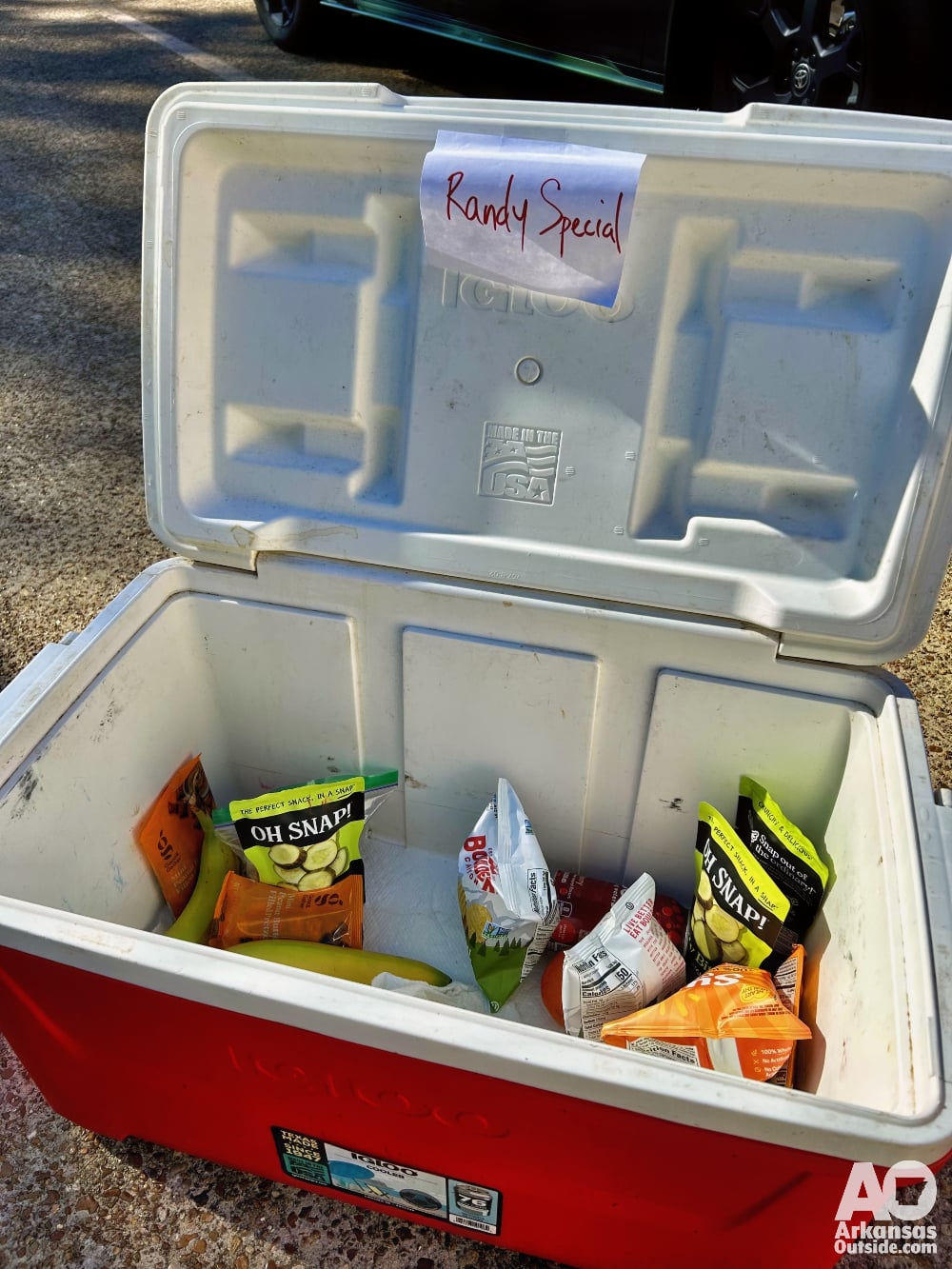
It had been just about perfect. Good gravel, a comfortable pace, incredible scenery and great friends, both old and new.
No podiums. No finish-line clocks. No pressure to beat anyone.
Just five people enjoying a beautiful part of Arkansas on bicycles.
Sometimes that’s all you need.
Back to the Farm, Where the Real Party Begins
When we returned to Birdeye, there was plenty of time to clean up and find a comfortable spot on the porch.
Throughout the afternoon, riders returned from adventures scattered across the region. Some had tackled much longer routes, and each arriving group was greeted with cheers and congratulations.
The porch became the center of the universe, or at least our little corner of it.
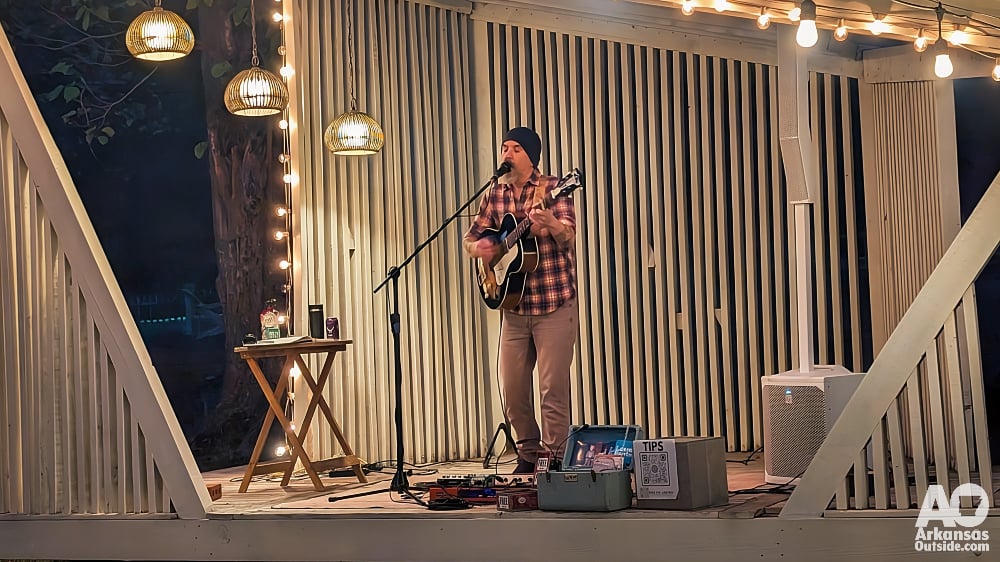
Stories were exchanged, friendships renewed and new ones made. Everyone seemed to have discovered something different out on the roads.
Lisa found her way into a massage session. I found my way to the porch bar, expertly managed by our friend Paulina, who had been teaching some of the other participants the basics of mixing drinks.
We all have our priorities.
As the sun began to set, the music started, and the farm took on a different personality.
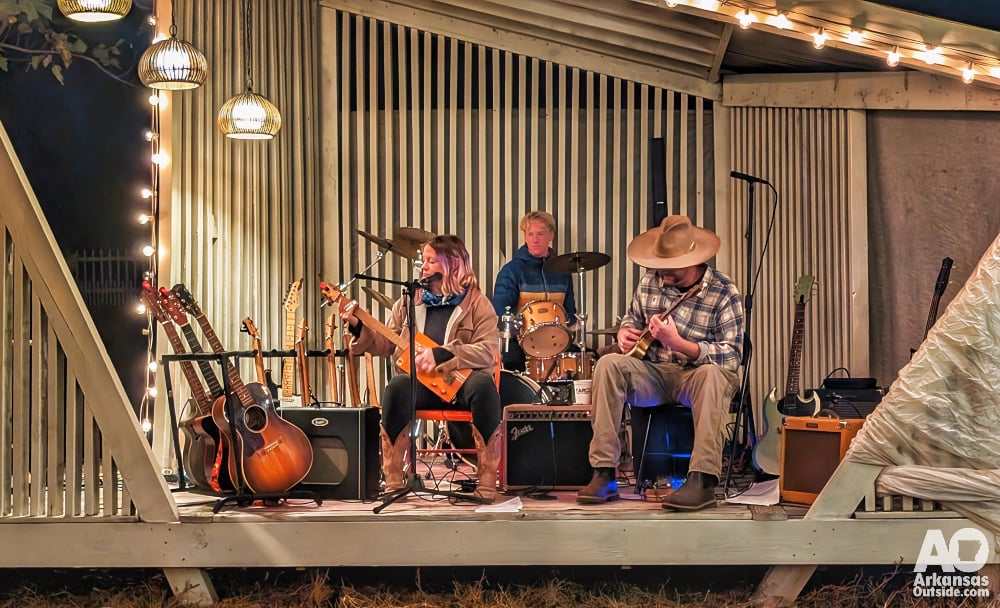
Live music provided the soundtrack for a weekend that felt more like a gathering of friends than an organized festival.
Before long, brick-oven pizzas began appearing, and the temperature outside started dropping.
Inside the century-old farmhouse, things were buzzing. People gathered around the kitchen, talked about the day’s adventures and enjoyed the kind of hospitality that seems to come naturally to the Smith family and their friends.
We tried to stay awake until something resembling our normal bedtime.
After a day of riding, eating, visiting and generally enjoying ourselves, that was becoming a challenge. But going to bed too early meant waking up even earlier, and we weren’t particularly interested in greeting the sunrise before it arrived.
Eventually, we surrendered.
The forecast called for a cold night, so we doubled up on blankets in the tent and crawled into our sleeping bags.
It didn’t take long to fall asleep.
Biscuits, Bacon and One More Morning in Birdeye
Sunday morning arrived with the usual farm alarm clock.
Roosters.
Lots of roosters.
Apparently, nobody has explained to them that people on vacation occasionally like to sleep in.
We crawled out of the tent, made our way to the farmhouse and found coffee waiting.
Near the pizza oven, Martin was busy making biscuits and bacon. The warmth from the oven was particularly welcome after our chilly night outdoors.
People continued filtering into the house, finding seats, pouring coffee and picking up conversations from the night before.
Then came a large bowl of Gouda grits, accompanied by poached eggs.
We ate well.
Actually, we had eaten well all weekend. Between the farm-fresh meals, pizza, breakfast and the seemingly endless hospitality, it’s possible we consumed more calories than we burned on our 32-mile ride.
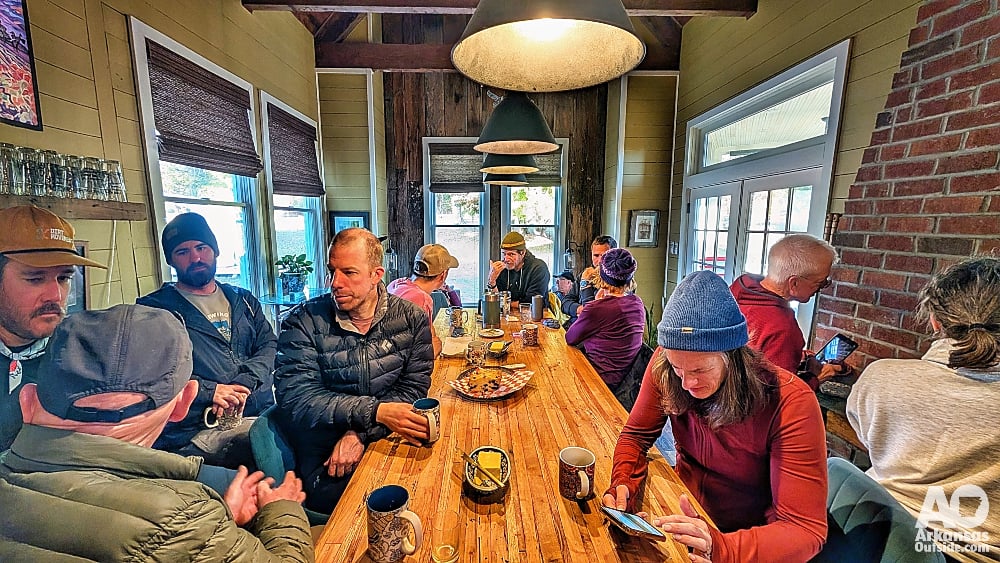
I’m comfortable with that.
We lingered as long as possible, enjoying the warmth of the house and, more importantly, the company.
Eventually, though, it was time to break camp and head home.
More Than a Weekend, More Than a Gravel Ride
There’s a reason Lisa and I keep finding our way back to Birdeye.
Certainly, the gravel riding is excellent. Crowley’s Ridge offers some of the most interesting terrain in Arkansas, with steep climbs, deep ravines, hardwood forests, agricultural landscapes and roads that seem to have been forgotten by time.
But the riding is only part of the attraction.
What Martin, Kara, their family and the studioDrift team are creating is something much bigger.
They are demonstrating that the Arkansas Delta has tremendous value, not just in its agricultural productivity or its history, but in its people, landscapes, culture and opportunities for outdoor adventure.
The Birdeye Gravel Festival brings people into the region who might never have considered visiting otherwise. They discover places like Tuni Canyon, experience the hospitality of small Delta communities and begin to see the possibilities.
Some will come back for another ride. Others might return to paddle the Cache River, explore a state park or spend a weekend visiting the small towns along Crowley’s Ridge.
And maybe, over time, those visits will help support new businesses, create jobs and give younger generations more reasons to stay or return home.
That’s the larger vision behind studioDrift.
The organization isn’t simply developing a gravel route or creating water trails. It’s helping communities secure resources, navigate complicated funding processes and build projects they can call their own.
Its current $250,000 fundraising effort could provide bicycles, trailheads and signage that make the Crowley’s Ridge Gravel Trail more accessible to residents and visitors alike.
But the bigger goal is something that can’t be measured entirely in miles of trail or dollars raised.
It’s about helping communities recognize the value of what they already have and giving them the tools to build on it.
The Birdeye Gravel Festival is a wonderful example of how that can work.
For one weekend, a historic family farm becomes a gathering place for cyclists, runners, outdoor enthusiasts and people who simply appreciate good food and good company.
The money raised helps support projects that can benefit the region long after the last tent has been packed away.
And the friendships, memories and connections made over the weekend are just as important.
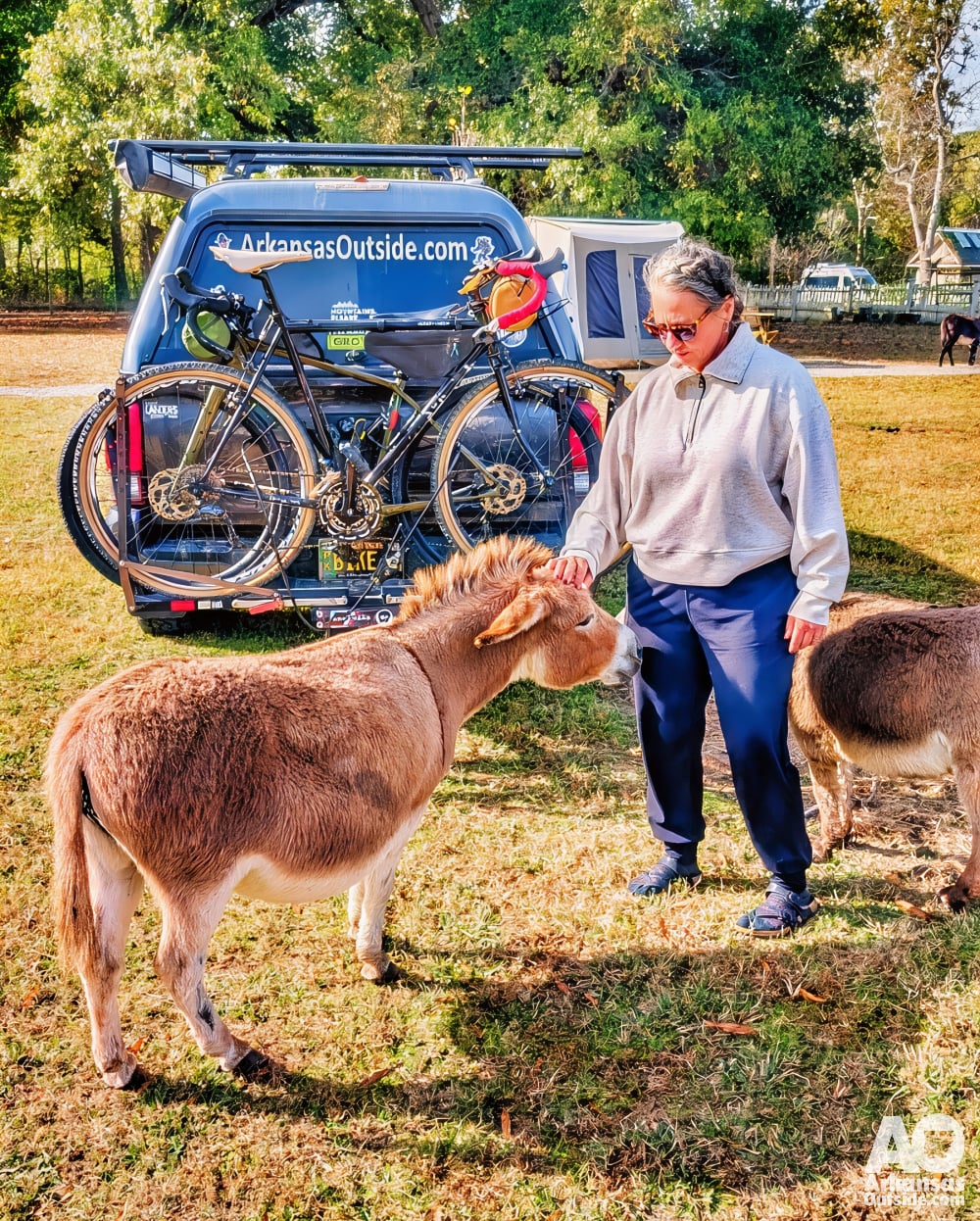
As Lisa and I drove home Sunday, we were already talking about next year.
We might ride a longer route. We might explore somewhere new. We might spend more time sitting on the porch.
Whatever we decide, I’m pretty sure we’ll be back.
Because at Birdeye, you come for the gravel, but you return for the people.
And if studioDrift succeeds in its mission, a lot more people will be discovering what makes the Arkansas Delta so special.
Readers interested in supporting studioDrift’s projects, including the Crowley’s Ridge Gravel Trail, can learn more about the organization and its fundraising efforts through studioDrift. If you’d like to go straight to the donation page, roll on over to here: https://www.studiodriftar.org/donate
This article was originally published on ArkansasOutside.com, your trusted source for outdoor news and updates in The Natural State. Unless otherwise credited, all photos included in this piece are the property of Arkansas Outside, LLC. We take pride in sharing the beauty and adventures of Arkansas through our lens, thank you for supporting our work!