
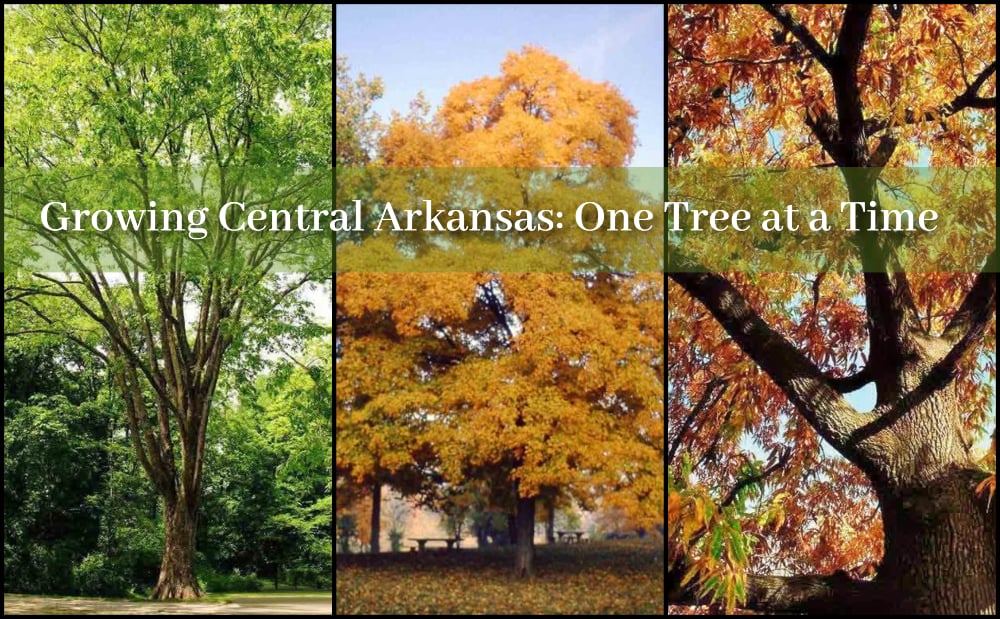

Central Arkansas residents, businesses, schools, nonprofits and local governments have an opportunity to help expand the region’s tree canopy through an ambitious program offering native trees at no cost. The Central Arkansas Tree Planting Project has a goal of planting 166,000 trees and shrubs across Pulaski, Saline, Perry, Grant, Faulkner and Lonoke counties by the end of 2029. The project is funded through a $1.6 million federal grant administered by Metroplan, with the University of Arkansas System Division of Agriculture Cooperative Extension Service managing and distributing the trees.
In the following commentary, Bernadette Rhodes, deputy director of Metroplan, explains why trees should be viewed as more than part of Central Arkansas’ landscape. She outlines their role as green infrastructure, from managing stormwater and reducing erosion to providing shade, improving air quality and making communities more inviting.
Regional Growth One Tree at a Time
In the Natural State, trees provide more than just our iconic scenery; they also provide critical green infrastructure.
Across our communities, trees absorb rainfall, reduce erosion, filter air pollutants, support wildlife and lessen the heat retained by streets, parking lots and buildings. In addition to the natural beauty they provide, trees can shade a home and a workplace, lower summertime energy costs and make an area more inviting.
Now, Central Arkansas residents can reap these benefits by planting free native trees.
Free Native Trees for Central Arkansas
The Central Arkansas Tree Planting Project aims to plant 166,000 trees and shrubs in Pulaski, Saline, Perry, Grant, Faulkner and Lonoke counties by 2029, and the trees are available free of charge to residents throughout the six counties.
The program is open to individuals and families, businesses, farms, municipalities, government agencies, nonprofits, schools and religious organizations. For employers and civic leaders, the project offers a practical way to improve a workplace, neighborhood or public space while contributing to the region’s environmental infrastructure.
A Regional Investment in Green Infrastructure
The project is supported by $1.6 million in federal funding administered by Metroplan and awarded to the University of Arkansas System Division of Agriculture Cooperative Extension Service (UAEX). UAEX is responsible for procuring, managing and distributing the trees and will provide technical expertise to help participants plant successfully.
Building a Stronger Regional Tree Canopy
At Metroplan, we are committed to creating a stronger, healthier quality of life through regional infrastructure planning, safer streets and smart growth.
A robust tree canopy is one of those regional goals. Trees support infrastructure by slowing stormwater, increasing absorption into the ground and reducing pressure on waterways. Their shade can lower cooling costs, while greener surroundings can strengthen the curb appeal of commercial corridors, neighborhoods and gathering places.
More Than Two Dozen Native Species
The Tree Planting Project offers more than two dozen native Arkansas species, including bald cypress, bur oak, flowering dogwood, native pecan, persimmon, redbud, red maple, river birch, shortleaf pine, sweet magnolia, sycamore, sugar maple and white oak. Because different trees thrive under varying soil, moisture and space conditions, UAEX can help applicants consider each species’ mature size and needs before ordering.
Growing Benefits for Years to Come
Requesting and planting trees is a great way to contribute to your neighborhood and allow your community to thrive.
The value of this project will not be measured only by the number of seedlings distributed. Its success will be visible years from now—in cooler properties, healthier waterways, cleaner air and more beautiful communities.
Bernadette Rhodes is the Deputy Director of Metroplan.
The Central Arkansas Tree Planting Project is open to individuals, families, businesses, farms, municipalities, government agencies, nonprofits, schools, religious organizations and other groups within the six-county project area. More than two dozen native species are available, and the Cooperative Extension Service provides information to help participants select, plant and care for trees suited to their location. As Rhodes notes, the project’s impact will ultimately be measured not just by the number of trees planted, but by the long-term benefits they provide to neighborhoods, waterways and communities across Central Arkansas.
Information about available trees, eligibility, ordering and planting assistance is available through the Central Arkansas Tree Planting Project.
This article was originally published on ArkansasOutside.com, your trusted source for outdoor news and updates in The Natural State. Unless otherwise credited, all photos included in this piece are the property of Arkansas Outside, LLC. We take pride in sharing the beauty and adventures of Arkansas through our lens, thank you for supporting our work!