
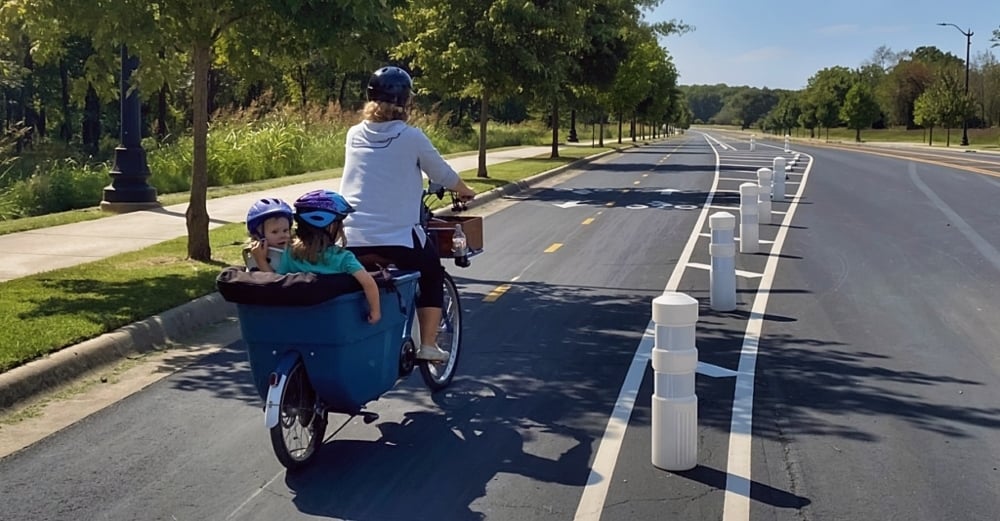

A recent change by the U.S. Department of Transportation (USDOT) is raising concerns among bicycle advocates, transportation planners, and local governments across the country. While the policy change does not immediately eliminate bike lanes or stop existing projects, it signals a shift in federal priorities that could influence how future transportation projects are designed and funded, including in Arkansas.
For a state that has spent more than a decade building a reputation as an outdoor recreation destination while also making gradual improvements for bicycle commuting, the implications could be significant.
USDOT Changes Direction
Last week, the Federal Highway Administration removed several long-standing “Proven Safety Countermeasures” from its website. Among the measures no longer listed are:
- Bicycle lanes
- Road diets
- Speed management strategies
- Speed safety cameras
- Variable speed limits
The Proven Safety Countermeasures program was intended to highlight engineering practices supported by research that reduce crashes and save lives. Bike lanes and road diets had been included because numerous studies demonstrated measurable safety benefits.
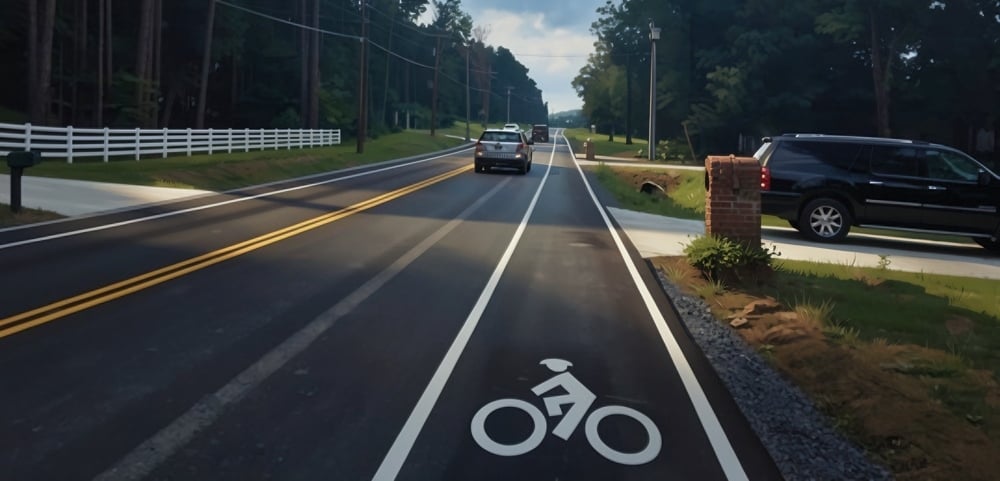
The change comes as Transportation Secretary Sean Duffy has emphasized a different approach to roadway safety. Duffy has called on states to focus on improving safety along arterial roadways while also encouraging standardized traffic control devices and reducing what he describes as distractions within the roadway environment.
While the department has not prohibited bike lanes, removing them from the list of recommended safety treatments represents a notable policy shift.
Research Has Not Changed
The League of American Bicyclists responded quickly, pointing out that the federal government’s own research supporting bike lanes remains unchanged.
According to data previously published by the Federal Highway Administration, adding bicycle lanes has been shown to reduce total crashes by as much as 49 percent on certain four-lane urban roads and by approximately 30 percent on two-lane urban roads. Importantly, those reductions apply to crashes involving all road users, not just people riding bicycles.
Other studies have consistently found that protected bicycle infrastructure can reduce fatalities and serious injuries while encouraging more people to ride.
In other words, the evidence supporting these safety improvements has not disappeared. Only the federal guidance has changed.
What Could This Mean for Arkansas?
Arkansas has become one of the nation’s fastest-growing states for cycling tourism.
Northwest Arkansas has earned international recognition through its extensive trail systems. Central Arkansas continues to expand regional trail connections, such as the Southwest Trail and the Arkansas River Trail. Communities from Jonesboro to El Dorado have invested in greenways, shared-use paths, and bicycle-friendly streets.
At the same time, many Arkansas cities have been slowly adding on-street bike lanes, buffered lanes, and road diets to improve safety for residents who ride to work, school, or local businesses.
Many of these improvements have relied on federal transportation funding.
If future federal guidance places less emphasis on bicycle infrastructure, cities may find it more difficult to justify projects during competitive grant applications or within state transportation priorities.
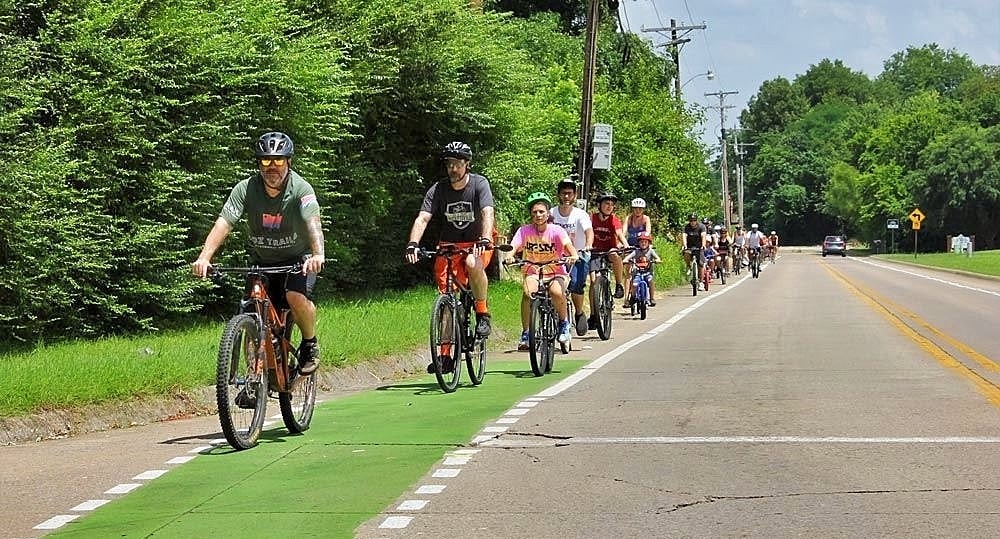
That does not necessarily mean projects will stop.
Local governments, metropolitan planning organizations, and the Arkansas Department of Transportation still make many project decisions independently. However, federal priorities often influence which projects receive funding first.
Recreational Riders Could Feel the Effects
For recreational cyclists, Arkansas has become known for much more than mountain biking.
Road cycling events, gravel races, bikepacking routes, and regional trail networks attract thousands of visitors each year.
Many of these rides depend on safer connections through towns and along busy highways.
A protected bike lane leading into a trailhead, a road diet through downtown, or improved shoulders connecting communities may seem minor individually. Together, they create the network that allows cyclists to travel safely between destinations.
If communities begin emphasizing vehicle throughput over multimodal access, those connections may become harder to build.
Commuters Face Different Challenges
For commuters, the stakes are often even higher.
Unlike recreational riders who may choose quieter roads or trails, people riding to work frequently have no choice but to travel along major streets.
In cities such as Little Rock, Fayetteville, Bentonville, Fort Smith, Conway, Jonesboro, and Hot Springs, bicycle commuters often depend on bike lanes or shared-use paths to reach jobs, schools, transit stops, and shopping.
Removing federal encouragement for proven safety treatments could slow future improvements on these corridors, particularly if local governments become uncertain about future funding opportunities.
Arkansas Still Has Work to Do
Although Arkansas has made significant progress, major gaps remain throughout the state.
Important regional trail connections are still incomplete.
Many communities continue struggling to connect neighborhoods with schools, parks, and business districts using safe bicycle infrastructure.
Projects such as completing the Arkansas River Trail, expanding and connecting the Razorback Regional Greenway in Northwest Arkansas, building additional segments of the Southwest and Southeast Trails, and improving local street networks all depend upon long-term investment and cooperation among federal, state, regional, and local agencies.
Those needs will not disappear because federal guidance changes.
A Broader Conversation About Transportation
Secretary Duffy has repeatedly stated that roadway safety remains a priority for the department. His recent initiatives have focused heavily on reducing fatalities along major arterial roads and emphasizing standardized roadway treatments.
The debate centers on how best to achieve that goal.
Federal transportation officials are changing which strategies they actively promote, while many transportation researchers and safety organizations continue pointing to decades of evidence supporting bicycle infrastructure as an effective way to reduce crashes for everyone using the roadway.
For Arkansas, the question is less about national politics than about practical transportation decisions.
Should future roads continue to be designed primarily to move automobiles efficiently, or should they also accommodate people walking, bicycling, and using other forms of transportation?
As Arkansas continues investing in outdoor recreation, tourism, and quality of life, that conversation is likely to become increasingly important.
The federal guidance may have changed. The challenge of building safer streets for everyone has not.
Rep. Rick Larsen (D-WA), ranking Democrat on the House Transportation & Infrastructure Committee, released a statement asking for a briefing from the USDOT about why these safety measures are no longer encouraged, adding that “It’s not political to say bike lanes and speed cameras improve safety; it’s a statement of fact.”
If you would like to contact your representative to ask for their support for Rep. Larsen’s request, you can do so easily on the League of American Bicyclists website.
This article was originally published on ArkansasOutside.com, your trusted source for outdoor news and updates in The Natural State. Unless otherwise credited, all photos included in this piece are the property of Arkansas Outside, LLC. We take pride in sharing the beauty and adventures of Arkansas through our lens—thank you for supporting our work!