

A federal program responsible for tens of millions of dollars in improvements to Arkansas national parks, wildlife refuges and other public lands is awaiting action from Congress after its original five-year funding authorization ended.
The National Parks and Public Land Legacy Restoration Fund was created by the Great American Outdoors Act in 2020 to tackle deferred maintenance on federal public lands. Funding was authorized for fiscal years 2021 through 2025.
While the original funding period has ended, bipartisan legislation in Congress would renew the program. For Arkansas, the debate is more than a national public lands issue. The Legacy Restoration Fund has already financed major projects at Hot Springs National Park, Buffalo National River and Dale Bumpers White River National Wildlife Refuge.
According to the U.S. Department of the Interior’s 2026 Arkansas fact sheet, nearly $52.5 million from the fund is being invested in four projects affecting more than 150 assets in the state. At the same time, the department estimates that National Park Service and U.S. Fish and Wildlife Service properties in Arkansas still face nearly $248 million in deferred maintenance and repair needs.
What the Great American Outdoors Act Did
Congress passed the Great American Outdoors Act in 2020. The legislation created the Legacy Restoration Fund and authorized up to $1.9 billion annually for five years to address deferred maintenance across the National Park Service, U.S. Forest Service, U.S. Fish and Wildlife Service, Bureau of Land Management and Bureau of Indian Education.
The full $1.9 billion was deposited in each of those five years, providing $9.5 billion nationally for maintenance and repair projects.
The law also permanently funded the Land and Water Conservation Fund at $900 million annually. That portion of the Great American Outdoors Act did not expire when Legacy Restoration Fund deposits ended after fiscal year 2025.
Arkansas Outside covered passage of the Great American Outdoors Act in 2020, noting the potential for what was then an unprecedented federal investment in public lands, recreation infrastructure and the Land and Water Conservation Fund.
Six years later, Arkansas has several examples of what that investment looks like on the ground.
Hot Springs National Park Receives Arkansas’ Largest Investment
The most visible Legacy Restoration Fund project in Arkansas is underway along Bathhouse Row at Hot Springs National Park.
The Department of the Interior now lists approximately $31.6 million in Legacy Restoration Fund investment for rehabilitation of the park’s historic bathhouses.
Arkansas Outside covered the groundbreaking for the Maurice Bathhouse rehabilitation in August 2025. The building opened in 1912 but has been closed since 1974. The project includes critical structural and building-system improvements intended to preserve the historic structure and make it more attractive for eventual reuse.
The larger project also includes repairs to the Fordyce and Buckstaff bathhouses.
The investment illustrates one of the broader purposes of the Legacy Restoration Fund. Outdoor recreation infrastructure is not limited to trails and campgrounds. Historic structures, roads, bridges, water systems, visitor facilities and other infrastructure all affect how people experience public lands.
The economic connection is especially apparent in Hot Springs, where the national park and downtown business district occupy much of the same landscape. Maintaining Bathhouse Row preserves historic resources while supporting one of Arkansas’ most recognizable tourism destinations.
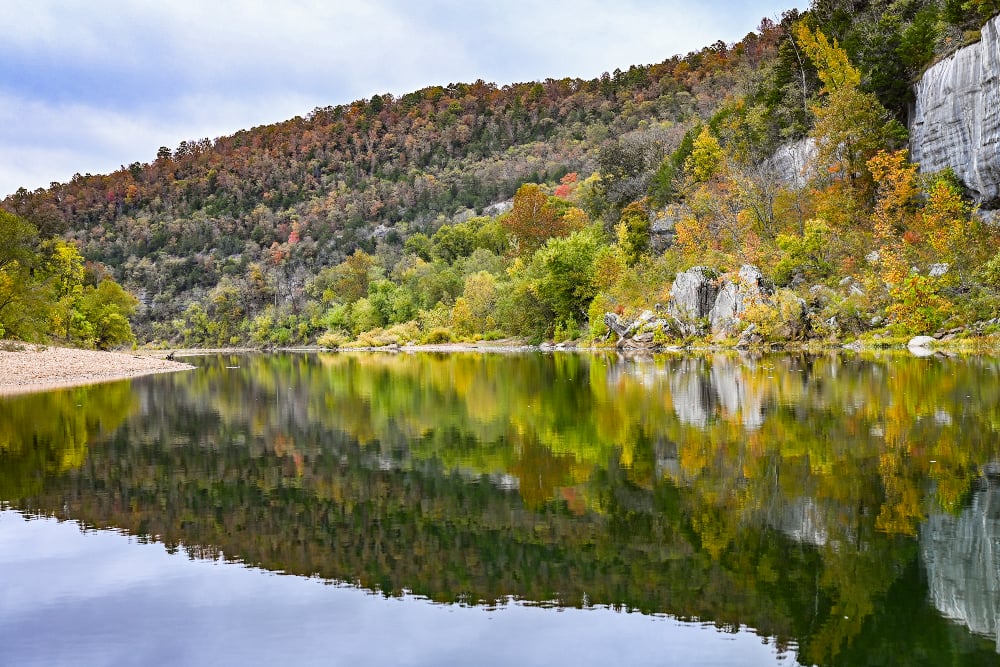
$10.8 Million for Buffalo National River
Buffalo National River is another major Arkansas beneficiary.
The Department of the Interior lists $10.8 million for a project addressing infrastructure and housing deferred maintenance at the park.
The investment comes as the Buffalo continues to serve as one of Arkansas’ most important outdoor recreation destinations, drawing paddlers, hikers, campers, anglers and visitors to communities throughout the river corridor.
Maintaining that recreation infrastructure can be less noticeable than building a new trail or opening a new park. Roads, employee housing, water systems, campgrounds and other facilities, however, are necessary to keep a heavily visited national park operating.
Those maintenance needs have not disappeared.
The Department of the Interior estimates that National Park Service properties in Arkansas had approximately $115.6 million in deferred maintenance and repair needs as of September 2025.
White River Refuge Improvements Include Boat Ramps and Campgrounds
The impact of the fund can also be seen at Dale Bumpers White River National Wildlife Refuge in southeast Arkansas.
Approximately $10.07 million was allocated between design and construction phases to modernize outdoor recreation access and transportation infrastructure at the refuge.
The project repaired boat launches, rehabilitated campgrounds and repaired levees and water-control structures. Work also included parking lots, road bridges and gravel roads that provide public access throughout the refuge.
For hunters, anglers, paddlers, wildlife watchers and other visitors, these are the kinds of basic facilities that determine whether public lands are actually accessible.
The project also demonstrates the connection between recreation and conservation. Levees and water-control structures help manage important wildlife habitat while roads and boat launches allow people to reach it.
The Fish and Wildlife Service faces an even larger Arkansas maintenance backlog than the National Park Service. Interior estimates approximately $132.4 million in deferred maintenance and repairs at Fish and Wildlife Service properties in the state.
Arkansas Still Has Nearly $248 Million in Deferred Maintenance
Despite the investment made since 2021, the backlog remains substantial.
The Department of the Interior estimates a combined $247.98 million in deferred maintenance and repairs at Arkansas properties managed by agencies participating in the fund.
That includes about $115.6 million for the National Park Service and $132.4 million for the U.S. Fish and Wildlife Service.
Those numbers help explain why outdoor recreation organizations and businesses are asking Congress to continue the program.
Nationally, the issue extends to roads, trails, campgrounds, boat ramps, bridges, water systems, visitor centers and other facilities that were often constructed decades ago.
The Impact Goes Beyond the Legacy Restoration Fund
Federal recreation funding has shaped Arkansas outdoor infrastructure well beyond these four projects.
The Great American Outdoors Act also permanently funded the Land and Water Conservation Fund. Arkansas’ current 2025-2030 Statewide Comprehensive Outdoor Recreation Plan was funded in part through LWCF, and maintaining that plan is required for the state to remain eligible for certain federal recreation funding.
Those federal dollars often work alongside state and local money.
Arkansas Outside has documented millions of dollars flowing into community parks, trails and recreation facilities in recent years. In 2025 alone, the Arkansas Department of Parks, Heritage and Tourism announced $3.85 million in Outdoor Recreation Grants across 20 counties. Since 1988, that program had distributed more than $55 million in matching grants by 2025.
Other federal programs have supported projects ranging from the Delta Heritage Trail and Arkansas River Trail to the Southwest Trail, Lake Sylvia Recreation Area, Lake Ouachita Vista Trail and Maumelle Pinnacles Conservation Area.
The funding sources and agencies vary, but together they demonstrate how much Arkansas’ outdoor recreation infrastructure depends on partnerships among federal, state and local governments, nonprofit organizations and private donors.
Congress Considers Reauthorizing the Fund
The question now is whether the Legacy Restoration Fund will continue.
The America the Beautiful Act, S. 1547, would reauthorize the fund. The Senate Energy and Natural Resources Committee advanced the legislation by voice vote in June 2026.
A House proposal, H.R. 9250, would also renew the program. The House Natural Resources Committee held a field hearing on the issue in Hot Springs in June, placing lawmakers only blocks from one of Arkansas’ largest Legacy Restoration Fund projects.
The Department of the Interior has expressed support for reauthorization while also calling for changes intended to prioritize critical deferred maintenance, speed project delivery and leverage non-federal funding.
The proposals have attracted bipartisan support, but as of mid-September neither has completed the legislative process.
Maintaining What Arkansas Has Built
Arkansas’ outdoor recreation story over the past decade has often focused on what is new: new trails, new bike parks, new greenways, new water access and expanded recreation opportunities.
Maintenance is the less visible side of that story.
A trail eventually needs rehabilitation. A bridge needs repair. A campground needs new facilities. A boat ramp deteriorates. Historic buildings require stabilization. Roads, culverts, water systems and restrooms eventually reach the end of their useful lives.
The Legacy Restoration Fund was designed specifically to address that accumulated work on federal lands.
In Arkansas, its first five years have meant nearly $52.5 million invested in Hot Springs National Park, Buffalo National River and Dale Bumpers White River National Wildlife Refuge. Yet the state’s remaining federal deferred-maintenance backlog approaches $248 million.
As Congress considers whether and how to renew the program, Arkansas offers a clear picture of both sides of the equation: what sustained federal recreation investment can accomplish, and how much work remains.
This article was originally published on ArkansasOutside.com, your trusted source for outdoor news and updates in The Natural State. Unless otherwise credited, all photos included in this piece are the property of Arkansas Outside, LLC. We take pride in sharing the beauty and adventures of Arkansas through our lens, thank you for supporting our work!